
DOK Leipzig’s New Director Ola Staszel on Why Documentaries Are More Important Than Ever
.
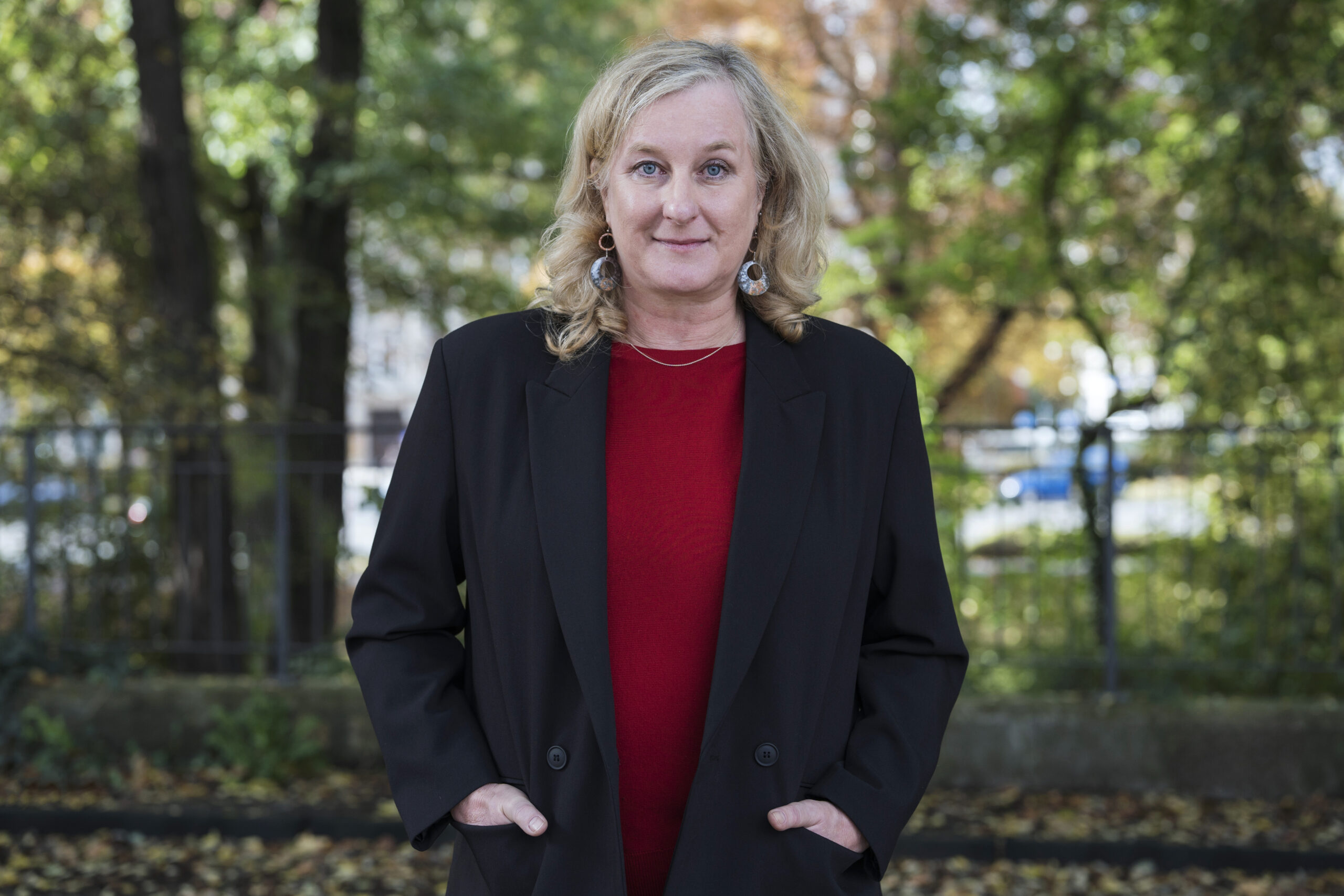
VERDICT: In her first stint as DOK Leipzig director, Ola Staszel confronts Germany’s growing East–West divide while navigating political sensitivities over Palestine, funding cuts and the challenges facing documentary cinema.
In her first edition at the helm of DOK Leipzig, Ola Staszel discusses challenging stereotypes about eastern Germany, the political sensitivities surrounding films about Palestine, and the growing pressures on documentary filmmaking.
As audiences gathered at Leipzig’s central railway station on October 26 for a public screening of Good Evening, Beautiful (Guten Abend, du Schöne), the 69th edition of DOK Leipzig opened with a documentary revisiting the lives of women in the former German Democratic Republic (GDR/East Germany). Directed by Ina Borrmann, the film returns to the experiences of women interviewed for Maxie Wander’s 1977 book Good Morning, Beautiful, exploring gender roles and emancipation under socialism. Its selection resonated with the political climate in eastern Germany, where the far-right, anti-immigration and anti-LGBTQ+ Alternative for Germany (AfD) party has gained significant electoral support, intensifying debates about the region’s identity and its relationship with western Germany.
For Polish-born Ola Staszel, who took over as director in January 2026, the festival’s October 26–November 1 edition offers an opportunity to confront these divisions through cinema. She has introduced two new sections, Fokus Ost and Positions, while preserving DOK Leipzig’s longstanding commitment to documentary and animated films. Speaking to The Film Verdict following the opening, Staszel discussed her vision for the festival, the role of documentaries in challenging stereotypes, the political sensitivities surrounding films about Palestine, and the funding and distribution challenges facing documentary filmmakers.
The Film Verdict: This is your first festival as director of DOK Leipzig. What did you want to change or develop, and what was important to preserve?
Ola Staszel: The first year is about testing things, getting to know the team and seeing how audiences respond to the programme. I really like how Christoph Terhechte organised the competitions, with a good balance between documentary and animated films. I also like the Audience Competition, featuring films that have already proved popular elsewhere. One small change is introducing digital voting for the Audience Award instead of having a jury of five or seven people. I think it’s more democratic to let audiences decide.
I also wanted to preserve established sections such as Animation Night, Animation Perspectives and our retrospectives. But we’ve removed the separate Central and Eastern European section because I want those films represented throughout the programme, including the competitions. Leipzig has traditionally been a meeting place for filmmakers from East and West, and that balance is important.
We’ve also introduced Positions and Fokus Ost, both intended to encourage discussion. We’re living through political and social crises, wars and growing divisions, and I think festivals have an important role in discussing the sometimes controversial subjects that films address.
TFV: How will the new sections encourage this kind of dialogue?
OS: With Positions, we’ve selected seven films that raise subjects worth discussing, with more time after screenings for conversations involving filmmakers, producers and outside experts. For two films, we’re collaborating with the Berlin Critics’ Week, which has developed new discussion formats. We want to involve audiences beyond simply taking questions from the room.
Fokus Ost comes from something I’ve been thinking about for some time. I’m originally from Poland, although I’ve lived in Germany for almost 30 years. I’ve seen Polish society become deeply divided over the past decade, with families and friends no longer speaking because of politics. I’m seeing something similar in Germany, particularly in the growing polarisation between East and West.
People in western Germany blame eastern Germans, while people in the East feel misunderstood. DOK Leipzig has a strong historical connection to the former GDR, and I thought it was time to give these voices more space and discuss what eastern German identity means today. The aim isn’t to deepen divisions but to get people talking.
There certainly seems to be interest. Screenings were sold out before the festival began. We also screened the opening film at Leipzig’s main railway station, as we’ve done for eight years, but this was the first time the huge hall was completely packed.
TFV: Eastern Germany is frequently portrayed in the media through far-right politics, the rise of the AfD and economic or social divisions. Do you think documentaries can challenge these prevailing stereotypes and offer a more complex understanding of eastern German society?
OS: At the very least, documentaries can explain more about who we really are. I’m concerned about how news organisations frame these debates. Coverage is often too simplified, and stereotypes emerge far too quickly. Reality is complicated, and there are reasons why people think and behave the way they do.
Documentary filmmakers meet people, research their subjects and take time to investigate what’s really happening. That’s why I think documentaries are perhaps even more important today than in previous decades. We’re living in a crazy media environment where people consume news in seconds on their smartphones and don’t always know what’s right or wrong. Documentaries offer the opposite: time and space to understand reality more deeply. This applies far beyond eastern and western Germany.
TFV: At the same time, documentary filmmaking faces increasing financial pressure, with cuts to cultural funding across Germany and Europe. How is DOK Leipzig addressing these challenges, particularly when documentaries already struggle to attract investment compared with fiction films?
OS: Through DOK Industry, we bring together funders, producers and filmmakers, creating opportunities to discuss financing. But we’re all worried about how the funding system is developing. So much money goes towards large fiction productions, while other forms of filmmaking receive less and less.
Culture cannot exist without funding, particularly in Germany and Europe. We don’t have the same system of private sponsorship as the United States, so our cultural institutions depend heavily on public support. The cuts are painful for the entire cultural sector, including festivals. We talk to politicians and try to convince them how crucial our work is for democracy and keeping people talking to one another.
TFV: One of the films in the International Competition is Helena T?eštíková’s Bára – Diary of a Rockstar, which follows its subject across several decades. Such long-term documentaries are particularly difficult to finance. What made you choose this film, and why did you decide to dedicate a homage to T?eštíková?
OS: I’m a huge admirer of Helena T?eštíková. For me, she’s one of the great masters of long-term documentary filmmaking. Very few filmmakers can work this way because it’s almost impossible to finance projects over such long periods, but Helena found a way.
She started in the late 1970s, filming a couple around their wedding, and continued following them over the years. She then began documenting other people’s lives, with some films emerging after 20 or 30 years. Bára is particularly special because it’s her longest-running project and the last of those long-term portraits.
When I heard about it, I immediately wanted to invite the film into the competition. We also organised a homage and a masterclass. What impresses me is how close she becomes to her protagonists, sometimes even becoming their friend. It raises a fundamental question in documentary filmmaking: how close should you become to your subjects? I think Helena handles this in an extraordinary way.
TFV: DOK Leipzig has continued to programme films addressing Palestine and Israel since October 7, 2023. This year, several films engage with the Palestinian experience, at a time when cultural institutions in Germany face intense scrutiny over how they address the conflict. How did you and your programming team approach these films, particularly given the controversies surrounding the Berlinale?
Staszel: It was very, very important to me. Of course, there are several wars and conflicts, including Ukraine, but Israel and Palestine is perhaps one of the most important issues at the moment. It’s also a very delicate subject in Germany, particularly regarding how these films are received and how the authorities might react. You’re aware of what happened at the Berlinale and the controversies surrounding it. There are also accusations of antisemitism, which come up repeatedly. For me, it was essential to include documentaries showing the situation on the ground. I don’t think anyone should be accused simply for presenting these realities. We have to show the situation.
At the same time, we have two films by Jewish Israeli filmmakers who are independent of Israeli government funding: the German film Snake Charmer and the Belgian film The Fracture. Both address criticism of the Israeli government from within Israeli society. Presenting these different perspectives is our role, even our duty, as a festival.
TFV: Beyond funding, documentaries struggle with theatrical distribution. What responsibility do festivals such as DOK Leipzig and IDFA have in sustaining documentary filmmaking?
Staszel: I think festivals play several important roles. Where a documentary has its world premiere can be crucial to its future. We help films gain visibility through media coverage, and then there’s that beautiful moment when a film meets an audience for the first time. Through DOK Industry, we also connect filmmakers with sales agents, distributors and broadcasters who can help their films reach other festivals, cinemas and television audiences.
If you simply release a documentary in a cinema in one country, you don’t necessarily create the same awareness. Festivals can give films national and international attention. It’s different from a Hollywood blockbuster like Spider-Man. For documentaries and animated films, I think festivals are absolutely crucial.
TFV: Artificial intelligence has become increasingly controversial in filmmaking, particularly in animation. What is DOK Leipzig’s position on films made using AI?
Staszel: We discuss this a lot. In our submission process, we ask filmmakers whether AI has been used in production or the creative process. We have to trust they’re honest because it’s not always possible to tell. As far as I know, we don’t have any films in this year’s programme whose filmmakers have declared using AI.
Some filmmakers openly use AI as part of their artistic process, and I think that’s fair if they’re transparent. There was a major controversy at the Annecy animation festival over a film created using AI, with protests outside the cinema. We can’t simply stop AI or declare it evil. For me, the important thing is honesty, so audiences can decide whether they like it or not.
TFV: Finally, with such a busy week ahead, are there any films in the programme you’re particularly looking forward to seeing again, this time simply as an audience member?
Staszel: There are quite a few. We watch some films during selection in small screening rooms, so I’d love to experience them again on a big cinema screen. I’m particularly looking forward to Pyropolitics by Lukas Marxt, Las noches by Ana Buñuel and the animated film Magic Candies, which I think will look amazing on the big screen.
There’s also Letters from the Silenced Country by Andrei Kutsila, a very impressive film. I’m particularly interested in seeing how audiences respond to it. Even when you’ve already seen a film, experiencing it in a cinema with an audience can be completely different.