Cairo 2026: The Verdict
.
VERDICT: Despite regional tensions, the Cairo Int. Film Festival expanded its operations and moved closer to its goal of being a Mideast hub for all stages of filmmaking.
Visibly growing in size and strength, the 47th edition of the Cairo International Film Festival (CIFF) – taking place 50 years after the inaugural festival of 1976 — was significant in several ways.
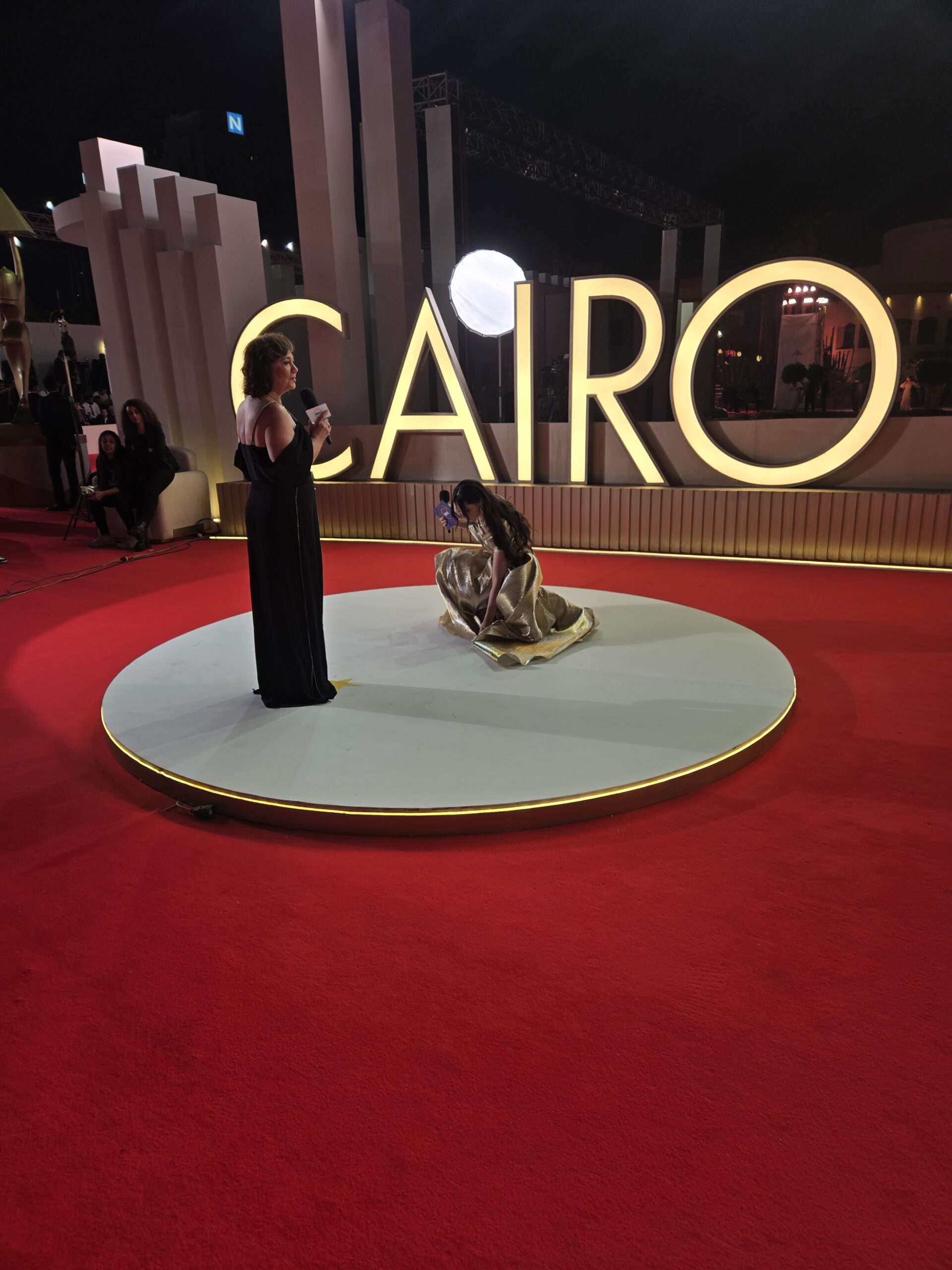
Under the guiding hand of popular festival president Hussein Fahmy, who was ably supported by artistic director Mohamed Tarek and the director of Cairo Industry Days Mohamed Sayed Abdel Rahim, the program included 145 films from 64 countries. Ticket sales rose to 53,000 this year, well over last year’s 45,000, while social media views on the festival accounts shot up to 85 million views on TikTok, 22 million on Instagram and 8 million on Facebook. The difference was plainly felt by film-goers, who had to book tickets early to find a seat in the mostly sold-out screenings. These were not just at the three venues around the Cairo Opera House complex, which was the heart of the festival, but at a number of movie theaters around the sprawling, traffic-clogged city where young Cairo audiences eagerly turned up for screenings.
But it wasn’t just a question of numbers. In the current tragic period of region-wide conflict over Gaza and Iran, Cairo has emerged as a festival that, after canceling its 2023 edition due to the outbreak of the Israeli-Hamas war in Gaza, CIFF appears to have stabilized. Supported by the Egyptian Ministry of Culture, the festival is pursuing its aim to become a hub between the North and South, linking Africa, Asia, and Latin America with Europe and North America. But it is already a key moment for the Egyptian film industry, from the long list of local movie stars who loyally attend the big events and red carpets to the veteran and emerging filmmakers whose world premieres are much-feted. Two award winners were Ahmad Abdalla’s BerleeN_ which won the Audience Award, and Ashgan El-Hamus’s Al Baraneys, taking home the Bronze Pyramid.
Particularly impressive were the hundreds of international participants who flocked to the Industry Days’ 11th film market and project workshops. With everything except the film screenings concentrated in one huge convention venue – the Sofitel Cairo Downtown Nile – the six-day market fulfilled its task, as Abdel Rahim emphasized to TFV, to deepen industry networks, elevate regional filmmaking, and strengthen Egypt’s role as a production and co-production hub. It also included a new attention to technology as seen in the XR (Extended Reality) section and Digital Restoration technology, put to good use in the important Cairo Classics strand.
Arab cinema had a strong presence at the festival, with the programming reflecting the different stages of a film’s journey, from its first public screening to its arrival before a wider regional audience. The International Competition included the world premiere of Ahmad Abdalla’s BerleeN_, alongside Ashgan El-Hamus’s Al Baraneya, Nadim Tabet’s In This Darkness I See You and Laïla Marrakchi’s Strawberries. The Horizons of Arab Cinema competition brought together seven films, notably the world premieres of Sara Shazli’s Your Daughter, Ali Toffan Al-Fatlawi’s The Blind Ferryman and Aziz Shennawy’s To the Sun and Beyond.
Other films, such as Mia Bendrimia’s Magma and Mohamed Zineddaine’s Until Dawn, found a place alongside these new discoveries. This mix is an important part of Cairo’s programming, giving some films their first opportunity to meet audiences and begin their festival and potential commercial journey, while bringing films that have already travelled internationally back to an Arab audience, where the stories often have a different resonance.
One of these is Rania Rafei’s The Day of Wrath: Tales from Tripoli, winner of two prestigious awards: Best Documentary and the Horizons of Arab Cinema top prize for Best Film. Taking a poetic approach to the often violent past of Lebanon, filtered through offbeat interviews with the people of Tripoli (the country’s second-largest city after Beirut), Rafei builds an impressive knowledge base around key historical moments: a massacre by French colonialists in 1943 in which tanks ran over schoolkids, the short-lived pan-Arabic movement of the 1950s centered around Gamal Abdel Nasser, the rise and takeover of Islam in the 1980s, the demonstrations against political corruption of 2019. Far from dry history, The Day of Wrath: Tales from Tripoli is full of bold inventiveness that grips the attention, even though the references may be too local for audiences outside the region.
Cairo’s relationship with Arab cinema also goes beyond what appears on screen. Through the Cairo Film Connection (CFC), the festival continues to support upcoming Arab projects at different stages of development and production, connecting filmmakers with potential co-producers, funding bodies and distributors. This year’s projects included Reda by Egyptian filmmaker Ahmed Fawzi Saleh, Madness and Honey Days by Iraqi director Ahmed Yassin Al-Daradji, Naydalaan by Yemeni filmmaker Mariam Al Dhubhani and Twelve Fig Leaves by Lebanese filmmaker Joëlle Abou Chabké, all of which received support through the industry platform. There is also a continuity between the two sides of the festival: Rafei’s The Day of Wrath, for example, was previously presented as a project at CFC before returning to Cairo as a completed film. It is perhaps one of the more interesting aspects of the festival’s approach to Arab cinema, not simply selecting completed films for ten days of screenings, but being involved in different points of their lives, from early development to the moment they finally reach audiences.
On the lighter side of festival programming, it happened that Cairo attendees could choose between two movies named Salvation. The one cinephiles were most likely to have already heard about was the film that premiered in the Berlinale competition in February and was directed by Turkish filmmaker Emin Alper: the story of a decades-old feud between two clans over a land dispute in a remote village. The other Salvation was a first feature hailing from the UK (specifically Scotland), and first unveiled in Toronto’s Discovery section two months ago. A smaller film, but nonetheless very deserving of attention, as Tom Nicoll and his magnetic protagonist Liam Harkins take viewers on a subtly compelling journey dissecting male influencer culture and its more financially detrimental side.
A big winner in multiple categories was Summer Meadow, the fiction debut of Belgian-Palestinian documentarian Naël Khleifi, in partnership with Lisa Debauche. Presented in the Horizons of Arab Cinema competition, where it won Best Performance thanks to Manal Issa’s affecting work as Hana, a Lebanese woman working as a shepherdess in the French Alps, it also won over a separate jury, which bestowed upon it the award for Best Arab Feature Film across all the sections of the festival. It was a sterling example of a relatively tiny film (65 minutes long, main cast of two) having a big impact.
This year, The Film Verdict’s collaboration with the Cairo Industry Days took on an additional form: as part of the festival’s recent focus on immersive media, with the introduction of Cairo’s XR in 2025, our senior feature writer Max Borg, who has covered the topic extensively, was one of the speakers at a panel concerning the resources that are necessary for immersive technology to be a viable and sustainable part of the Arab film industry. Topics raised included the types of audience(s) currently reached by immersive projects, the importance of having a strong idea and vision that justifies using the technology, and the thorny issue of AI tools (in keeping with the rules adhered to by other Category A festivals, Cairo does not accept works made entirely via generative artificial intelligence).