
Amoeba
Amoeba
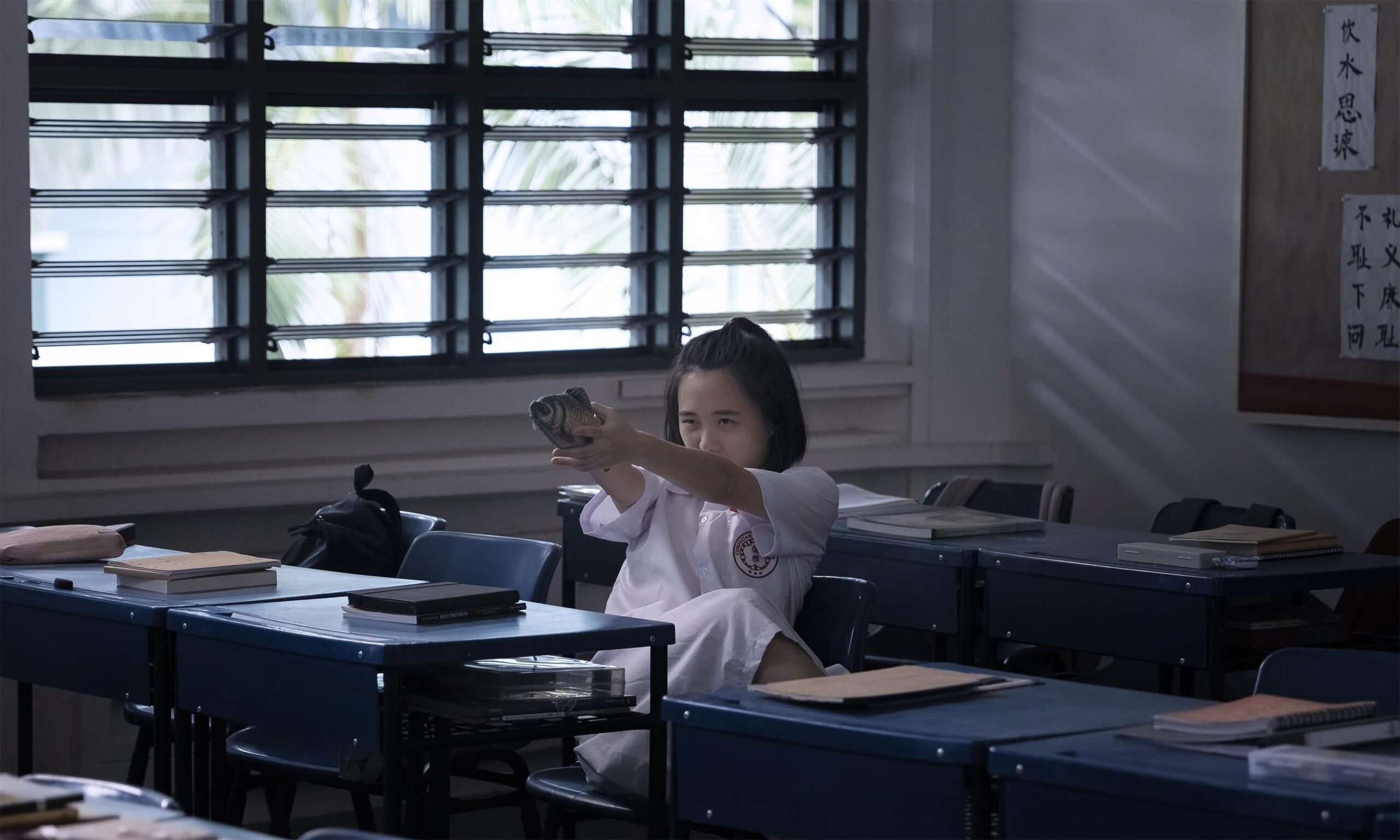
VERDICT: Singapore filmmaker Tan Siyou takes aim at the socially suppressive status quo crushing young people in her country in the exuberant teen-centered 'Amoeba'.
“Ungovernable”: that’s how Amoeba’s quintet of teenage protagonists are described by their teachers after one of their many acts of mischief. Rather than showcasing authority figures flaunting their superiority with some grandiose wordplay, Los Angeles-based Singaporean filmmaker Tan Siyou actually used the word to hint at how her first feature is at once a vigorous and irreverent coming-out-age drama and also a powerful political allegory.
Universal in its theme about young people struggling against conformity and specific in its allusions to the socio-economic issues in stifling, stratified Singapore, Tan’s directorial debut is bolstered by Ranice Tay’s breakout performance as an adrenalin-fuelled rebel without a pause – an explosive turn that serves to salvage the film’s sporadic moments of over-expositional melodrama. Amoeba should easily multiply its appearances on the festival circuit after its premieres at Toronto, Busan and finally back home in Singapore, where it is in competition at the city’s annual international film festival.
If there’s another word that’s looming large over Amoeba, it’s “haunting”. First, a ghost: the film begins with a grainy, Blair Witch-like home video in which high-schoolers Choo (Tay) and Nessa (Nicole Lee) try (and fail) to record a paranormal presence lurking in the former’s bedroom. Then, a spectre: the film then cuts to a schoolyard-full of docile, seemingly spellbound students who silently watch a flag-raising ceremony and then breaks into a hypnotic school anthem about “respectful daughters of virtue”.
It’s a masterful montage of two scenes of wildly different textures and styles, and an ingenious way of equating the climate of obedience and fear of Singaporean school-life with the menace of an unseen yet omnipresent phantom. And this phantom is indeed everywhere at the fictional Confucian Girls’ Secondary School, where self-aggrandising announcements about its century-long legacy and its Olympic-size swimming pool are broadcast regularly through the tannoy, and teachers are heard berating their young wards by saying how a future as a street-sweeper beckons for those with bad grades.
With her short hair and even shorter temper, Choo sticks out like a sore thumb as she settles into her new surroundings. Joining a class mid-term, she quickly infuriates her homeroom teacher by describing class monitors as servants and calling for diligence lessons to be replaced by “napping time”. But Choo’s rare, rebellious streak also endears her to the very small coterie of “mean girls” who snack (secretly) in class, smoke (outside campus, of course) during recess and sing along (at home, mind) to Singaporean hip-hop.
In one amusing instance, the teenagers are seen clowning about in the apartment-sized bedroom of their poor-little-rich-girl leader Sonia (Lim Shi-an), shouting along to a gangsta rap number and declaring they want to become gangsters. Cut to: the girls seated comfortably on lush sofas and carpeted floors, as they huddle around to enjoy British-style afternoon tea as laid out by Sonia’s socialite mother, complete with cakes and scones and a silver serving tower. Another shocking juxtaposition, for sure, and one that serves as a subtle harbinger about the brittle nature of the young protagonists’ mutinous veneer.
The girls’ gung-ho spirit to life – embodied by a stage show they put together spoofing Singapore’s official origin-story – is soon put to the test as the school authorities get hold of the video that begins the film, a tape which contains much more of the teenagers’ so-called delinquent misadventures and snippets of gentle (and fully-clothed) intimacy between Choo and Nessa. Faced with real repercussions that could ruin their future, the girls’ long-suppressed but much-ingrained ideology of fear and obedience finally bubbles back to the surface with devastating effect.
Admittedly, Amoeba’s coming-of-age narrative arc is hardly new, and Tan – in a way, like her young protagonists – does fall back on some much-used melodramatic tropes to stir emotions and move the story along. By and by, however, her screenplay offers scathing critique against official machinations in coaxing and coercing the masses to fall in line, be content with their stock as “good citizens” – while the notions of class privilege, a foundation stone of capitalist creed, remain sacrosanct for all.
Neus Ollé’s camerawork and Sam Manacsa’s production design offers an evocative view of Singapore’s stuffy and stifling social fabric, with characters stuck in ennui in their luxurious condos, middle-class flats, hallowed school hallways and rubble-strewn construction sites. But Amoeba excels thanks to the dynamism of its cast, with Tay, Lee, Lim and Genevieve Tan (who plays the jester in the quartet) bringing fun and tristesse galore to the screen. This, perhaps, mirrors what Tan Siyou had wanted to say along with this very fine debut: it’s in the people, and with the people, that changes could eventually be brought about.
Director, screenwriter: Tan Siyou
Producers: Fran Borgia, Denis Vaslin, Antoine Simkine, Luisa Romeo, Han Sunhee
Executive producer: Fran Borgia
Cast: Ranice Tay, Nicole Lee, Lim Shi-an, Genevieve Tan
Director of photography: Neus Ollé
Editor: Félix Rehm
Production designer: Sam Manacsa
Production companies: Akanga Film Asia, Volya Films, Les Films d’Antoine, Mararía Films, Widelog Office
World sales: Diversion
Venue: Singapore International Film Festival (Competition)
In English, Mandarin, Hokkien, Cantonese
98 minutes