Cesarean Weekend
Cesarean Weekend
VERDICT: A boozy party at a seaside villa descends into a delirious explosion of suppressed angst for two slackers and their angst-ridden middle-aged fathers in “Cesarean Weekend”, Iranian indie cinema instigator Mohammad Shirvani’s first feature in 13 years.
“You should leave Iran if you’re uncomfortable here,” say a throng of characters to someone they’re ganging up on at the beginning of Mohammad Shirvani’s latest feature, Cesarean Weekend. Rather than watching chauvinists menacing women, as one would most probably expect from a film unfolding in Iran today, it’s women who are mocking two young men for their feeble attitude towards life.
Bowing at the Forum section at the Berlinale, Cesarean Weekend is neither a clichéd study of masculinity in crisis nor a reactionary clarion call aimed at the manosphere. By exploring the two men-children’s and their fathers’ troubled relationship with themselves and each other, the film offers a delirious and deliciously disorienting stab at characters confined by past and present social norms they have problems conforming to. Shunning realism at every turn, Shirvani flings comedy, tragedy, history and geography into the blender and delivers a mind-bending and heart-rending piece about existence in contemporary Iran.
“Fuck your existence!” reads graffiti sprayed on a wall, and this might well be Shirvani’s own motto towards mainstream Iranian society. He made his international breakthrough in 2013 with Fat Shaker, an absurdist drama about an oversized con-man getting his comeuppance and attaining redemption for using his handsome-yet-deaf son as bait to snare women. Today the Iranian indie producer-director is part of a coterie of filmmakers (including Vahid Vakilifar and Mani Haghighi, among others) trying to veer away from the aesthetics of their festival-acclaimed forefathers.
Refusing to play by the rules of establishments of any political stripe – whether that of the state or the dissident movement – Shirvani elected to follow up the success of Fat Shaker by retreating into underground cinema with his workshops and projects with his Alternative Film Lab. Having spent the past decade producing raw films from young cineastes, the maverick filmmaker has now returned with something that subverts expectations about narrative, characters and space.
Starting with the blast of a rooftop party, the film slowly descends into surreal debates about society and philosophy in a pool downstairs, before ending up in dream-like, death-infested finale in the sea.
Cesarean Weekend begins with a 15-minute sequence of hedonistic revelry, as a group of young people smoke, dance, get tattooed and row to the sound of booming dance music. Weaving his way through the many women literally letting their hair down is Milad (Milad Ahmadzadeh), a curly-haired wannabe-Lothario seen flirting with each and every woman around him – an extreme reaction, it seems, to his learning of the pregnancy of his frustrated girlfriend (Bita Jamshidi). His buddy Armin (Armin Shirvani, the director’s real-life son) is a bespectacled nerd who has to be literally dragged out of bed to join the party.
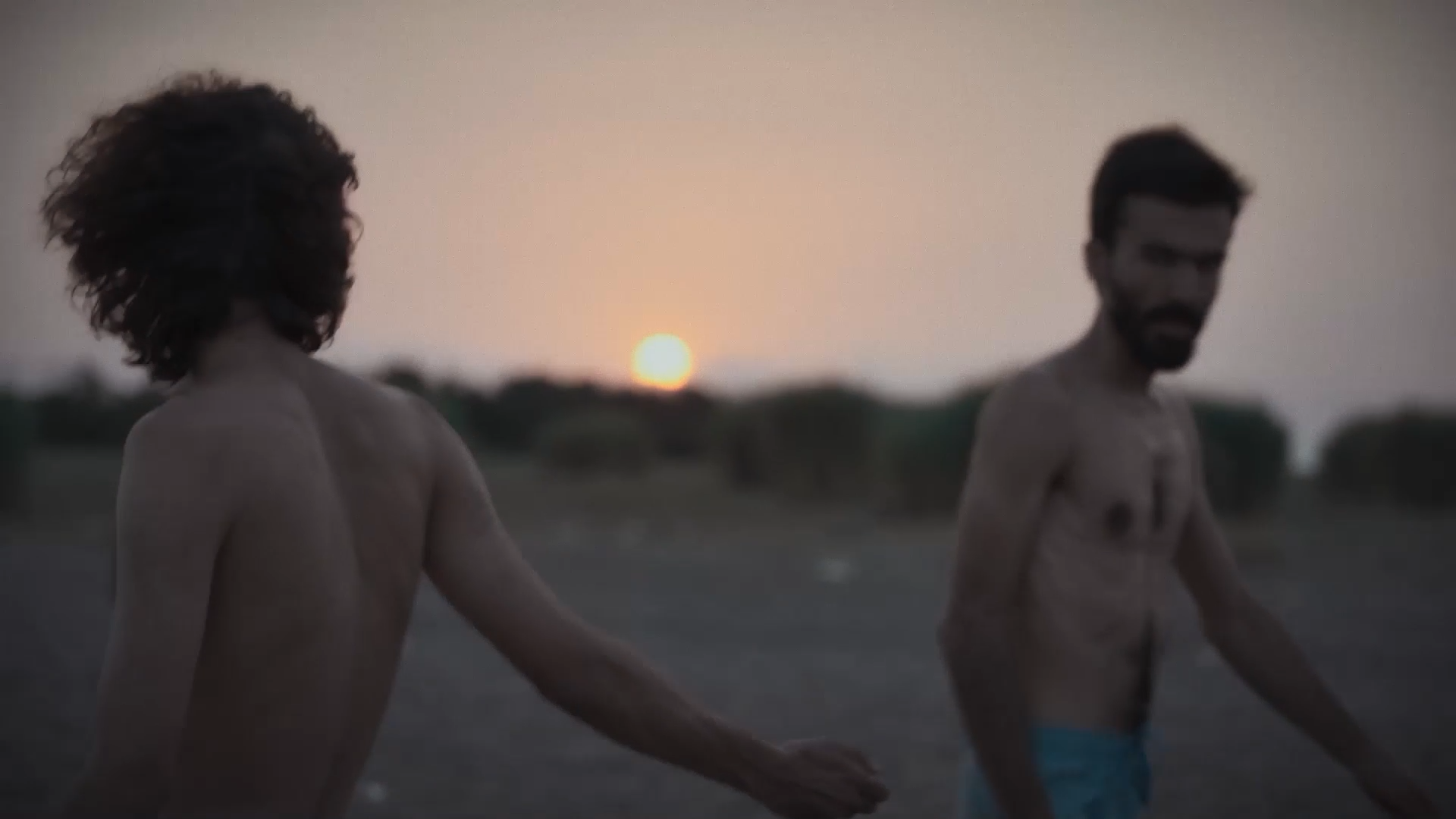
Just when one is tempted to see Milad and Armin as Iranian incels, Shirvani throws a curve ball by splicing snippets of the pair’s intimate interactions at another time and space. Roaming the ruins of an abandoned tenement block and the overgrown gardens around it at dawn – before or after the party, we are not sure – the two seemingly stoned men, dressed only in their swimming trunks, crack infantile jokes (including the one about the graffiti), hug trees, chase goats and reminisce dreamily about their good times together. Teasing both tenderness and rawness from his two leads, Shirvani leaves the nature of their relationship very much ambivalent, a guessing game best left for the engaged viewer.
Without warning, the film shifts shape as the young people relocate to a swimming pool on the ground level of the house. They are now joined by patriarchs: relaxing in the water surrounded by youth, Milad’s bearded bear of a father (Peyman Yeganeh) taunts his feral son for his lack of focus in life. “Using the language of misery is the only thing philosophy taught you” is one of the many insults he hurls at the manchild Milad – while Armin’s more refined dad (played by the Vienna-educated musical conductor Nader Mashayeki), an expatriate composer who has lived abroad and away from his own family for years, laments the collapse of culture in his homeland.
Through the explosive exchanges among this quartet, filmed by Shirvani in close-ups and edited together with dynamism and danger, the tensions between generations are revealed. By venting fury at their overbearing or absent fathers, Milad and Armin are (probably) voicing the pent-up frustration of youth about the ignorance and ineptness of all these self-styled adults. While hardly addressing directly the turmoil gripping Iranian society, Shirvani’s barbed commentary about its social mores is more than evident.
These heated arguments eventually give way to a visually infernal denouement: as the focus shifts away from the young to the elders, Shirvani lets loose the two fathers in the sea. The pristine, high-resolution imagery of the rooftop party fades into the distance; heightened by Oveis Derakshan’s eerie sound design, the film morphs into a series of flame-tinted, fogged-up sequences of the two middle-aged men floating off the shores of the Caspian Sea, imploding with the guilt of not having done enough for themselves and the world and their inability to attain their life-long ambitions in their homeland. Discarding his demure demeanour of the earlier scenes, Armin’s father lets out screams beset by shame and regret for not being able to direct Gustav Mahler’s Ninth symphony in Iran.
This wish of his shouldn’t be taken as a straightforward critique of censorship of art in Iran: Mahler’s work has indeed been performed in the country, and Mashayeki himself brought even more experimental work there (John Cage’s music, for example) during his real-life tenure at the Tehran Symphony Orchestra. Rather, this final line should be taken as Shirvani’s opaque commentary about an individual’s inability to overcome his inner demons which are, indeed, shaped by the social constraints around them. That, however, might be too serious an interpretation for Shirvani’s liking. Like his previous work – not just the features, but also shorts and even mischievously surreal installations – Cesarean Weekend should be enjoyed like a strange dream as much as a piece of social commentary.
Director, producer, screenwriter, cinematographer, editor: Mohammad Shirvani
Cast: Nader Mashayekhi, Peyman Yeganeh, Milad Ahmadzadeh, Armin Shirvani, Bita Jamshidi
Music composer: Reza Rostamian
Sound designer: Oveis Derakhshan
Production company: Alternative Film Lab
Venue: Berlin Film Festival (Forum)
In Persian
90 minutes