
Diary of a Chambermaid
Le journal d'une femme de chambre
VERDICT: Radu Jude delivers another cutting, crushing satire on upper class ignorance.
Radu Jude is as prolific as he is unpredictable and playful. Ever since the biggest film of his career, 2023’s delightfully funny and angry Do Not Expect Too Much From The End Of The World, he’s knocked out two more features: liberal guilt satire Kontinental ‘25 and a three-hour, AI-prompt filled provocation Dracula. That’s on top of a handful of short to medium length films. For his next trick, Jude puts his own spin on Diary of a Chambermaid, and delivers his most unlikely film yet — an empathetic, and mostly straight faced portrayal of working class suffering.
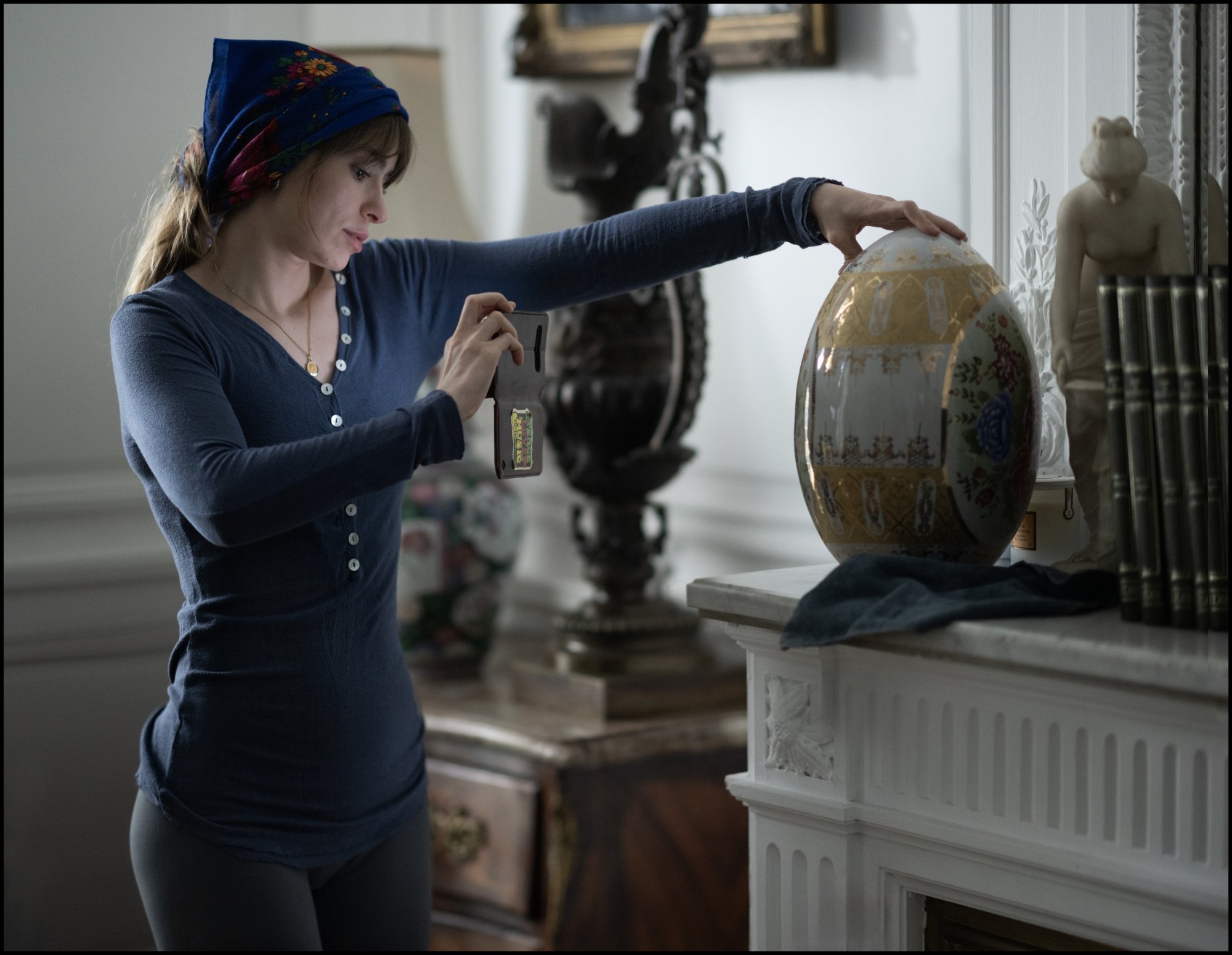
Designating his version a “variation” on Octave Mirbeau’s frequently adapted 19th century novel, the filmmaker sets his take in a tony section of Bordeaux where Romanian Gianina (Ana Dumitra?cu) is the live-in housekeeper and babysitter for the Donnadieus, an upper class family. While Marguerite (Melanie Theirry) and Pierre (Vincent Macagine) are at work, she dusts, cleans, does the groceries, changes the sheets, cooks meals, and watches their young son Louen (Louen Boutellier) after school. Divorced, Gianina’s daughter Maria (Sofia Dragoman) is in the care of her mother in rural Romania while she works to pay off debts and send money back home. The narrative ticking clock is that Gianina is planning to return home in a couple months for Christmas to see Maria, who desperately misses her. Of course, best laid plans are putty in Jude’s hands.
The filmmaker loves nothing more than taking the stuffing out of the bourgeoise, and the picture is ninety minutes of subtle skewering. The affluent and leftist Marguerite and Pierre are always quick to tell their friends and family how much they appreciate Gianina. They adore the Romanian fairy tales she tells Louen (so much better than Asterix & Obelix!) and marvel at her cooking (even if she spends nights eating tinned fish and baguette in her room). But their education and money are silent and unintentionally wielded weapons. As they try to involve Gianina in political discussions, and invoke everyone from Sartre to Kircher in casual conversation, it only emphasizes the privileges they’ve easily enjoyed. And there’s no limit to Gianina’s services that can be refused, at least without the promise of a bonus, because she’s simply not in a position to decline.
Pointing out the hypocrisies of the proudly progressive is fairly low hanging fruit, but few do it with Jude’s panache. Set across the autumn season, this is not a romantic, postcard version of Bordeaux. Nor does it evoke the lived in comfort of Rohmer’s pictures. The film sees the city through Gianina’s eyes, her wanderings in the city limited by her errands. The unhoused are in plain view and the city presents like any other place you might find in a Western European country. Only once do we see a bonafide tourist attraction — the Water Mirror — but that’s only so Gianina can make a video to send to Maria. As he has shown so capably before, Jude effortlessly blends mediums to create a film that feels vibrantly contemporary. Working with frequent collaborator, cinematographer Marius Panduru, the pair seamlessly integrate Facetime calls, iPhone footage and video messages to create the fabric of what is ultimately Gianina’s disconnection from her daughter.
Restraint isn’t a word in Jude’s vocabulary, and the film’s reach does slightly exceed its grasp. At Marguerite’s insistence, Gianina takes a role in a local college stage production of Diary of a Chambermaid. This meta touch has fleeting moments of impact but the rehearsal sequences tend to grind the film to a halt. Curiously, the film’s other interesting touch (which I can only assume is intentional) could’ve been toyed with more. It’s hard not to imagine that Gianina was named as a nod to another woman, with a similar sounding moniker, stuck in the grind of household servitude: Jeanne Dielman.
The film’s inevitable heartbreak is crushing, arguably more so because its so plainly obvious to anyone who’s ever had to earn a living. Gianina’s gradual exchange of her choices for compromises is as relatable as it is haunting because, by the end, even she believes what’s best for the Donnadieus is the best for everyone.
Director: Radu Jude
Screenplay: Radu Jude
Cast: Ana Dumitrascu, Melanie Thierry, Vincent Macaigne, Marie Rivière, Louen Boutellier
Producers: Said Ben Said
Cinematography: Marius Panduru
Production design: Stephanie Delpech
Costume design: Charlotte Richard
Editing: Caatalin Cristutiu
Sound: Damien Luquet, Julien Roig, Xavier Thieulin
Production companies: SBS Productions (France), Avanpost (Romania)
World sales: SBS International
Venue: Toronto International Film Festival (Wavelengths)
In French, Romanian
94 minutes