
Dream of the Red Chamber ‘77
Xin Chao Hong Lou Meng
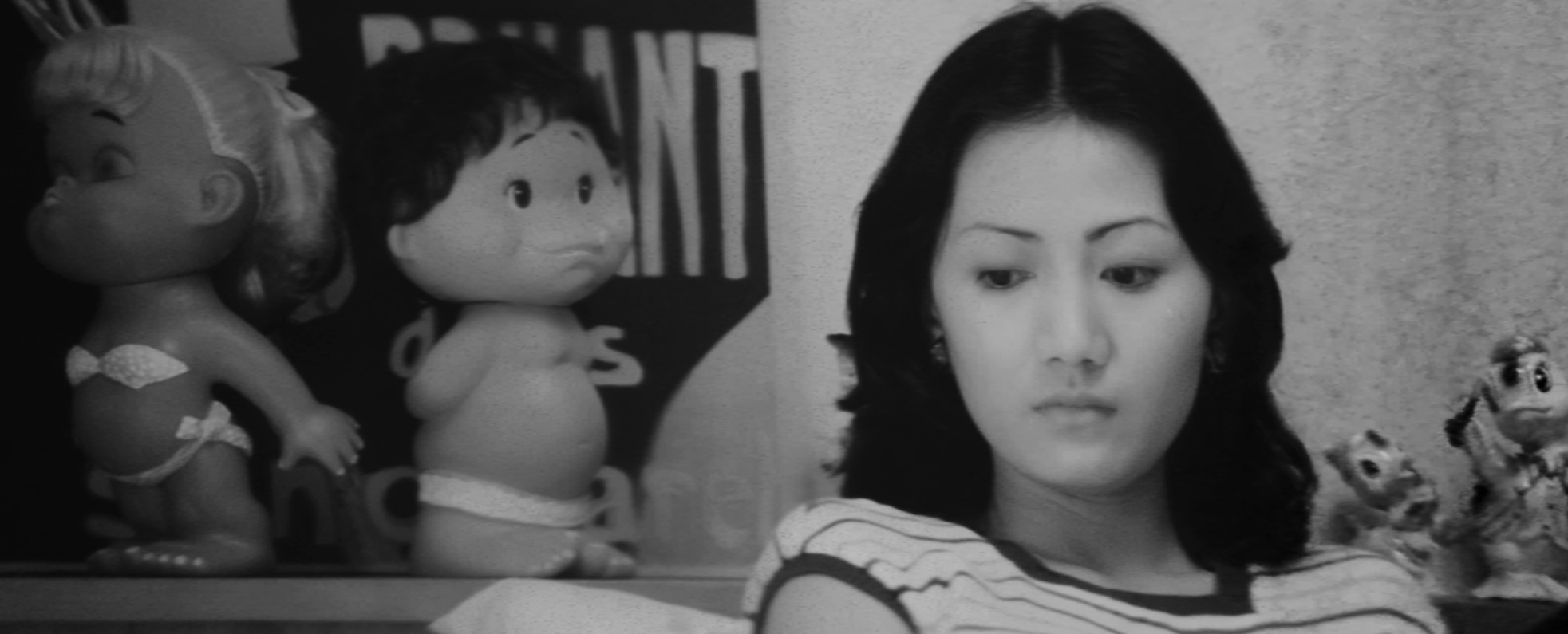
VERDICT: Long considered lost and an urban myth of sorts, 'Dream of the Red Chamber ‘77', legendary Chinese cineaste Chiu Kang-chien’s irreverent, Singapore-set reinterpretation of the Chinese literary classic re-emerges after nearly five decades as a key curio in the restoration programme of the Singapore International Film Festival.
Imagine the shock (and joy) of Juliet romancing Romeo with a recitation of Yeats and Plath, Ophelia commanding the lethargic Hamlet to “snap out of it”, or Anna Karenina leaving the men in her life to become a class-conscious worker.
This will probably be what Dream of the Red Chamber ’77 looks like to those familiar with the classical 18th century Chinese novel, in which a young, orphaned woman goes to live with her aristocratic relatives, falls in love with a philandering scion, and finally succumbs to multiple conspiracies with the fast-crumbling clan.
With his directorial debut, Chiu Kang-chien – now most well-known for his contributions to Hong Kong New Wave classics like Boat People, Nomad and An Amorous Woman of Tang Dynasty – relocates Cao Xueqin’s classic 18th century novel from feudal China to a snazzy, skyscraper-laden Singapore. In line with the film’s modern setting, Chiu transforms the damsel in distress in the original material into an independent, strong-willed woman who first observes, then changes, the life of her pampered, princely suitor.
Featuring surprisingly competent performances from a cast comprised mostly of first-time actors, Dream of the Red Chamber ’77 bears all the hallmarks of the jovial romantic dramas prevalent in mainstream Mandarin-language cinema of the day. There are courting young lovers having fun and breaking up on finely manicured lawns and in bustling urban landscapes, peppered by moments of saucy behaviour by the supporting characters and backed by pop musical numbers. The screening of a restored version of Chiu’s film at the Singapore International Film Festival is a landmark of sorts because of the way it was rediscovered.
After a week of sparsely attended screenings in a handful of Singapore cinemas back in January 1977, the film vanished from sight due to its lukewarm box office and the disappearance of one of its financiers. Having spent months in rehearsals before a 43-day shoot, most of the cast drifted away from acting and back to their original jobs. The male lead Gao Feng (real name Peng Tai Zhang), for example, went back to being a seaman. Plans to release the film in Hong Kong and Taiwan, markets grappling with a craze of Red Chamber adaptations, were also scrapped.
The film is considered by Singaporean film historians as a lost gem –and a very important one, given its standing as a rare independent movie in their city-state, as well as a pan-Chinese production featuring crew from abroad. Chiu is joined by Hong Kong-based DP Ricky Lau, editor Tony Chow and composer Stanley Chow. A much-deteriorated print was eventually found at the Taiwan Film and Audio-visual Institute. The Asian Film Archive set out to revive the film in 2023, but could only turn in a 4K black-and-white restoration due to the unsalvageable colour components in the material.
On the strength of this, one already sees Chiu’s own transformation from a studio-employed screenwriter at Shaw Brothers into a more experimental cineaste. The film begins with Daiyu (Liu Yanling, then using the stage name Su Xin Xin) arriving in Singapore from Taiwan. Over the opening credits, we travel with her in a taxi, marvelling at panoramic views of a modern, capitalist bastion complete with endless highways, concrete tenement blocks, advertising placards, and busy markets. She then gets off at the Chia Mansion. In a montage of shots with echoes of Antonioni we are treated to an eerie tour of a vast villa of marble and stone, with its empty gardens and grand interiors. We finally get to see the meet-cute between the woman and Baoyu (Gao), an infantile young man riding a child’s bike and checking on her zodiac sign.
This is just one example of how Chiu reworks (and sometimes spoofs) a conventional romantic romp with wayward lensing (courtesy of Ricky Lau, who later became a director in his own right with the Mr. Vampire horror-comedy series) and dynamic editing (from Tony Chow, who worked on 1980s Hong Kong action classics such as the Tarantino-influencing City on Fire). But the film also serves as an important chronicle of Singapore’s geographic landscape. Chiu and his producers scoop up location shots around the city’s developing landmarks, from the colonial ruins of Fort Canning to its towering housing complexes.
The film is also exceptional for its depiction of women as strong-willed and standing in solidarity with each other in difficult circumstances. In the original novel Daiyu is perennially sad, sickly and dependent of the charity of others; here, the protagonist arrives in Singapore because she wants to “stand up on her own two feet” away from the comfort zone of home, and readily chides Baoyu (and his family) for their idleness. In one scene, Daiyu actually asks Baoyu why his people couldn’t find something worthwhile to do while the Singapore government is embracing policies of economic development. In other circumstances, this might sound like official propaganda; in the hands of Chiu and the context of this irreverent satire of fossilised social mores, it is a clarion call which marks the new in this film.
Director, screenwriter: Chiu Kang-chien
Producers: Lu Chang Shung, Liu Mo-lung, Chiu Kang-chien
Executive producers: Kadarisman, Tan Kok Kiong
Cast: Su Xin Xin, Gao Feng, Tian Zhen, Yan Jing Ling, Wang Ting Ting
Director of photography: Ricky Lau Koon-wai
Editor: Tony Chow Kwok-chung
Music composer: Stanley Chow Fook-leung
Production company: Singapore Film Development Company
World sales: Asian Film Archive
Venue: Singapore International Film Festival (Landmarks)
In Mandarin
96 minutes