
FIC Luanda Festival Director Jorge Cohen on Restarting the Angolan Film Festival
.
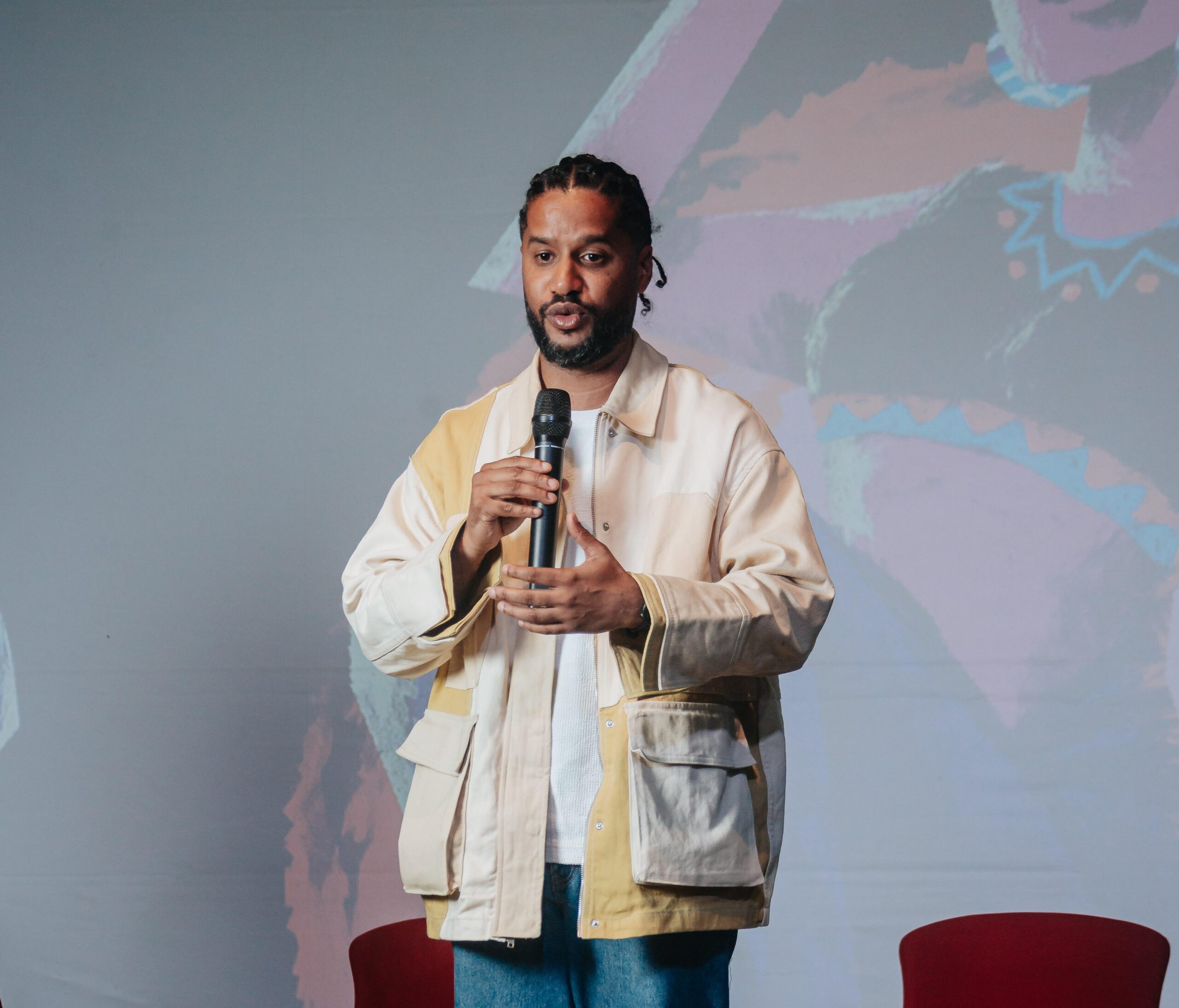
VERDICT: TFV speaks to Jorge Cohen, director of FIC Luanda.
For over a decade, FIC Luanda, the film festival based in the Angolan capital, was on a hiatus. This year it returned from October 28 to November 2 under the leadership of Jorge Cohen, its newly appointed festival director. A well-known film producer, Cohen has made movies that have screened in Locarno, the Red Sea Film Festival and other venues.
Here he speaks to The Film Verdict about the festival he now runs.
THE FILM VERDICT: You have worked as a film producer for years and now you are producing a film festival. What have you learned from being on both sides?
JC: I have learned that it’s always better to be a guest. [Laughs]
Seriously, it’s a nice challenge, a new hat. We have an opportunity to connect people and to participate in the construction of the industry. As a festival director, I am the platform. As a producer, I am the content.
When you work on a film, you work on one idea and there are production challenges. For a festival, you need to understand the different sensibilities—the institutional one and that of the filmmakers. You have to understand how to connect the international filmmakers and the local filmmakers.
A film is about what you want to say to the world; a film festival is the platform for what filmmakers want to say to the world.
TFV: Talk to me about the selection for FIC Luanda.
JC: We are programming around 100 films based on a guideline [from the government] saying we needed to have six competition sections: three national and three international. Feature films, documentaries, and shorts for both. The guideline was for the last event held 11 years ago, but we didn’t quite have the time to rebuild the guideline.
So, from the start we were handling 60 films. For some of the international projects, we approached the filmmakers directly. For our Angolan selection, we put out an open call and received about 90 films. We then added a Nigerian focus and a Brazilian focus because we are looking at cultural and linguistic connections. For Nigeria, we want to connect the industries; with Brazil, it’s because we speak the same language and we have two huge markets.
Other than that, we received several short films for kids, so we created a section for them, so on Saturday and Sunday at the main venue Cinemateca Nacional, we have a family programme. We want to get Angolans into the habit of going to the cinema again. We are also approaching our Independence Day [on November 11], so we have films—documentaries—on it.
It’s quite a very heavy programme.
JC: Yes, the programme is large. It’s because the FIC Luanda festival was stopped for so long and we really want to involve as many people as we can.
I think this is also the first time we have four generations of Angolan filmmakers alive and active in a way, so it’s a moment to strengthen intergenerational collaborations. In the future, we will make the festival tighter.
What do you think about Angolan cinema right now?
JC: I think we are in a better place. Our cinemas that are returning are not only commercial, so this will give us space to test the market and audience and try to monetise those types of films.
Our production volume is growing as making films has become easier. There is more freedom to create. I see a new generation making films that are not about war, independence, and political problems. Their films are about social problems and about expressing feelings and how they are living now. They are not making films about “big problems” and trying to represent a country. I think it is a better moment.
Institutionally, there is openness. We have institutional support.
Do you mean funding? Does the state give funding?
JC: There is no funding yet. But there is support. The theatres are coming back and we have policies and agreements. Angola is opening up. We did not have coproduction agreements with even countries we collaborate with a lot like Portugal and Brazil—or with South Africa or Nigeria or Congo, our neighbours.
To get everything right will take a bit of time but filmmakers should take advantage of the situation. A festival coming at this time is an opportunity for filmmakers here. It is an opportunity for bigger awareness. I usually say that if the last decade was the decade of music, this is the decade of cinema.
So, there is some progress on the business and policy side of filmmaking here. What about artistically? What needs to improve?
JC: We need training. It’s become so easy to produce films. There are people who come from social media who are now making shorts. But it’s important to commit to do good stuff. I say this because I have also produced a lot and fast. So, maybe it’s time for us to take a bit more time to produce better films. But you need to be able to live in between projects to be able to do that.
What do you hope your international guests will take away from attending FIC Luanda 2026?
JC: I want them to have a great time. People need to come here first and see for themselves, to experience the country, to see the openness I mentioned, to be able to do coproductions. But I don’t put too much expectation on what our guests will take away from coming to FIC Luanda. I just want them to have the best experience we can provide. I want them to see, watch, and take whatever they feel works for them.