
For Life
For Life
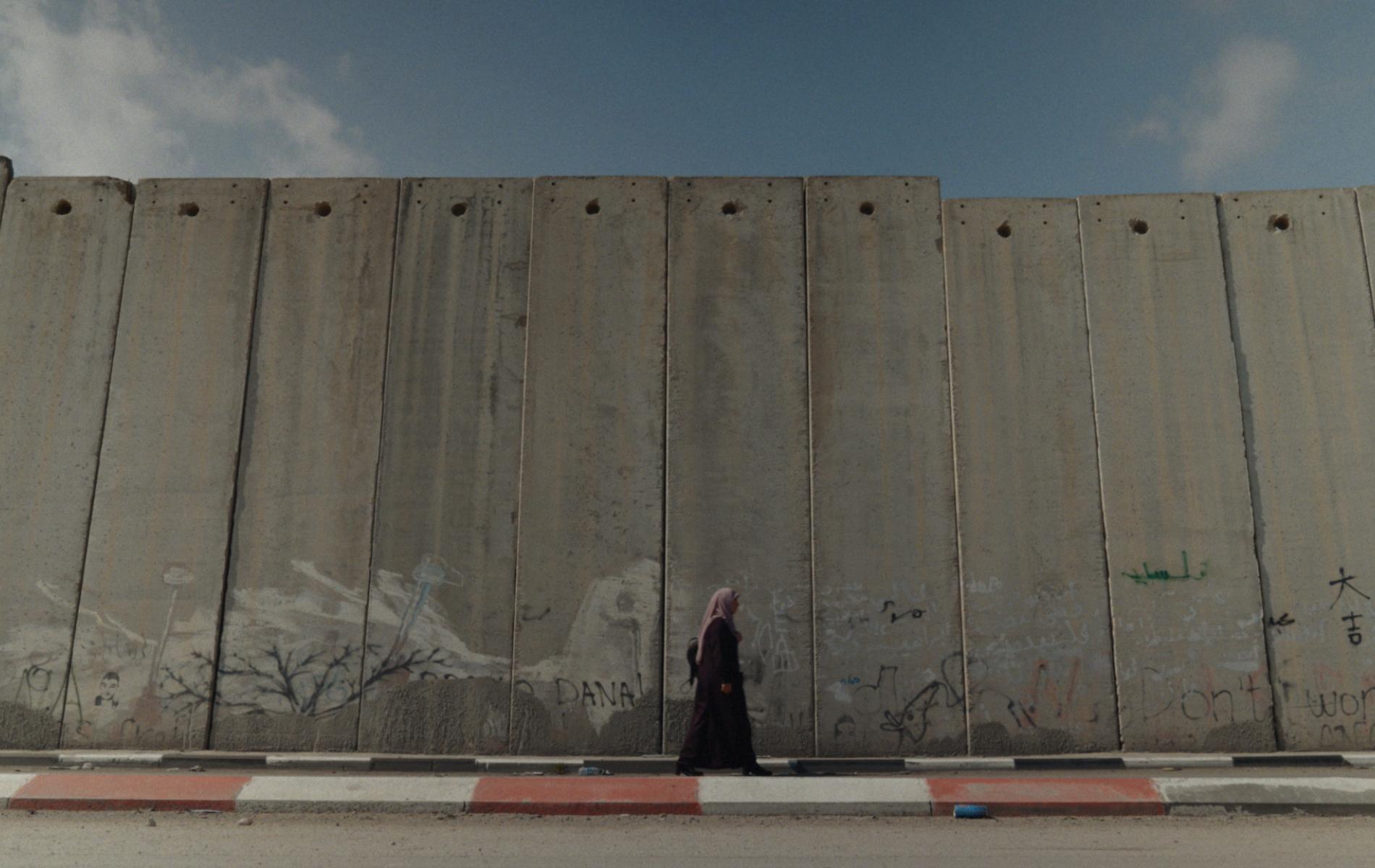
VERDICT: A Palestinian woman's attempt to conceive a child with her incarcerated husband turns into a tense and sobering documentary that questions the boundaries between motherhood, personal desire, and resistance in 'For Life'.
A sperm sample has only a limited time to remain viable outside the human body. For Hind, a Palestinian woman whose husband has spent more than two decades in the Israeli prison system, her chance to conceive a child becomes a race against time, as a hasty trip from a prison to a fertility clinic meets roadblocks, traffic jams across the occupied West Bank, and military checkpoints. Turkish filmmaker Ahmed Seven builds a gripping medical thriller around this predicament in his documentary For Life, an original documentary that exposes the far-reaching impact of incarceration in Israeli jails have on the lives of Palestinian families, while questioning the boundaries between motherhood, personal desire, and resistance.
Adopting an observational approach, Seven follows Hind’s attempts to conceive through sperm smuggled from prison, allowing the political import of her struggle to emerge through logistical complications, rather than providing commentary to explain what is happening. Hind’s husband, Ramadan, has been serving a life sentence for over 20 years. Physical contact is impossible during prison visits, leaving artificial insemination as the only means of conceiving another child. Hind has already raised their two daughters largely alone, helping them start their own families and supporting their education. As her daughters become independent, she fears that she will grow old without her husband or her children beside her, a universal sentiment captured within the unique circumstances of families of Palestinian prisoners.
Seven establishes the couple’s relationship through small details. Hind carefully preserves Ramadan’s handwritten notes in a book about memorizing the Quran, later transcribing them into a computer. It offers a glimpse into a marriage maintained through affection, work and faith, despite prolonged separation. Hind’s plan is hardly unprecedented; for decades Palestinian prisoners’ wives have developed networks that include relatives, intermediaries and medical professionals to facilitate pregnancies through smuggled sperm.
Unlike other documentaries that reconstruct the experiences of Palestinian prisoners, For Life keeps the prison largely outside the frame, concentrating on the women living with its consequences. At one point Hind speaks on the phone with a grandmother whose daughter got pregnant twice through smuggled sperm, allowing her to conceive one child the first time and triplets the second. The older woman rejects the word “smuggled”, preferring “liberated”, showing not only how people perceive this operation but also how an intimate reproductive decision has political significance. This heavily politicised gaze of conceiving children is expanded horizontally in the film to show the toll it takes on Hind. It also captures how an intimate reproductive decision acquires political significance for people denied ordinary marital life.
Early in the film, a forgotten ID complicates Hind’s trip through a checkpoint as she travels to her daughter’s graduation. What seems to be an everyday bureaucratic inconvenience, one that thousands of Palestinians have to go through, builds tension to the more consequential journey ahead, when delays can determine whether the sperm survives.
The documentary also encounters other prisoners’ wives and includes the story of Walid Daqqa and his daughter, who was conceived during his imprisonment. Their experience broadens the film’s examination of incarceration, placing the women who manage households, work, raise children, and preserve relationships at its center. Although these women live outside prison, their lives remain structured by the sentences imposed on their husbands.
Cinematographers Laila Abdel Latif and Fuad Hindieh keep the camera close to Hind, accompanying her through domestic spaces, clinics and West Banks roads, capturing her anxiety and exhaustion, while quieter scenes reveal the loneliness beneath her resolve. Her frequent prayers, often uttered during moments of fear and uncertainty, provide an insight into the support system that sustains her through her setbacks. The relative absence of explanatory narration and emotional music allow the tension of these situations to emerge from the action itself, although the camera’s persistent proximity sometimes leaves little room for a detached examination of Hind’s choices.
Seven’s strongest sequences unfold around the transportation and examination of the sperm samples. During one attempt, an exhausting journey ends with the medical staff discovering that the sample is no longer viable. On another occasion, the painstaking unwrapping of another sample becomes an unexpected source of suspense. Instructions arrive over the phone and as layers of concealment are removed by the lab staff, viewers wonder not just whether the sperm is viable, but also whether this act of resistance will succeed. These sequences generate tension over the practical details rather than a dramatic embellishment .
This is well served by the editing, which finds an effective rhythm between long periods of waiting and sudden moments of urgency. The years Hind spent separated from Ramadan are in mighty contrast with the few hours available to transport a viable sperm sample.
Director: Ahmet Seven
Producer: Aslhan Eker Çakmak
Cinematography: Latifa Abdel Latif, Fuad Hindieh
Editing: Ahmet Seven, Omar Nabil
Sound: Akgün Adatepe
Production: TRT World
Language: Arabic
Venue: DOK Leipzig (Audience Competition)
Runtime: 90 minutes