
Full Moon
.
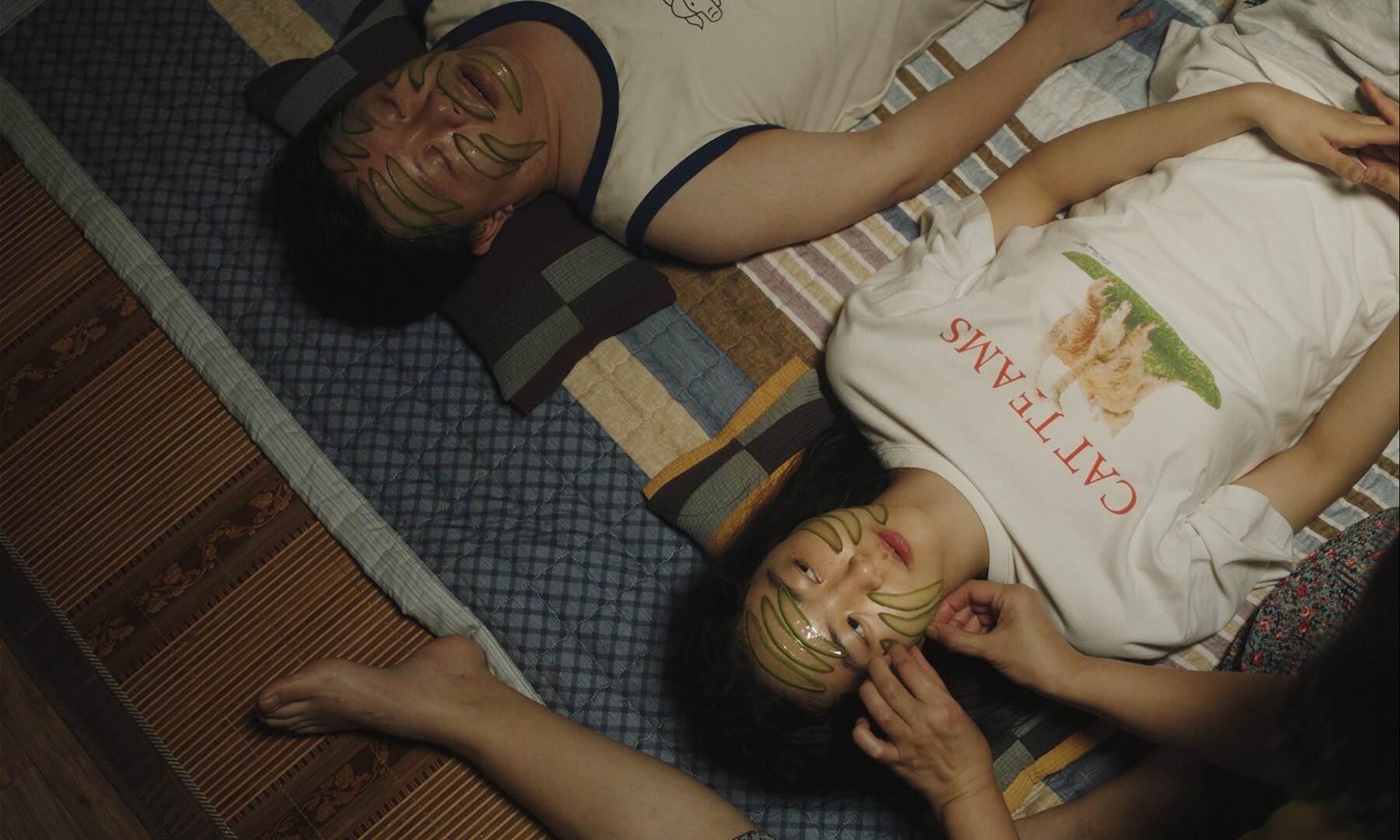
VERDICT: Jeong Ji-hye’s tender second feature 'Full Moon' pairs an occasionally overexplained coming-of-age narrative with exceptional casting and beautifully judged performances.
by Nemo Kim
In Full Moon, a teenage girl wants everyone to look at her — provided they can’t see too much.
Sixteen-year-old Hye-mi dreams of taking centre stage in her school dance team, yet keeps her parents firmly out of the spotlight. Her father has Down syndrome and her mother has borderline intellectual functioning; at home, she shoulders responsibilities that leave little room for the carefree teenage life she tries to project at school. Jeong Ji-hye’s second feature finds its rich emotional centre in this collision between the desire to be noticed and the fear of being exposed.
A warm, pastel-toned coming-of-age drama, Full Moon reaffirms the director’s interest in those whose lives are constrained by social prejudice. Her 2022 feature debut, Jeong-sun, followed a middle-aged factory worker and single mom who was subjected to the circulation of an intimate recording. In Full Moon, the writer-director approaches questions of shame and visibility through a girl still learning to negotiate the gaze of others. The storytelling sometimes anticipates its own revelations, but Jeong’s remarkable facility with actors gives even the more explanatory passages a compelling emotional life.
Jeong arrives with a considerable reputation to uphold: Jeong-sun won the Korean Competition Grand Prize at Jeonju and went on to receive the Grand Jury Prize and Best Actress award at the Rome Film Festival. Her second film remains rooted in the same region. Shot in Busan and her hometown of Yangsan, Full Moon also draws on local participation, featuring students from her former middle school and residents in its Great Full Moon festival.
The community setting provides the backdrop to a story whose stakes are, for Hye-mi, intensely private. Stirringly played by Jung Min-ju, she is preoccupied with friendship, dancing and her crush on a boy named Jun. But the ordinary business of being a teenager becomes complicated when the family she wants to keep hidden threatens to enter the world she has carefully constructed. On top of this, her parents’ constant dependence on her produces an uneasy reversal of roles: she must often behave like an adult at precisely the age when she most wants permission to be carefree.
Jeong’s strongest decision is to allow Hye-mi’s conflicting feelings to coexist. Her embarrassment does not cancel her strong attachment to her parents, nor does her sense of responsibility make her immune to resentment. The film understands how exhausting it can be to love someone while fearing what others might make of them. Hye-mi’s wish for an ordinary family life is neither comfortably admirable nor simply selfish, and the excellent performances preserve that discomfort without turning it into a lesson in morality.
Her activities at school give these tensions a visual and thematic framework. The dance club offers her a chance to be the object of attention, and the astronomy club allows her to turn her gaze elsewhere. The distinction opens up the film’s broader concern with looking: who gets to watch, who must endure being watched, and how easily even sympathetic attention can become intrusive and painful. This theme extends into the home when her mother wants to be on a neighbor’s YouTube channel. Hye-mi vehemently opposes the idea, invoking the dangers of the internet to conceal her deeper fear that her parents’ disabilities will become public knowledge. Yet her mother’s wish to be seen echoes Hye-mi’s own desire for the spotlight, exposing the uneasy contradiction between the recognition she seeks for herself and the invisibility she demands of her parents.
A costume malfunction during a dance performance becomes more than a passing humiliation. Here, however, the screenplay’s tendency to over-anticipate is particularly apparent. By drawing attention beforehand to the outfit’s poor fit, Jeong makes the impending tear easy to predict. The setup takes some of the surprise out of a scene that should feel abruptly and painfully beyond Hye-mi’s control. Similar spoilers pop up in the camerawork. When Hye-mi abandons the performance and sits around watching, the camera moves from a wider view towards her, pressing an emotional point that has already been made.
These reservations, however, are softened by the cast. As in Jeong-sun, Jeong demonstrates an exceptional eye for casting and an equally impressive ability to draw stellar performances from her ensemble. The achievement extends beyond the leads: supporting characters and even fleeting appearances have a specificity that makes the world feel inhabited. Taeyang Lee, in particular, makes a striking impression as Hye-mi’s crush, Jun, bringing even his brief cameos vividly to life.
The film’s regional identity is less consistently convincing. Yangsan’s school grounds and the Great Full Moon celebrations give it a tangible geographical setting, while the use of a real school band adds an appealing local texture. Yet dialogue is delivered in something closer to standard Seoul speech than the region’s distinctive cadences, weakening that sense of place.
Ultimately, Full Moon finds its strength in Jeong’s assured work with her actors, whose finely judged performances lend emotional depth to an unconventional coming-of-age story. If the script sometimes tells us too clearly where to look, the performances give us ample reason to keep watching.
Director, screenplay: Jihye Jeong
Cast: Minju Jung, Taeyeon Kim, Kumsoon Kim, Soy Kim, Minhwi Kang
Producers: Nagyong Choi, Junsang Lee
Cinematography: Jin-hyeok Jung
Editing: Sunmin Kim
Production design: Jio Kim
Costume design: Kim Hee-jae
Music: Minhwi Lee
Sound: Park Cho-rong
Production company: Cinemaru
World Sales: M-Line Distribution
Venue: Busan Intl. Film Festival (Vision Korea)
96 minutes