
Home Bitter Home
.
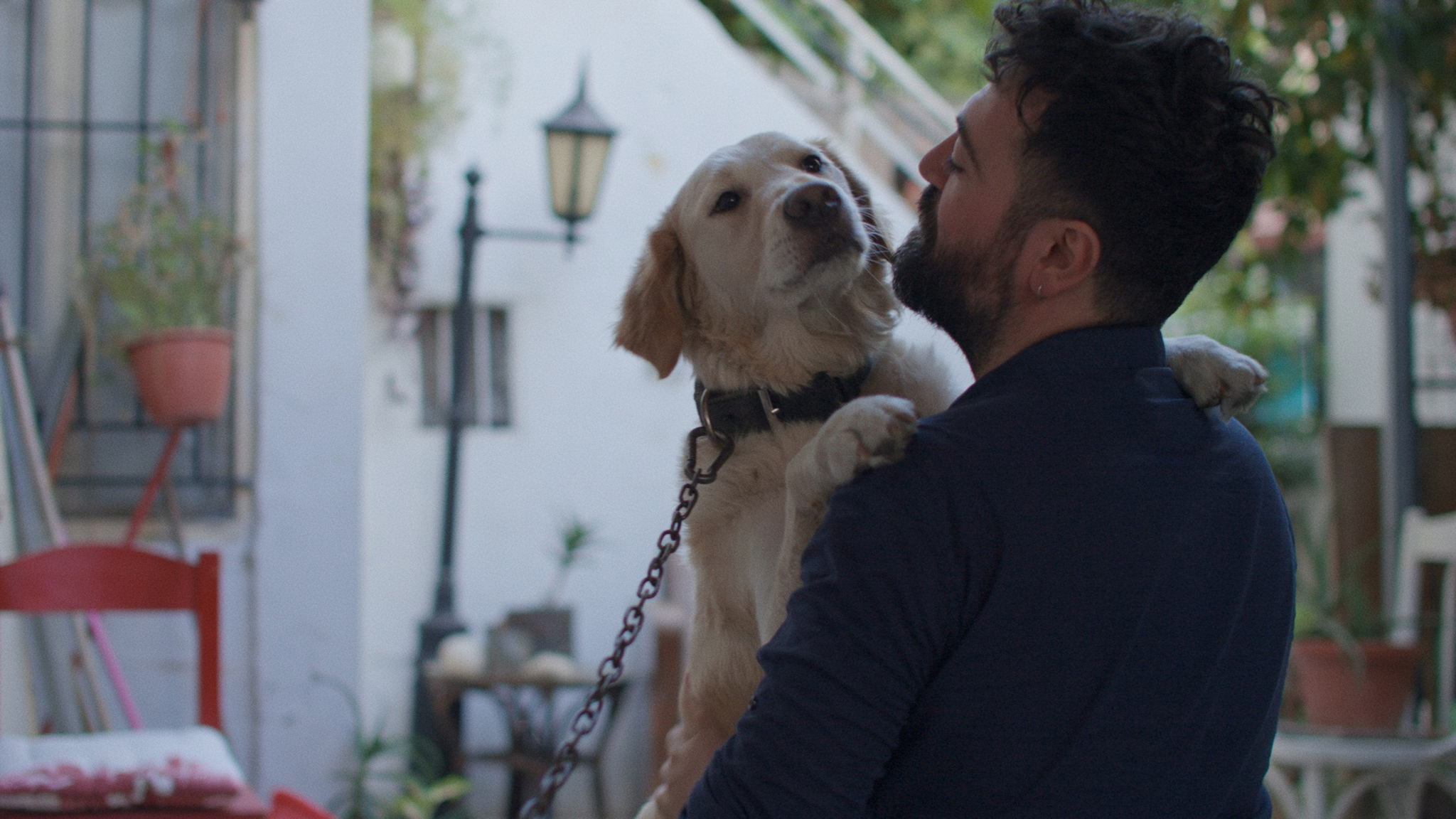
VERDICT: Artistic frustrations are the throughline in the Lebanese omnibus film ‘Home Bitter Home’, set in present day Beirut.
While the title is deliciously laden with irony, there aren’t many laughs to be had with Home Bitter Home, the Lebanese omnibus effort (five stories, six directors) that celebrated its world premiere in Rotterdam’s Harbour section. The somewhat downbeat tone and demanding running time (157 minutes) make it a hard sell outside of the most hardcore arthouse circles, but it is an interesting watch, especially in the current context of what’s been going on in Lebanon in recent years.
Each story is about a different artist, whose “portrait” (to use the description provided in the credits) is fictional even though the performers use their real names: Sara Fakhri, Hadi Deaibes, Adham Al Dimashki, Dana Dia, and Dhana Mykael. The segments are as follows: Sara is a lawyer who yearns to change careers and is preparing for an audition at a prestigious dancing school; Hadi turns his home into a sound studio so he can provide for his family, but becomes concerned with a strange noise; Adham, a painter, has to deal with unprecedented hostility from his neighbors; Dana uses her acting skills to conduct drama workshops for kids; and Dhana, also an actress, struggles with financial hardship.
The project came about from an idea by producer Georges Hachem, who came up with the general framework within which each story was developed. Per his statement in the press notes, the film “brought together Lebanese filmmakers and actors of the same generation, engaging the former in a process of writing and directing, induced and largely inspired by the latter.” As such, each segment is very much its own thing, although there is some behind-the-scenes overlap: in addition to producing the whole endeavor, Hachem edited the Hadi and Dana storylines, and Tania Kammoun worked on the sound for three out of five chapters.
Each pairing of filmmaker(s) and actor (Ghina Abboud for Sara, Naïm El Hajj for Hadi, Salim Mrad and Aline Ouais for Adham, Jihad Saade for Dana, and Marie-Rose Osta for Dhana) has a distinct flavor, rooted in the sensitivities of the individual directors and fields of the arts they explore, and this is perhaps most evident in the Dhana segment which is shot in black and white. Each microcosm has its own peculiar mood, and can therefore be enjoyed as a singular dramatic entity. Except, of course, in a theatrical context it’s the bigger picture that matters, and while that may be a daunting prospect for some viewers, the cumulative effect of the five chapters is a quietly powerful one, as the frustrations of each protagonist paint an intriguing picture of everyday life in a city that is perhaps becoming too stifling for the generation depicted on screen.
And yet, while the atmosphere in front of the camera veers towards the gloomy, what went on during the shooting appears to have been quite the opposite. The most striking detail of the film, in fact, is one that emerges in the closing credits, where each segment receives its own space and the supporting actors are invariably grouped under the phrase “With the Supportive Presence of”, a choice of words that indicates there was a great communal spirit and effort in making, amusingly enough, a series of portraits of alienation. One can only hope future projects by these filmmakers will similarly benefit from the supportive energy of the varied Lebanese artistic community.
Directors: Ghina Abboud, Naïm El Hajj, Salim Mrad, Aline Ouais, Jihad Saade, Marie-Rose Osta
Screenwriters: Ghina Abboud, Naïm El Hajj, Salim Mrad, Aline Ouais, Jihad Saade, Marc Salemeh, Marie-Rose Osta
Cast: Sara Fakhri, Hadi Deaibes, Adham Al Dimashki, Dana Dia, Dhana Mkhayel
Producer: Georges Hachem
Cinematography: Jean Hatem, Elsy Hajjar, Jihad Saade, Jocelyne Abi Gebrayel
Sound: Raed Younan, Hadi Deaibes, François Yazbeck, John Paul Jalwan, Victor Bresse
Production companies: Stray Bee
World sales: MAD Solutions
Venue: International Film Festival Rotterdam (Harbour)
In Arabic, English
157 minutes