
I Play Rocky
I Play Rocky
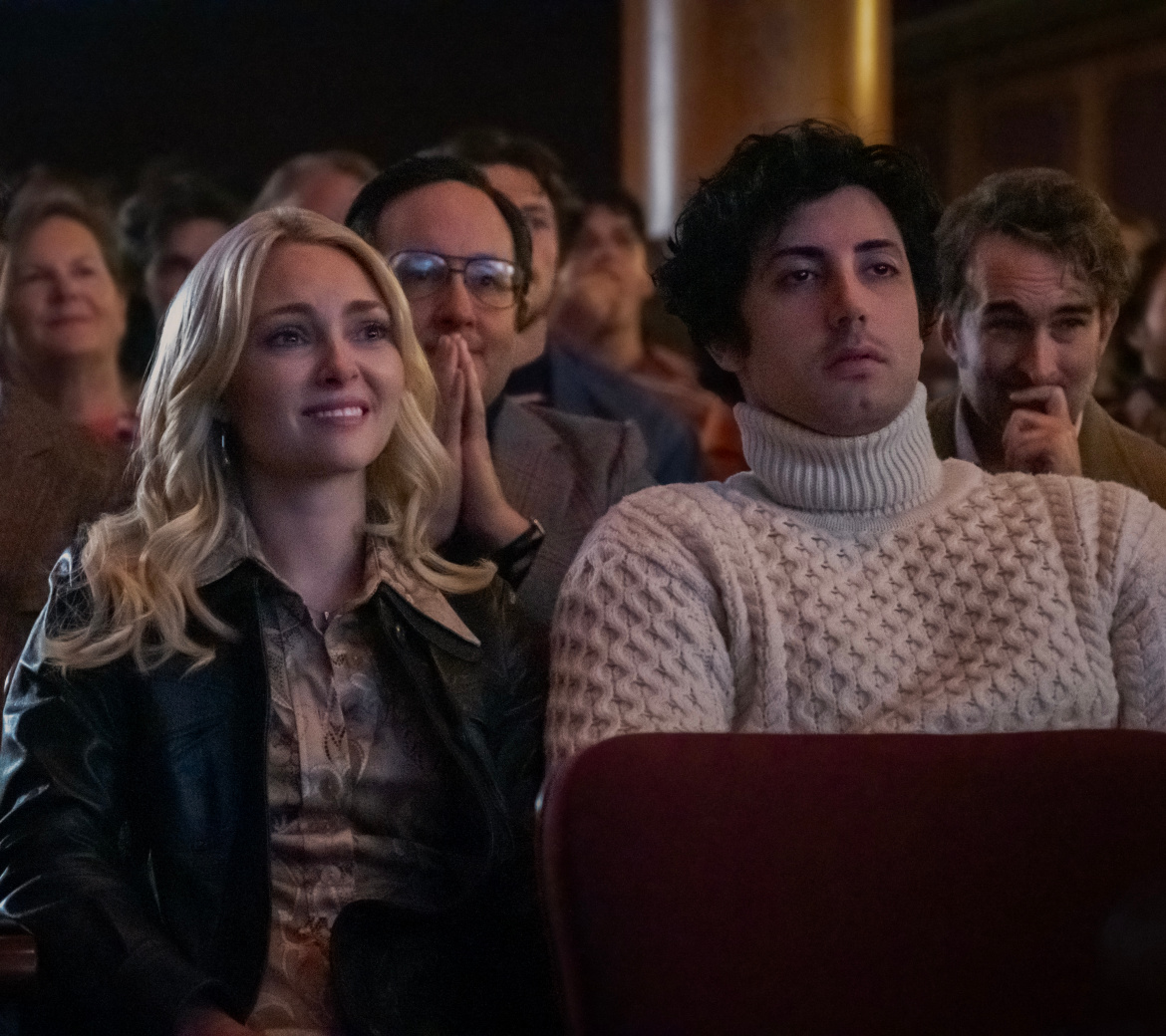
VERDICT: This making-of-a-classic tale wants to hit the heartstrings and the adrenaline centers in the same way that its subject did 50 years ago – and it mostly succeeds.
A down-on-his-luck loser meets a woman who believes in him, gets a one-in-a-million shot at stardom, and gives it his all even as the odds are increasingly stacked against him. That’s the feel-good plot that rocketed Rocky to box-office and Oscars success in 1976, and that same formula gets a workout in I Play Rocky, which manages to hit the same beats when telling the story about Sylvester Stallone’s unlikely rise to stardom.
As with any “based on a true story” saga, it’s probably best to take the truthfulness of I Play Rocky with a punching-bag-sized grain of salt, but screenwriter Peter Gamble (Office Uprising) and director Peter Farrelly find a way to retell Rocky even as they’re crafting a movie about the unlikely creation, production, and success of Rocky. Farrelly makes an ironically appropriate choice as director: Cinephiles often complain that Rocky, for all its audience-pleasing qualities, didn’t deserve to win the Best Picture Oscar over the likes of Network, Taxi Driver, and All the President’s Men, and those same cinephiles would call Farrelly’s Green Book one of the very worst Big Picture wins of all time. If the filmmaker must sprinkle his feel-good magic dust over historical events, better to do so with the making of a beloved popcorn movie than with the history of civil rights in America.
The perfectly-cast Anthony Ippolito plays “Mike” Stallone, a struggling New York City actor who thinks his given name of “Sylvester” lacks marquee appeal. He reads Whitman into a tape recorder to fix his lisp, he uses the trees and benches of Central Park as his private gym, and when he finds himself homeless, he takes a role in a softcore sex movie just to survive. He eventually starts tearing tickets at a movie theater, where he falls for box-office employee Sasha (AnnaSophia Robb), who warms up to this charming lummox. After he complains about getting auditions only to play cops and thugs, she urges him to write scripts for himself. (She also urges him to drop the “Mike.”)
They move to Los Angeles, where Stallone starts parking cars at an industry watering hole, and one of his clients hooks him up with producers Robert Chartoff (Toby Kebbell) and Irwin Winkler (P.J. Byrne, 2026’s hardest-working That Guy); the producers don’t have an acting role for him, but they tell him, in that insincere producer-y way, that they’d love to read one of this scripts. The actor slips a copy of Paradise Alley into their to-read pile, and the producers are shocked at how much they like it, even if they don’t want to make a wrestling picture. So he brings them a boxing script, which they do want to make, but the writer has one condition: “I play Rocky.”
Did all these subsequent close calls, lucky breaks, and minor disasters really happen during the making of Rocky? Film historians can quibble, but Gamble clearly believes in the old Italian saying, “Si non è vero, è ben trovato.” (“Even if it’s not true, it’s a good story.”) Ippolito gets all of the Stallone-isms down perfectly, from the stance to the diction. (It’s a testament to the young actor’s chameleonic abilities that he also played Al Pacino in The Offer, the recent limited series about the making of The Godfather.) He dominates the film but leaves room for a talented ensemble to shine, from the comedic stylings of Kebbell and Byrne (Chartoff and Winkler hearing Bill Conti’s iconic Rocky theme for the first time is a gem) to Jay Duplass’ short-tempered irascibility as director John Avildsen to Matt Dillon’s brief but memorable turn as Stallone’s loving but abusive father. Robb, for her part, navigates around the trap of just being The Girl in this story: it’s Sasha who pushes and inspires Stallone at every turn, particularly at a key moment during the shoot.
Cinematographer Sean Porter (Green Room) and production designer Anthony Gasparo (Materialists) revel in the 1970s details, providing the grit and occasional glitz of New York, Los Angeles, and Philadelphia of the post-Nixon era while also absolutely nailing the very specific look of Rocky itself. As I Play Rocky delivers the chest-swelling moments that rival those of the original movie, it’s editor Sam Seig at the controls, guiding every peak of exhilaration and triumph.
The film becomes something of a funhouse mirror, where the sight of audience members at Rocky’s first screening standing up and cheering (during the Philadelphia Museum of Art sequence, of course) might in turn inspire viewers of I Play Rocky to do likewise. Rocky fans who were happy to be played by that film’s consciously aggressive manipulation may well enjoy placing themselves in Farrelly’s hands for another run up those museum steps.
Director: Peter Farrelly
Screenwriter: Peter Gamble
Cast: Anthony Ippolito, AnnaSophia Robb, Toby Kebbell, P.J. Byrne, Jay Duplass, Kiki Seto, Matt Dillon, Stephan James, Tracy Letts
Executive producers: Andrew Muscato, J.B. Rogers, Joe Guest, Glen Basner, Laine Kline, Melissa Morkus, Roland Kickinger, Evan Bates, Gianni Benvenuto, Mario Biancacci, Mark Williams, Kyle Fox, Slava Vladimirov, Jared Underwood, Andrew Robinson
Producers: Toby Emmerich, Christian Baha, Peter Farrelly, Paul Currie, Michele Weiss
Director of photography: Sean Porter
Production design: Anthony Gasparro
Editing: Sam Seig
Music: Dave Palmer
Sound design: Andrew DeCristofaro, Darren “Sunny” Warkentin, supervising sound editors
Production companies: Amazon MGM, Fireside, Baha, Filmnation, International Media Funds Management
In English
128 minutes