
Khalid Abdalla, the Advocate of Freedom
.
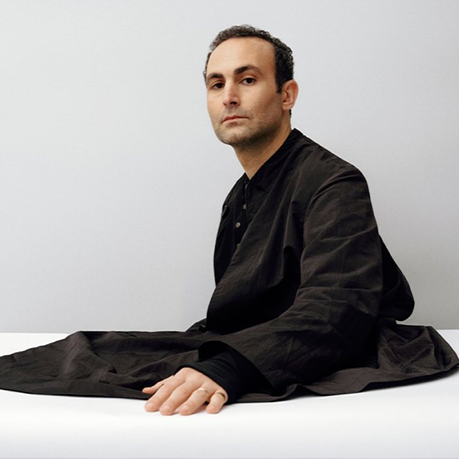
VERDICT: “I feel deeply optimistic about the cultural potential in the [Middle East] region,” the British-Egyptian actor and creator of the play ‘Nowhere’ told The Film Verdict.
“I have a problem defining myself, but I accept the definitions thrown at me. I don’t trouble myself about labels.”
It has been well on ten years since Khalid Abdalla attended a film festival and yet there he was in Amman, a member of the festival’s main Arab Feature Narrative Competition jury.
Born in Glasgow to Egyptian parents and growing up amid Palestinian families, he traces his leaning toward political activism back to riding on his father’s shoulders when he was three years old, at a protest in Scotland. His political commitment has blossomed into outspoken advocacy for Palestine and on the red carpets of films and TV series like The Crown where he played Dodi El Fayed, The Kite Runner, United 93, Green Zone, The Square and many others. He became one of the first actors to stand up for Palestine at the Emmys and other awards ceremonies.
“Every time I made a gesture on the red carpet, I didn’t know how it would be received, but then I felt the public’s solidarity.”
“If you believe you’re a citizen of the world, you’re a citizen of nowhere.” Theresa May
Abdalla’s debut play, Nowhere, is a one-man show that he began performing in October 2024 as the Gaza war began in earnest. Explorng his reaction to the events in Gaza and his experience of revolution in Egypt, it reflects “the lack of space I carry from my childhood to the present day.” He has already toured nine countries with it.
Would he like to perform it in the Middle East? “It has been largely not possible until now to perform in, because of the aligned identity I have,” he says. More than autobiography, he sees Nowhere as anti-biography: “more how the world shapes us than how we shape the world.”
The play “is always what happens in the world, with an evolving text and an evolving audience. I change the text when we’re in a new stage.” So there is room for the Iran war in the play?
“Iran is a continuation of what we had,” believes Abdulla. He recently flew to New Zealand to perform the play and the fact that he took the last plane out of Dubai to get there was much on the audience’s mind.
What does he think of the Amman film festival taking place while Iran is bombings its border? Any safety concerns when he travels these days?
“In general I’m not too worried, but it depends where and when. I prefer to insist on my freedom. I try to operate in that mode in everything I do, but I don’t claim it’s easy.”
“… I’ve been very moved by the festival. I am in awe of what they’ve managed to do, their seriousness and long-term vision.”
Abdalla sounds enthusiastic about the potential he sees in the region and “what the festival can do to ferment change and progress in the film industry.” While we have seen the opening and closing of other mighty regional festivals like Dubai and Abu Dhabi, the organizers and patrons of Amman Intl. Film Festival seem determined to dig in for the long haul. It’s a festival that supports the region and Jordan’s role within a long-term vision to defend local film culture.
“I felt that and I loved to be here, to see the selection of films, the celebration of regional figures like Tunisian producer Dora Bouchoucha… I’ve been very moved by the festival. I feel deeply optimistic about the cultural potential in the region and what that means during the cultural and political struggle they are going through. Even though many of the films had a dark subject matter and reflect individual struggle, it is still a victory to make a film at all.”