
Knock
Nokeu
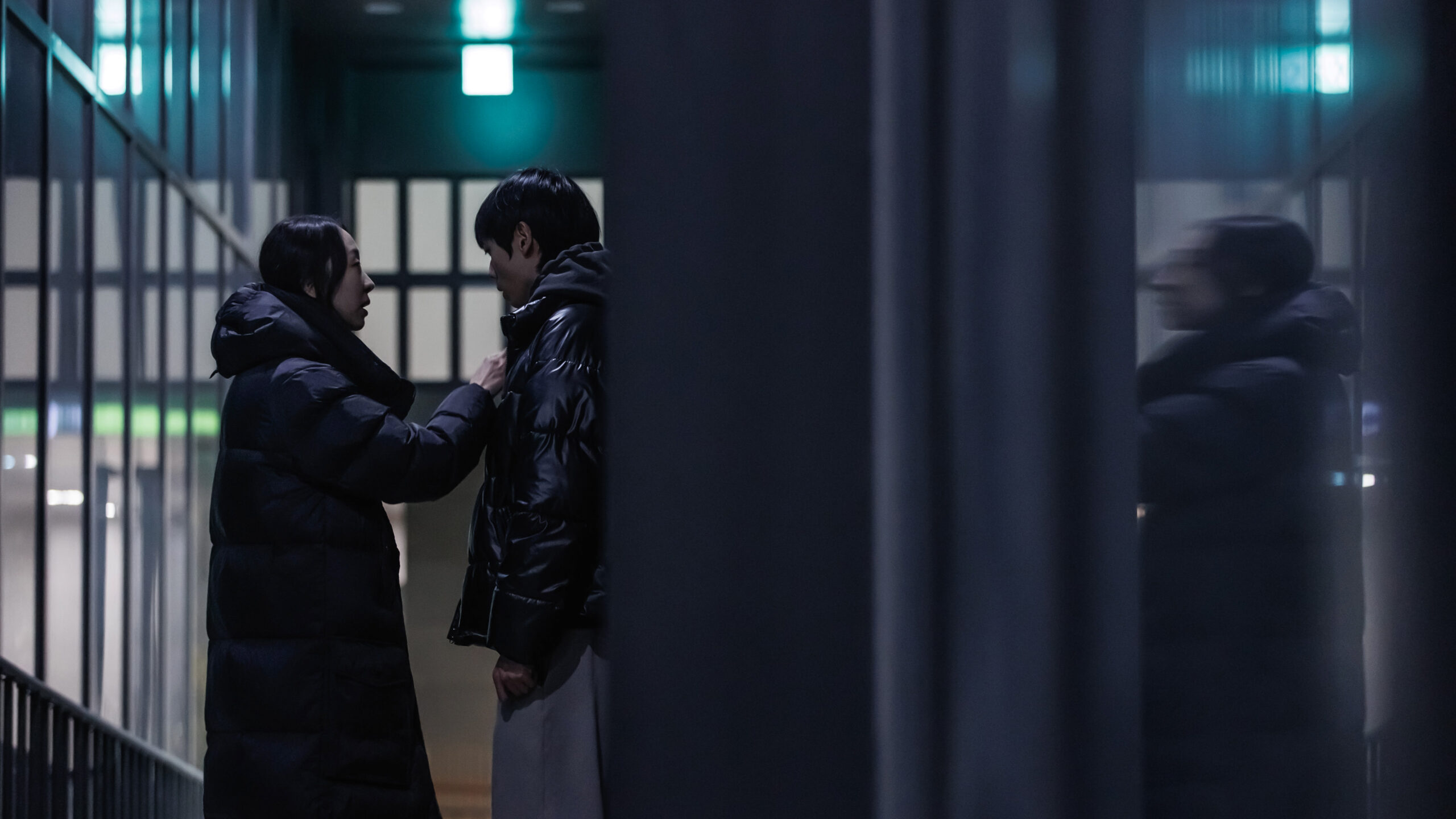
VERDICT: Winning four prizes at BIFAN, Jeong Beom’s ‘Knock’ thrives on a powerful premise and thumping performances, but spirals towards stylistic incoherence at the end.
A documentary crew discovers a gang grooming young girls in a rural rehabilitation centre in Knock, a rare film able to enthrall both professional juries and general festival audiences. Scooping the top prize in the Korean genre film fest BIFAN’s domestic competition, as well as the NETPAC award, Jeong Beom’s first solo feature impresses with its audaciously understated approach – no-frills production design, direct cuts, no music – in tackling an issue that has yielded many a melodrama down the years.
Beyond its stylistic innovations, Knock puts the masses on its side with a story that is at once about justice being done, and the complex and self-contradicting ways in which journalists try their best (and sometimes plunge to their ethical worst) in chronicling sordid reality. By winning BIFAN’s Audience award, Jeong has all but guaranteed a bright future for this low-budget feature and his burgeoning career as an indie filmmaker. The new film builds on the success of The Berefts, the 2023 film Jeong co-directed with Hur Jang about a couple going through a sham marriage to receive a state-sponsored apartment for newly-weds.
Knock begins in a “youth center” located deep in the Korean countryside, and all seems well. When the girls appear on screen for the first time, they laugh and make faces at the camera as they rehearse a musical number about a girl awakening from her self-pitying past. Director Lee (Lee Sang-hoon), the shelter’s founder, is a man of few words, but his dedication to the well-being of his charges is palpable, as he does his best in addressing the teenagers’ needs and balks at people’s description of the girls as delinquents.
That’s actually the view as held by Do-jin (Lee Do-jin), a documentary director assigned to cover the shelter. The jaded journalist is peeved at being sent to the boondocks while his colleagues are covering political demonstrations in Seoul, and the rural reality is too saccharine for his liking. Then his cinematographer Ye-rin (Kim Tae-un) shows him some footage of a scuffle between two girls in the shelter’s cafeteria. Having overheard Director Lee’s off-mic conversation with his wife about their perilous financial situation, Do-jin demands a reluctant Ye-rin unearth more sleaze: “Shoot everything .”
He soon finds someone who really piques his interest. In-ah (Yoon In-a) is a former resident who returns regularly to the shelter laden with food and gifts. Supposedly this allows he to “return the love” shown her by Director Lee and his wife, she tells Do-jin. Intrigued by In-ah’s evasive answers to his questions and how she always seems to visit her mentors when a teenager is scheduled to leave the shelter, Do-jin does some digging and soon discovers the woman’s involvement in multiple misdemeanours, some of them deadly.
Up until this point, Knock intrigues because it restricts the viewer’s understanding of the story through Do-jin’s perspective of the case. He wades through recorded interviews, cellphone videos and surveillance footage in his attempt to tease out a sensational story from a mass of banality. Bolstered by D.P. Kim Jin-pyo’s eerily unfettered imagery, the film looks enigmatic enough – until Jeong shifts his focus and allows the viewer to know and witness things from an omniscient narrator.
While this change of tack lets Yoon showcase her acting ability in channelling In-a’s amoral personality – a powerful performance which earned her the Best Actor prize at BIFAN – the film becomes more of a conventional crime thriller, with the culprit and the crime revealed too soon. Another perspective on Knock, however, is as a bifurcated narrative, with Do-jin’s lack of empathy for his subjects (“shoot first, think in post-production” is his journalistic creed) mirroring In-ah’s scant regard for others. Knock might contain more punch if seen in this light.
Director, screenwriter, production design: Jeong Beom
Producer: Kim Hyo-jun
Cast: Lee Do-jin, Yoon In-a, Lee Sang-hoon, Kim Tae-eun
Cinematography: Kim Jin-pyo
Editing: Jeong Beom, Lee Sang-hoon
Music: Go Young-il, Lee Sang-hoon
Sound: Go Young-il
Production companies: Casual Films
Venue: Bucheon International Fantastic Film Festival (Bucheon Choice Korean competition)
In Korean
103 minutes