
Magma
Le Magma
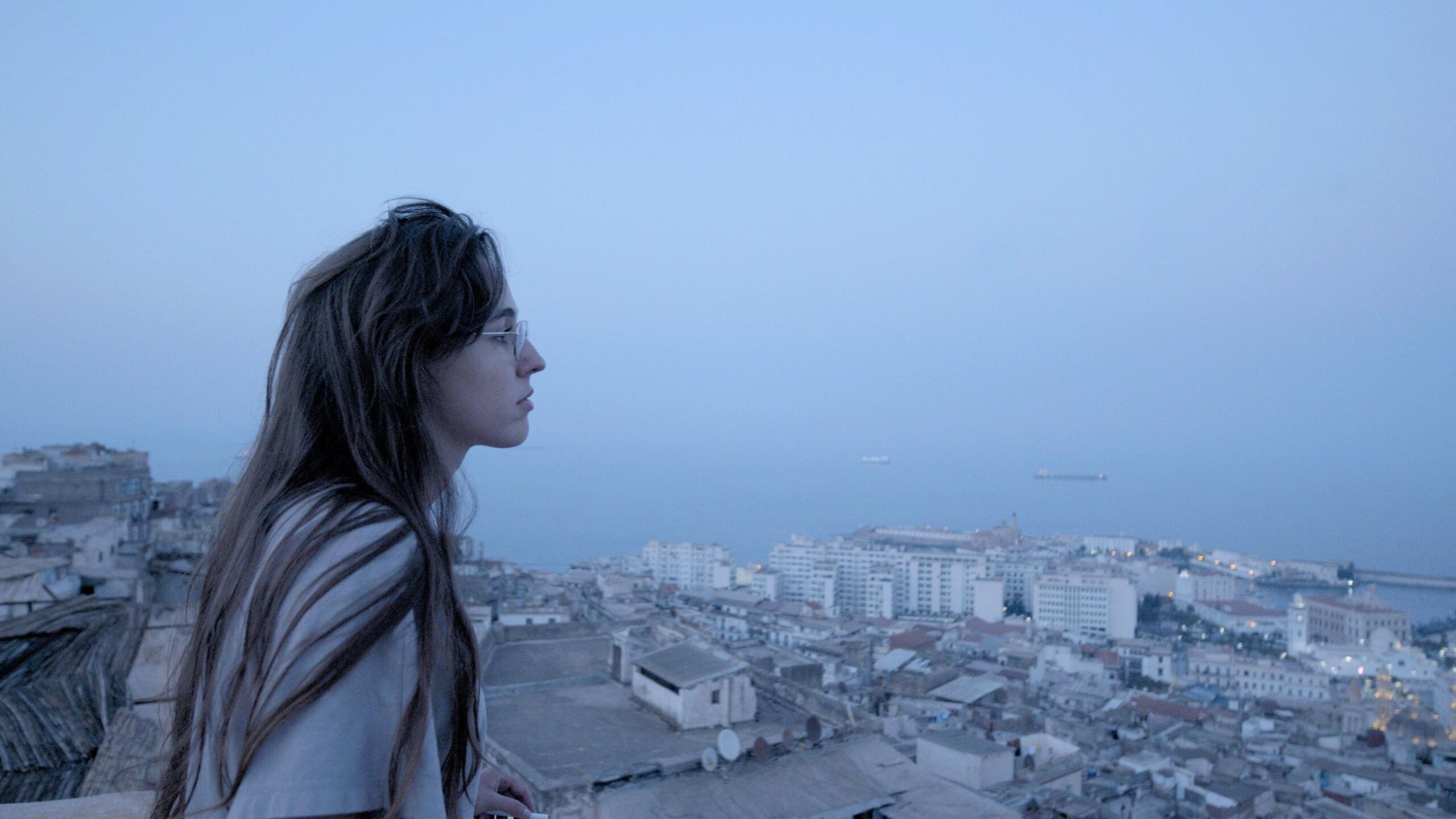
VERDICT: French-born Mia Bendrimia presents her research into her Algerian roots in ‘Magma’, an engagingly fresh exploration of intergenerational trauma left by war that tends to be diluted by too many ideas.
There is a moment in Mia Bendrimia’s autobiographical documentary Magma when the director/narrator describes the life-changing effect of watching Gillo Pontecorvo’s revered classic The Battle of Algiers: suddenly the war for Algerian independence against the French colonizers became clear to her. Would that her feature debut Magma spread more illumination on the conflict that tore her Franco-Algerian family apart. Or perhaps that is the point: the past is mined with taboos, which never offer the observer complete resolution even when broken.
Bendrimia stubbornly breaks her family taboos by seeking the truth about the death of her great-grandfather, who was supposedly executed as a traitor to Algeria. But instead of answers, the questions only proliferate as Nantes-born Mia (who is emphatically 26) embarks on a carefully planned reunion-with-camera with her Algerian extended family, the beating heart of the film. Though the get-together seems more emotional for the older members of the family, it also serves a healing purpose for the philosophically curious Gen Z-ers like Mia and her brother Tim.
Magma is currently screening in Cairo’s Horizons of Arab Cinema Competition.
Narrated as a personal journey, the story twists and turns with artless abandon, racing along almost too fast for the viewer to keep up. Narrator Mia bravely opens up (though not too much) about her family’s foibles and touches on a very private incident that changed the whole course of the film. Despite the drama, the mood tends to be humorous and light-hearted, rarely somber, reinforced by the serene, wide-open North African landscapes captured by cinematographers Amandine Klee and Mestich and the curiously delicate soundtrack by Zeid Hamden.
Part of a close-knit French family with an Arab last name, Mia rather remarkably decides to move to Cairo with a view to learning Arabic and making a film. These early scenes are sketchy pictures narrated from memory. She finds a domineering film producer to finance the film, but soon quarrels with him on artistic choices and he confiscates the material she shot; they also fall out personally and – we learn in what amounts to an offhand aside – he rapes her and threatens to kill her. Mia leaves Cairo. This is a dangling narrative thread that never gets fully addressed, although it floats back toward the end of the film.
The question at the bottom of Mia’s search is how her branch of the family ended up in France, cut off from the rest of the tribe. There is a mystery surrounding her great-grandfather who was killed during the war. Originally she believes the family legend that he was executed as a “Harki”, an indigenous fighter allied with the French military against Algeria’s National Liberation Front. But when Mia reaches back into the past, she is told numerous versions of the “truth”, including that he served as a non-combatant “Moghaznis” working in local schools and healthcare. Creatively listing other possibilities in crayon over the images, Bendrimia seems to revel in how complicated things are getting, with eye-witnesses balking at anything too political and contradicting each other.
Adding to her discoveries is another pro-independence ancestor nicknamed the Algerian Rambo, a hero said to have killed over 600 French soldiers and Harkis during the 1954-62 war, who has streets and schools named after him. And then there is the unfairness of how the Harkis were treated after the war. Viewed as traitors in their homeland, thousands were killed in reprisals and others fled the country – but Pres. Charles de Gaulle refused them sanctuary and many ended up in detention camps.
Magma does not try to grapple with the injustices of history. There is always a definite distance that separates Mia and her brother from the war their parents experienced close-up. And while Tim eventually joins her on a visit to Algeria, her father just can’t bring himself to go. His unarticulated psychological refusal makes him one of the most interesting characters, a boundary line that remains not fully conscious but can never be crossed.
Director: Mia Bendrimia
Producer: Kira Simon-Kennedy
Co-producer: Yanis Koussim
Cinematography: Amandine Klee, Mestich
Editing: Nassim Ouadi, Nina Khada
Music: Zeid Hamdan
Sound design: Saoussen Tatah
Sound mix: Anna Devillaire
Production company, world sales: Nazar Films (Paris)
Venue: Cairo Intl. Film Festival (Horizons of Arab Cinema Competition)
In French, Arabic
88 minutes