
Milo
7H40 ce matin-là
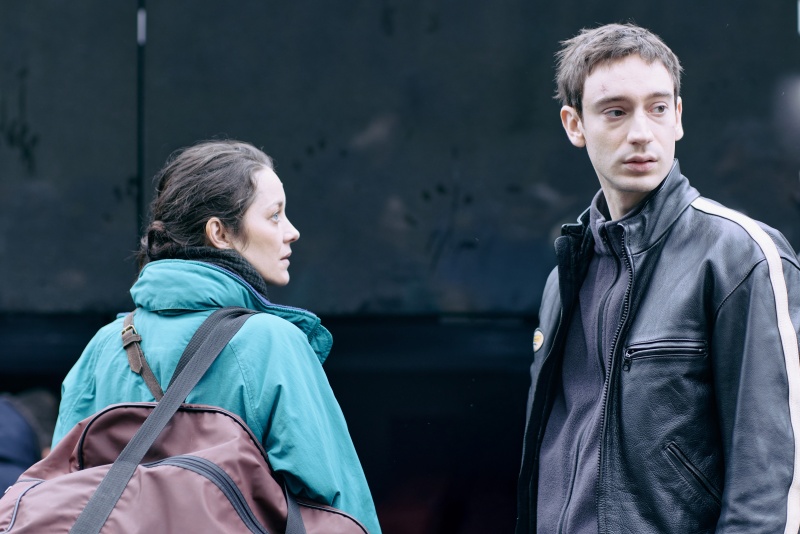
VERDICT: Stars Marion Cotillard and Théodore Pellerin turn director Nicole Garcia’s well-crafted French drama ‘Milo’ (‘7H40 ce matin-là’) into an absorbing and ultimately moving story set in post-revolutionary times.
The ideology of armed struggle against the state that swept through Europe in the 1970s has had its day, but in its wake there have appeared numerous films examining the psychological price paid by the victims and perpetrators of domestic terrorism. Milo (7H40 ce matin-là) belongs tangentially to that genre, in the story of a woman recently released from prison who goes searching for the son she gave up for adoption when she began to serve a 20-year sentence.
In Spain, most recent films set in the aftermath of political violence have centered around the Basque independence struggle, and works like Maixabel (2021) and Near Winter (2023) have made waves at San Sebastian when they came out. Milo, making its premiere in the festival competition, instead largely relegates politics to the past, with only a mild ripple effect visible in its distaste for today’s loutish and dishonest bourgeoisie. But it is still enough for Marion Cotillard to create a poignantly convincing back story in the lead role of Alice.
When Alice steps off a bus in a desolate provincial town, her mysterious past proves no obstacle to getting a job as a waitress in a roadside café. But her claim to come from Quebec is a convenient lie. The café owner (Artus) tries to get close to her, but she only has eyes for a dashing young garage mechanic, Milo (Théodore Pellerin). Though their age difference is not disturbingly apparent, the viewer will soon catch on that her interest is maternal: it’s her grown son she’s staring at so intently.
Pellerin, the Canadian actor who has won multiple awards for his performances in Nino and Genesis, is a luminous presence in the film and able to gracefully make his way through some very dicey scenes. But the four screenwriters did not devote a lot of creativity into inventing an obstacle in his life, in the form of his naïve attempt at drug smuggling for unsavory gun-waving gangs. He has fallen into this trap thanks to his friend Joseph, a poor cousin living with his rich relatives in their chateau, which is itself an overly obvious symbol of the money and status that Milo’s mother rejected.
Cotillard is thrillingly in control of every scene, watching and waiting for her chance to reveal herself, holding her responses carefully in check till the right moment. While her dialogue is judiciously limited, it increases the aura of mystery and coolness about her. When she makes a trip to Paris to visit “a sick friend”, it turns out to be a dying fellow revolutionary, Juliette (Anne Brochet). She is living out her last days in a luxurious apartment, and her funeral takes place oddly enough in a church, where someone sings the partisan song “Bella Ciao”, underlining the ideological breakdown that has taken place in the intervening years since her militant days.
This theme is starker still in the reappearance of a “bad professor” who taught Alice and other students to consider political violence normal and desirable. It led them to rob banks and kill policemen, and ultimately to prison. Unlike Juliette, who remembers “we wanted to change the world”, he reneges his past, and his hypocritical hand-washing puts all the blame on the students he influenced so disastrously (“The violence was inside you.”) But in the final scene, between ALice and Milo, a triumph of unspoken emotion, politics is nowhere to be found.
The technical work is pleasant and unobtrusive French arthouse. D.P. Yves Cape’s relaxed lighting lends atmosphere to the dingiest sets, which are most often ordinary cafes, cheap hotel rooms and dark garages, while Amina Bouhafa’s score creates real tension when it’s needed.
Director: Nicole Garcia
Screenplay: Nicole Garcia, Jacques Fieschi, Olivier Demangel, Laurette Polmanss
Cast: Marion Cotillard, Théodore Pellerin, Artus, Laure Calamy, Alexis Manenti, Anne Brochet, Eric Elmosnino, Charles Berling
Producer: Alain Attal
Cinematography: Yves Cape
Editing: Francois Gédigier
Production design:
Costume design: Caroline Spieth
Music: Amine Bouhafa
Sound: Jean-Pierre Duret, Nicolas Moreau, Jean-Pierre Laforce, Roman Dymny
Production companies: Trésor Film (France) in coproduction with Studiocanal, France 3 Cinéma, Artemis Productions (Belgium)
World Sales: Studiocanal
Venue: San Sebastian Film Festival (Competition)
In French
114 minutes