
Mohamed Sayed Abdel Rahim Wants Cairo to Become the Region’s Leading Film Market
.
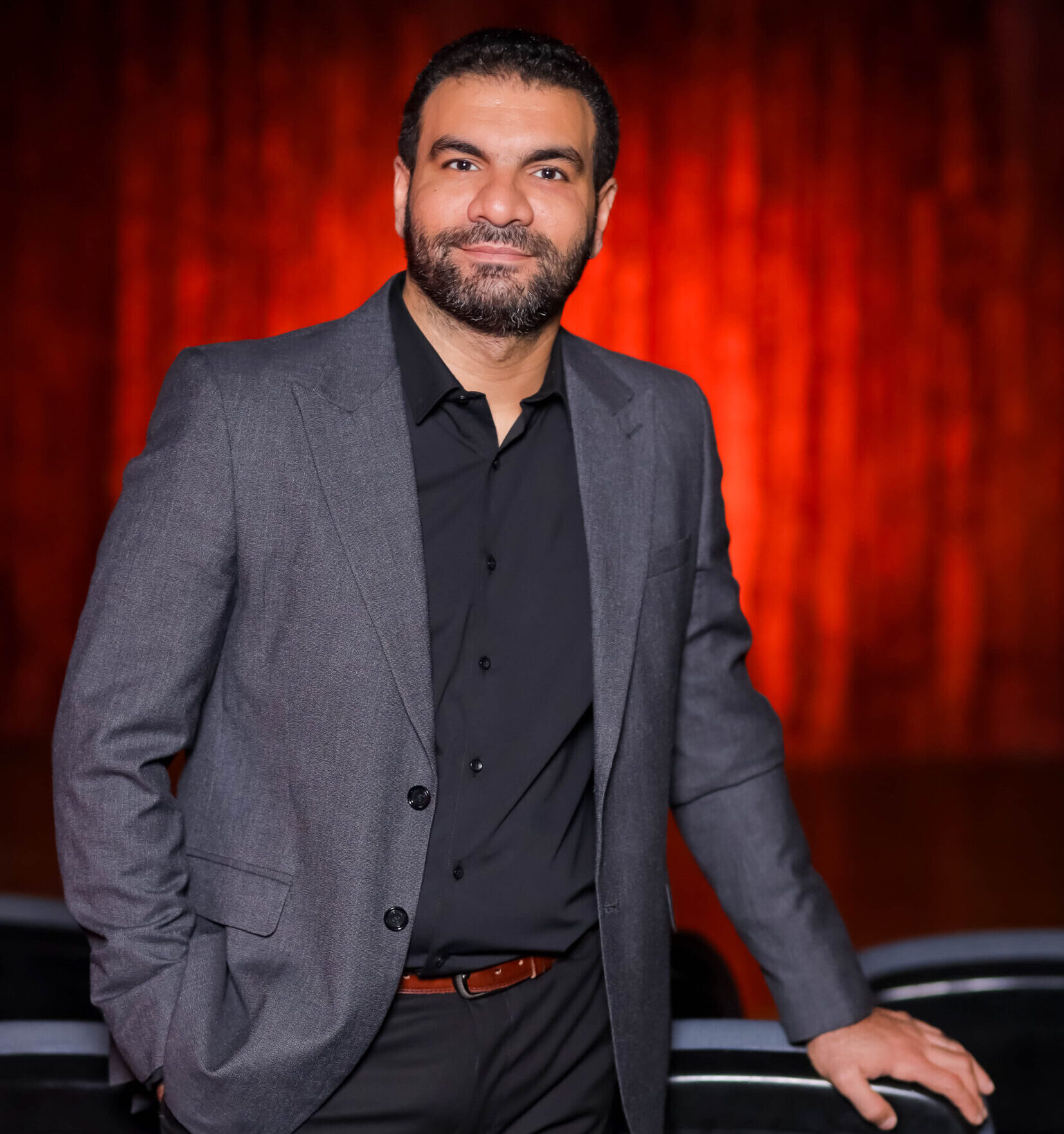
VERDICT: The head of Cairo Industry Days discusses a new forum for adaptation rights, the move to one-on-one meetings and what it takes to get films made after they win funding.
Picture this: a producer is murdered at the El Gouna Film Festival, and a young investigator has a guest list full of suspects.
That’s the mysterious premise of Blood on the Red Carpet, one of the books being pitched for screen adaptation at Cairo Industry Day’s inaugural “From Book to Screen” intiative. It will bring ten Egyptian publishers together to mingle with producers, distributors and streaming platforms during the Cairo Film Festival.
But the forum is part of a wider effort to turn Cairo Industry Days into a year-round platform. For the first time in its 12 editions, Cairo Film Connection will offer mentorship to every selected project, a step toward supporting filmmakers beyond the festival. In an interview with The Film Verdict, Cairo Industry Days head Mohamed Sayed Abdel Rahim discusses the obstacles that keep promising projects from getting made and his ambition to build a market where Egyptian and Arab filmmakers can find partners and buyers.
THE FILM VERDICT: Let’s start with the new edition of Cairo Industry Days. What are the highlights of this year’s program? What can audiences and filmmakers expect to see that’s new compared with previous editions?
Mohamed Sayed Abdel Rahim: This is our biggest edition yet in terms of the range of the program. We have three venues running in parallel. The Open Air Theatre at the Cairo Opera House hosts masterclasses and conversations open to the public. The Sofitel hosts industry panels, the market and pitching sessions. The American University in Cairo’s Tahrir campus hosts our longer workshops.
We’re now working across the whole process, from the idea to reaching an audience. We have workshops on writing, acting, cinematography, production design and casting, and we’re also covering financing, pitching, distribution and exhibition. We’re launching “From Book to Screen” and taking up subjects that are new to us, including microdrama, artificial intelligence and extended reality. We’re also marking the festival’s 50th anniversary with a “Fifty Years on the Red Carpet” panel.
TFV: This year’s program includes a wide range of masterclasses, panels and workshops, with guests from across the film industry. Could you talk us through some of the highlights and the people taking part?
The masterclasses include Matteo Garrone, Asif Kapadia, Abderrahmane Sissako, Nabil Ayouch, Óliver Laxe, Laura Wandel, Tudor Vladimir Panduru and Ahmed Rachedi. From Egypt, we have Medhat El-Adl, Ramy Emam, Antoine Zeind and Said Shimi, as well as a conversation with Asser Yassin.
TFV: After several years at the helm of Cairo Industry Days, how do you think the platform has evolved? What have been its biggest achievements and challenges? Has the experience changed your view of the role festivals can play in supporting the industry?
We’ve gone from a series of separate events to a platform with a clear identity, with a market, training, projects and awards. Cairo Film Connection has built a reputation, and many of the projects it supported have gone on to become films at major festivals. This year alone, seven films it supported as projects have screened or are scheduled to screen at festivals in Berlin, Locarno, El Gouna, Cairo and Marrakech. Our longer workshops are also drawing experienced trainers from Egypt and abroad.
The main challenges were securing funding and convincing the industry that the festival could play a role beyond that one week. The experience changed how I see festivals. A festival can connect the filmmaker with the financier, the distributor and the audience. If we do that well, we can influence how the industry itself works.
TFV: You often talk about Cairo as a meeting point between Europe, Africa and Asia. How does that vision shape this year’s program? Which relationships or markets do you think offer the greatest opportunities for collaboration?
You can see it in the lineup. We have Sissako, alongside Ayouch and Rachedi from the Maghreb. From Europe we have Garrone, Laxe, Wandel and Panduru. Kapadia represents a bridge between Asia and Britain, and there’s also an important Indian director we’re planning to announce. We have a panel, “Across Borders: Film Commissions in Collaboration,” on how film commissions can work together. That matters if we want to attract foreign productions to Egypt and make it easier for Egyptian filmmakers to shoot abroad.
Europe offers strong opportunities for co-production because it has established film funds. Across Africa, there’s a large market whose potential we’ve barely tapped. In the Gulf, I see opportunities for financing and distribution. I’m always trying to connect Egyptian producers with East Asian distributors. Given the size of China’s audiences and the number of cinemas there, I see real potential for a film that secures a theatrical release to make substantial returns.
TFV: This year you’re welcoming delegations and participants from China, India, Iraq and Russia. What form will their participation take? What opportunities could it open up for Egyptian and Arab filmmakers in co-production, distribution or other forms of professional collaboration?
Egyptian and Arab filmmakers get to sit down face to face with people from major markets. China and India are among the world’s biggest cinema markets by admissions, and working with them could open doors for distribution, co-production and location shooting. Russia and Iraq are interested in working with Egypt, and that comes through in the discussion about film commissions. I want those meetings to lead to agreements and projects.
TFV: One of this year’s new initiatives is “From Book to Screen”. How did the idea come about, how will the program work, and what do you hope to achieve by bringing publishers together with producers and filmmakers? Could the initiative expand across the Arab world in the future?
It began with a simple observation. We have a rich body of Egyptian and Arab literature, and Egyptian cinema drew heavily on literature in some of its best periods. Today, there’s a gap between publishers and producers. We wanted to give them a place to meet.
I started thinking about it in my first year as head of Cairo Industry Days. I met people who ran similar programs at European festivals and at the Frankfurt Book Fair, whose program I consider one of the most important in the world. Those conversations showed me how differently the business works here. In Egypt, stars such as Amr Saad and Nabila Ebeid buy the rights to novels themselves. That’s one reason I took my time developing a program that fits the Egyptian and Arab film industries.
I hope at least a few books become film projects. Eventually, I’d like to bring in publishers from across the Arab world. There are so many Arab stories that deserve to reach the screen.
TFV: Cairo Pro-Meet is back for a second year. What did you learn from the first edition? What’s new this year in terms of the experts taking part and the opportunities available? Did any concrete results or collaborations come out of last year’s meetings?
We listened to participants’ feedback. Last year, four filmmakers met with one expert. This year, one filmmaker will sit down with one expert. That means we’ll reach a quarter as many people as last year. We’re betting that each person will get more out of the meeting.
TFV: In our interview last year, we discussed how Cairo Film Connection had supported more than 150 projects, around 60 of which had become completed films. Looking at the projects that stalled, what are the biggest obstacles filmmakers face? How could the new mentorship and follow-up program help them overcome those obstacles?
Financing is the biggest obstacle, especially when you’ve secured some support and still have to close the budget. Development can take a long time, and people lose momentum along the way. Some filmmakers also have limited experience with co-production and international funds.
That’s why we’re holding “The Art of Getting Funded: Navigating Arab Film Financing” and a workshop, “Financing an Independent Feature: Resources and Strategies,” with Jad Abi Khalil and Mark Lotfy. We’re also launching a mentorship and follow-up program. We want to keep working with filmmakers after they receive an award and stay with them until they get the film made.
TFV: Finally, looking five years ahead, what would you like Cairo Industry Days to look like? If you had more funding and resources, what would you invest in first to make that vision a reality?
I want Cairo to become the region’s leading film market. If you want to make a film in the Middle East or Africa, Cairo should be a stop you have to make. That means a market where people actually buy and sell, a fund that operates on an ongoing basis and a training program that runs throughout the year. I think we’re getting closer every year. I hope we can get there by the festival’s 50th edition in 2029.