
Outliving Shakespeare
Outliving Shakespeare
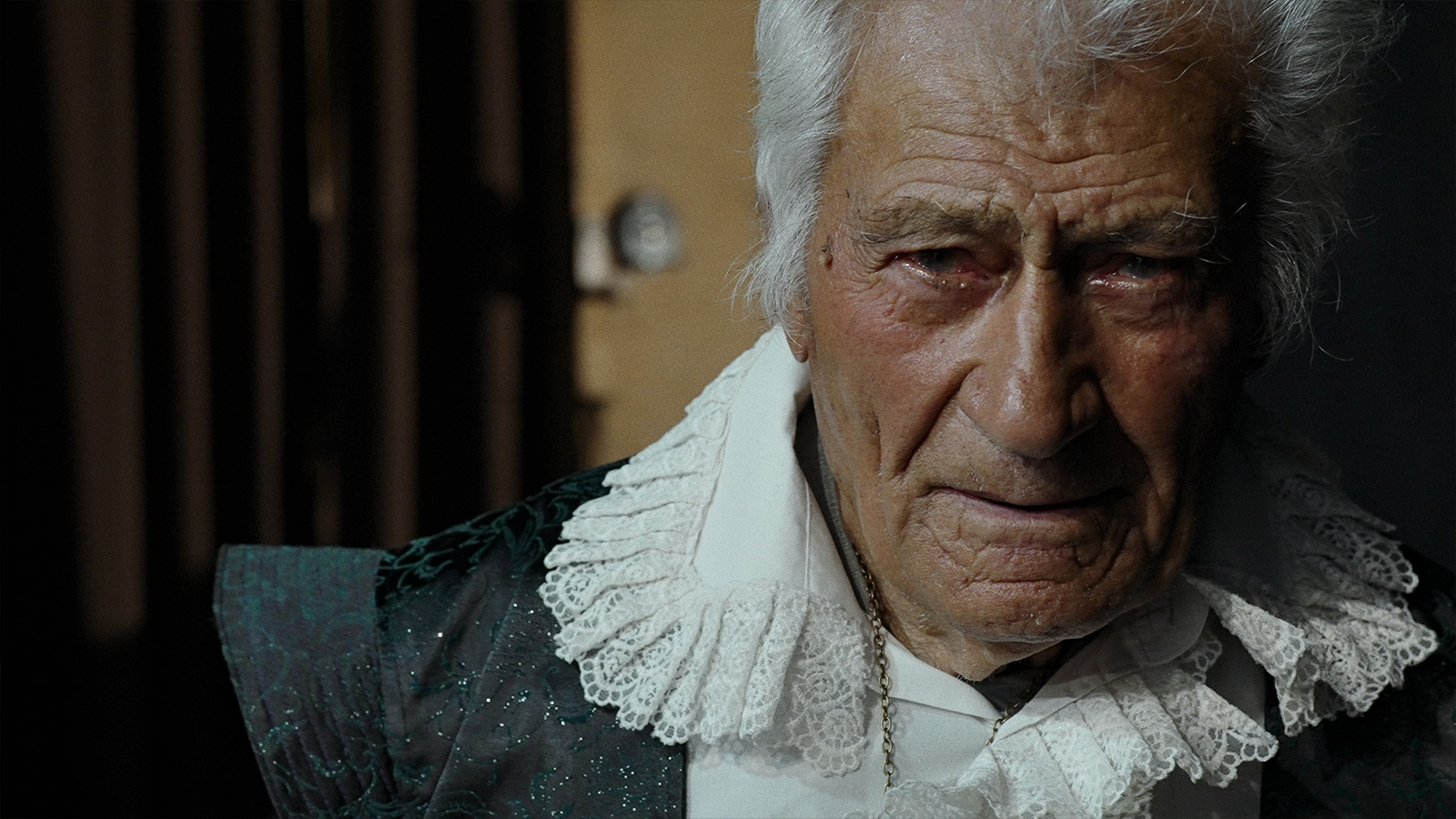
VERDICT: An Armenian retirement home theatre troupe tackles Shakespearean tragedy in a warm, deeply human doc by Inna Sahakyan and Ruben Ghazaryan.
In a sprawling retirement home in Armenia, residents gather together for play rehearsals in Outliving Shakespeare, a loose and unhurried, quietly profound meditation on living through and beyond tragedy. Co-directed by Inna Sahakyan and Ruben Ghazaryan, it had its world premiere at the International Documentary Film Festival Amsterdam, was awarded Best Documentary as goEast Festival of Central and Eastern European Film in Wiesbaden, and now screens in the International Competition of the Golden Apricot Yerevan International Film Festival.
Sahakyan’s high-profile, well-received 2022 animated documentary Aurora’s Sunrise recounted the life of Aurora Mardiganian, a survivor of the Armenian Genocide who became a writer and Hollywood actress. Her latest doc is on the surface a more low-key, observational film, but it gradually becomes clear that it has sprung from a similar, heartfelt impulse of bringing visibility and dignity to survivors and exiles of an Armenian history cyclically beset by wars and crises; and this it achieves admirably.
Garnik Seyranyan, the 66-year-old theatre director and playwright who helms this art therapy project, has written a play, Shakespeare’s Sins, in which the English bard’s characters — from Romeo and Juliet, to Hamlet, King Lear and Richard the Third — call him to account for their tragic fates. The director casts the play in the lunchroom and other communal spaces, and holds regular rehearsals of his troupe in the home’s red-coloured theatre. The colourful residents dive into candid conversations about love, loss and exile; the resonant, existential themes that have shaped their own lives and left impressions undimmed by time. As the title hints at, reaching old age in a tragedy-strewn life can bring its own kind of loneliness and melancholy. But even those over eighty are far from done with the drama of living: romances bloom and heartbreaks come, as some cast and crew get together, and others separate.
The cavernous, Soviet-era structure, with its rickety elevator, faded murals, and roaming cats, has seen better days but is full of character. As its residents gather to smoke and tease each other in its herringbone-floored hallways, we get a sense of the remnants of a Soviet idea of collective care that never quite came to pass, in a building now underfunded and understaffed. Even the jerky care robot seems less a high-tech innovation than a dated idea out of the past of what the future might be like.
There is not much to do to pass the time here, beyond watching old cartoons, peaches to shake from the trees outside, snooker or the occasional drinking session to reminisce about livelier days. Often shot through windows or from behind doorframes, with a loose and unhurried pace that suits the rather unstructured days, the doc captures many quieter moments of reverie and contemplation. Evocative, old photographs of the residents are shared, but no deep backstory.
Time drifts on like an eternal present, but mortality hangs over health troubles. And this is not a home cut off from the world. Television brings regular news bulletins on the war in Artsakh, the hardships and shortages of the blockade, and the displacement of Armenian families from settlements occupied by Azerbaijan. Gayane, who at 50 is younger than many of the other residents, has been evacuated to Armenia. She returns to Artsakh, but must flee again, and comes back to this stopgap shelter, in a society ill-equipped to tailor support to the displaced.
We share rehearsals with the cast in the lead-up to the performance, but after they are made-up and costumed, the film cuts at the stage cry of “Lights.” The process of creatively engaging and working through life that the project enables matters more than the result, after all. The ability of creative work done in community to affirm dignity and humanity has a moving, accumulative power here, even as the film admirably avoids sentimentality. There is no huge magic of transformation in evidence, nor does there have to be, as the theatre simply allows its sometimes stubborn, intractable cast a place to be visible, to be together, and to feel alive.
Directors: Inna Sahakyan, Ruben Ghazaryan
Screenwriters: Inna Sahakyan, Lilit Movsisyan
Producer: Vardan Hovhannisyan
Cinematographer: Bagrat Saroyan
Editor: Artur Sahakyan
Sound design: Lennert Hunfeld
Production companies: Bars Media (Armenia), BIND (Netherlands)
Sales: Bars Media
Venue: Yerevan (International Competition)
In Armenian, Russian
94 minutes