
Rotterdam 2026: An Interview with Vanja Kaludjercic and Clare Stewart
.
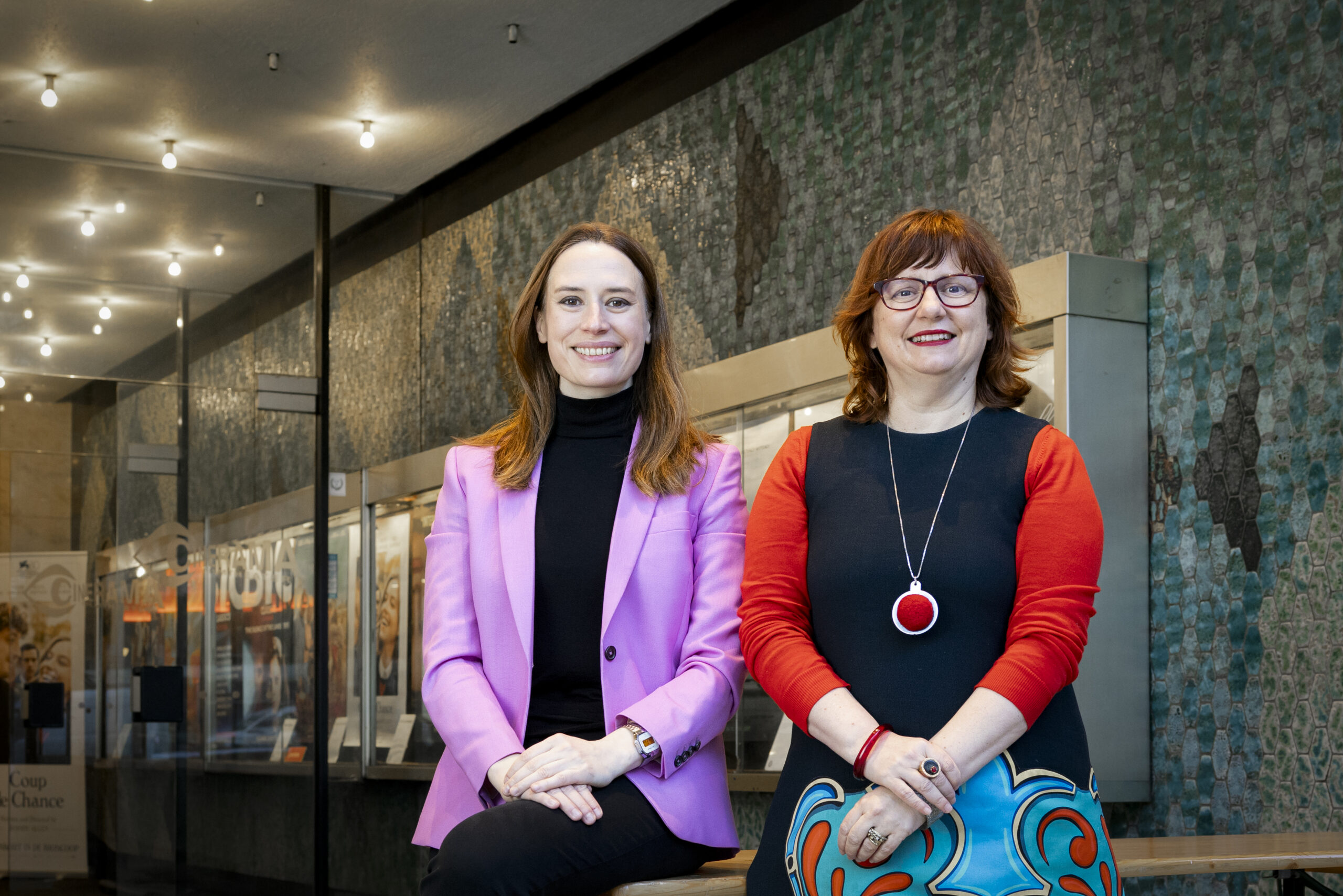
VERDICT: TFV inaugurates its Rotterdam 2026 coverage with our customary chat with the festival directors, Vanja Kaludjercic and Clare Stewart.
If there’s any stress as the finishing touches for Rotterdam 2026 come together, it doesn’t show on the faces of the festival’s two directors, Vanja Kaludjercic and Clare Stewart, as we talk over Zoom a couple of weeks before the beginning of the 55th IFFR. By now, the Dutch event is a well-oiled machine for both of them: Kaludjercic has served as Artistic Director since the 50th edition, while Stewart became Managing Director ahead of the 53rd.
Of course, that doesn’t mean there can’t be room for improvement, even just to a small degree. In fact, my opening question concerns the last time I saw the two directors, at the Cannes Film Festival. On that occasion, Kaludjercic was a member of the Un Certain Regard jury. Do these experiences (she was also on the VR jury at Annecy in 2024), with glimpses at how other events work behind the scenes, provide insights she can borrow for Rotterdam? “Absolutely, that’s a big part of it. What you don’t see as much when you’re on the Industry side is the protocol and handling, and there’s a lot to learn from that.”
Moving to IFFR proper, we have previously discussed the five-year plan the duo has for the festival. What’s the current status? “It’s all-encompassing, of course,” says Stewart, “but what we’re really excited about this year, in terms of expanding our reach in the city, is our new partnership with Phoenix, Rotterdam’s new museum about migration. We’re doing the press launch for the Displacement Film Fund there, as there’s obviously a strong thematic connection. We’re also doing a more community-based event there near the end of the festival.”
This also adds to the strategy of connecting with audiences throughout Rotterdam. “We’ve already established a number of film clubs in the city,” Kaludjercic explains, “and this created a communal space where audiences took part in the programming. We’ve also made Katoenhuis, this old warehouse, the new space for the Art Directions program, and that’s interesting to see because international attendees especially are used to this ‘perimeter’ where they walk for only about 500 meters. This has created a new energy, bringing that program to a hub that is already quite central to creativity in the Netherlands.”
Stewart adds: “Another focus of the plan is to do with our international-facing activity, working with alumni of the Hubert Bals Fund and the Cinemart. And we’re consolidating our human rights angle: we are premiering the Displacement Film Fund films this year, and introducing a new initiative called Safe Harbor. This connects to what we do with ICFR, the International Coalition for Filmmakers at Risk, of which IFFR is one of the founding members.”
On the subject of expanding the festival’s presence in the city, a huge part of the event’s appeal lies in how it connects with a local/national audience, much like the Berlinale in Germany or Locarno in Switzerland. On the artistic side, is there a film for which the team is particularly curious to learn the Dutch reaction? “So many, it’s a wide range and it would take more time than we have for this interview,” Kaludjercic says with a smile. “It’s always interesting with the special programs, when we’re introducing a filmmaker who is already established in their own country but not as well known internationally as we’d like them to be. It’s an IFFR specialty, and this year we have a range or Arab films, and I’m curious to see how that dovetails into the Focus on Marwan Hamed, a director who works on a grand scale and uses popular genres, yet still delivers films with the nuance of arthouse cinema.”
Speaking of the Focus programs, which are always a festival highlight, one of last year’s strands was devoted to the VHS culture. Was that setting the tone for this edition’s highly enticing retrospective about V-Cinema, i.e. Japanese genre films that were made directly for the home video market in the 1980s and ‘90s? “Well spotted. That was a general introduction, because we already knew we were going to venture into the world of V-Cinema, which was the idea that came first. Tom Mes, who curated the program, wrote his PhD on that type of cinema.”
The strand combines early work by well-known names – Takashi Miike, Hideo Nakata, Kiyoshi Kurosawa – and more obscure titles that international audiences are likely to discover for the first time. It’s also, as Kaludjercic emphasizes, a fraction of that whole world. “It was a dilemma for a while,” she says, “what to include, because it’s a huge universe. We decided to exclude anime, because you can’t do it justice with just one or two films.”
On the Nordic front, which has an important place in IFFR’s programming, one entry from Finland has arguably the most inadvertently topical title of the entire festival, given the events of the last few weeks. It’s called The Kidnapping of a President. “I didn’t know that story until I watched the film,” Kaludjercic explains about this comedy rooted in real events, namely the attempt to abduct the country’s first president, Kaarlo Juho Ståhlberg, in the 1930s. Per the trailer, and as confirmed by the Artistic Director, it’s a caper driven by alcohol-fueled incompetence. “It has a comedic tone, but there are also cautionary elements I find very interesting.”
To conclude our chat about the program, I ask how the opening and closing film, the bookends, speak to the selection in general. “Bookending is a nice way to put it,” Kaludjercic answers. “They can offer an idea of the range of the selection, but not encapsulate it entirely. João Nicolau’s Providence and the Guitar is a Robert Louis Stevenson adaptation, and it deals with artistic perseverance and commitment. This was very important to us, to anchor things in how much art and artists mean. It’s in the IFFR DNA. When it comes to the closing, it’s always really great to have something on the more popular side, coming from France in this case. Rémi Bezançon’s Murder in the Building cleverly delivers on the ideas of cinema, especially Hitchcock. The way the three actors – Guillaume Gallienne, Gilles Lellouche and Laetitia Casta – come together in this interpretation of the Rear Window situation is very funny and clever, and I wanted to share that with the audience.”
One last question, for Stewart: what has been the biggest organizational setback, given the increasing difficulties for festivals on a global level? “The hardest thing is wanting to maintain a certain scale, a certain scope, to have an impact, while the cost of literally everything is going up. It’s still a challenge for us, but what’s very exciting this year is we have new partners coming in, and existing ones are expanding in interesting ways. Corporations with a strong commitment to social responsibility are looking at sponsorships in a new way, and that offers a bit of hope in what is otherwise a very challenging environment.”