
Social Landscapes
.
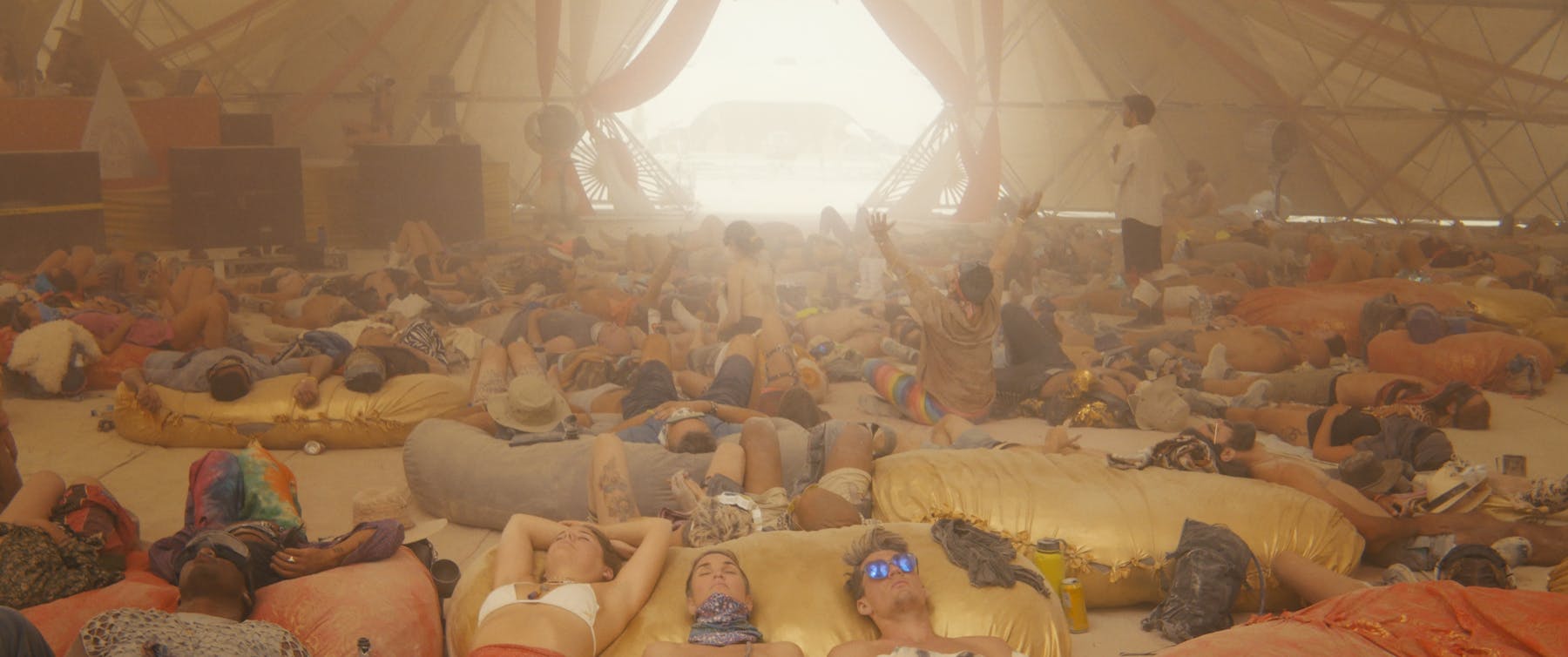
VERDICT: Jonas Meier explores the veil between perception and reality in the image-centric ‘Social Landscapes’, screened at CPH:DOX.
How do we connect to places in the world, especially ones we may not have visited ourselves and come to experience vicariously through other people’s impressions? That’s the impetus behind Social Landscapes, Jonas Meier’s documentary that is set to enjoy a long journey on the specialized festival circuit, owing not just to its premise but also to how it was made, with the potential for lengthy discussions about a new facet of artistic ethics in non-fiction filmmaking.
Drawing some apparent inspiration from the films of Godfrey Reggio (the score is perhaps inevitably reminiscent of Koyaanisqatsi, due to the similar instruments used), Meier stages the entire film as a travelogue around the world, with the visuals juxtaposed with voiceover that consists entirely of online comments and reviews. Some might feel the point could have been made just as efficiently with an even shorter running time than the finished product’s 78 minutes, but the grating nature of the remarks – often condescending in terms of how the reviewer’s preconceived notions colored their experience of the actual place – adds to the idea that, per the title, these landscapes are social not in the human sense, but as a digital commodity to be flaunted on websites and apps as a display of (ironically) well-traveled ignorance.
The thornier issue, for many and since the film’s world premiere at the Solothurn Film Festival, is Meier’s use of footage created via the use of artificial intelligence. The latter has, in fact, become an intriguing topic within the Swiss film industry in the last year or so. In the spring of 2025, the Generative Center – a collective based in Lugano – unveiled the first of several planned shorts based on Helvetic myth and folklore, The Wolf of Curio. Animated entirely with AI, it still had – per the credits – a human voice cast and a human crew, most notably people in charge of color grading and editing. It was therefore an attempt to use the technology purely as a tool and not a substitute for the people who make films, although the finished product still suffered from the uncanny valley effect that comes with the predominant generative AI aesthetic.
Damien Hauser started tinkering with artificial intelligence for the purpose of creating visual effects, before deciding to make it part of the story proper in his science fiction extravaganza Memory of Princess Mumbi, an exploration of what it means to create art and not lose sight of the human moments. Meier’s approach is not quite as overtly self-analytical, but the use of the artificially enhanced or generated footage is no creative shortcut: even when they’re not completely off-putting, AI visuals retain a disconcerting quality, leaving one even just slightly ill at ease, and that is precisely the effect Social Landscapes seeks to convey in its attempt to emphasize the layers of fakery that are at play in mankind’s performative approach to memories of trips to distant lands.
And while the images may be (deliberately) questionable at times, there’s no denying the human touch when it comes to the soundtrack, more specifically the score composed and performed by Stefan Rusconi (church organ) and Tobias Preisig (violin), a mixture of new work and tracks from their album Levitation. Already admirable on its own for its Philip Glass-like suggestions, the music acquires a deeper meaning when we get to the very end of the film and the end credits reveal how the new pieces were recorded: in various churches in Switzerland. Given how often the movie theater has been likened to a temple or a church, it is clear Meier believes in the integrity of the cinematic artform, using it here to lay bare the kind of artifice some might be tempted to misuse in the name of mass (and cheap) production.
Director, Screenwriter: Jonas Meier
Producer: Niels Vije
Cinematography: Jonas Meier
Music: Stefan Rusconi, Tobias Preisig
Sound: Christoph Benz
Production companies: zweihund GmbH
World sales: Visionär Films
Venue: CPH:DOX (Next: Wave Award)
In English
78 minutes