
Something Hard, Something Strange: BIFAN hits 30
.
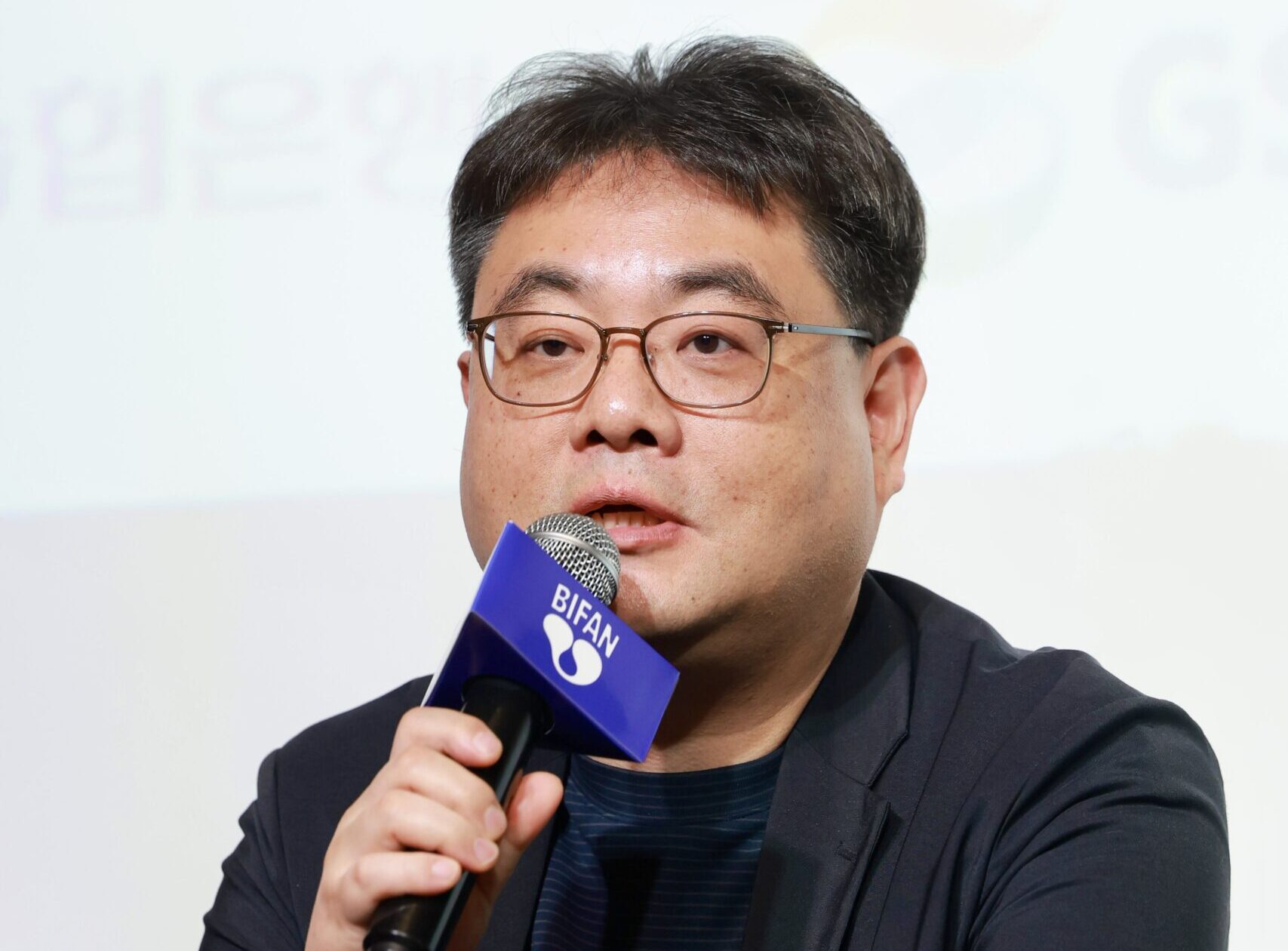
VERDICT: As the Bucheon International Fantasy Film Festival turns 30, its new Korean Cinema programmer Kim Hyung-seok explains why "the divide between art films and genre films is ultimately artificial".
Interview conducted by Cho Hyo-jin
The Bucheon International Fantastic Film Festival (BIFAN) celebrates its 30th anniversary this year. Widely regarded as one of South Korea’s three major film festivals and the leading festival dedicated to genre cinema, BIFAN has long enjoyed the enthusiastic support of devoted audiences. Although it was sometimes misunderstood as a niche event for hardcore horror fans, it has steadily broadened its appeal through eclectic curation and a willingness to embrace new ideas.
BIFAN’s programmer for Korean cinema, Kim Hyung-seok, who joined the festival last year after a long career as a film journalist and programmer for other festivals, reflects on the festival’s past, present, and future, as well as the evolving landscape of South Korean genre filmmaking.
THE FILM VERDICT: As a long-time festival-goer, film journalist, and now programmer, what do you think the impact has been of BIFAN’s launch on the Korean film industry and the festival scene?
KIM HYUNG-SEOK: Around 30 years ago in 1996, the Busan International Film Festival was born, and it remains the biggest international film festival in South Korea. The following year, BIFAN launched, focusing on genre films, creating a space for films unlikely to be screened at Busan. In 2000, the Jeonju International Film Festival came along to support digitally-driven films with a more experimental focus. These three festivals together were able to cover most of the important works on the Korean film scene, which was crucial for the industry’s growth now that there were platforms for new films to reach industry professionals and keen audiences.
The rise of online ‘maniac culture’ for non-mainstream titles and B-movies in the 1990s provided the right context for BIFAN. At the same time, the Korean film industry was witnessing technical advances in genre filmmaking [The Soul Guardians (1998), Whispering Corridors (1998), Shiri (1999)] despite a national financial crisis. As a result, confidence in genre filmmaking surged, and the industry grew bigger. With this cultural and industrial shift, BIFAN brought a new audience into film festivals and cinemas and was able to inspire a generation of filmmakers like director Kim Jee-woon, who has said he first watched Takashi Miike’s Audition (1999) at BIFAN.
TFV: What would you consider some of the most crucial moments in BIFAN’s 30-year history that have shaped the festival into what it is today?
KHS: There are many milestones but if I had to choose one, it would be the launch of the Network of Asian Fantastic Films (NAFF) in 2008, which was the world’s first industry program dedicated to genre projects. Over the past 18 years, NAFF has evolved, trying various initiatives and programs, such as Goedam Campus, to support and incubate exciting projects, and collaborating with other festivals like Cannes (Fantastic 7) and Sitges (FanPitch). More than 110 films have been completed, screened at major festivals, and even received wide release. I believe this track record of bringing together and supporting genre filmmakers is what has made BIFAN a major platform.
TFV: What are your thoughts on the relationship that genre films, as an art form, have with the film industry?
KHS: Personally, I think genre films ‘are’ the industry. Until the early 1990s, the majority of mainstream movies were dramas or melodramas. Coinciding with BIFAN’s beginning, however, a wave of new genre films was made and took over the industry. Now it is very common to analyze the industry’s success in relation to genre trends at any given moment.
As for the artistic aspect, I believe that when filmmakers who work in a certain genre consistently create great works, they eventually come to be regarded as auteurs. During the so-called Korean Cinema Renaissance, Park Chan-wook, Bong Joon-ho, Kim Jee-woon, and Ryoo Seung-wan all started out with genre filmmaking. Each developed a distinctive artistic voice while working within or across genre traditions and forged careers as auteurs. I think these master filmmakers show us that the divide between art films and genre films is ultimately artificial.
TFV: The 30th anniversary edition’s slogan is “NEW ERA, NEW SKIN.” What does BIFAN mean by it and what kind of new era does it envision?
KHS: We are at the turning point of a generation. But we don’t know what the new era of cinema will look like, hence the skin-shifting chameleon on the poster. It’s open. Right now, new forces in the industry, such as streaming platforms, short-form content, and AI, are challenging cinema as a medium and demanding change. BIFAN is actively exploring what changes are to be made.
This year, we are screening short-form series on the big screen. Two are presented in their original vertical format, and the other two have been re-edited into a horizontal format for theatrical exhibition. We think it is an interesting approach, reflecting how filmmakers, even established ones such as Lee Joon-ik, are experimenting with the new form of storytelling. This is part of our effort to figure out the ways to expand the boundaries of cinema, rather than simply defending the existing ones.
TFV: What do you think BIFAN needs to be in the coming 30 years?
KHS: I believe that a festival is not sustainable if it fails to breathe together with its audiences. That is the fundamental principle I always keep in mind. Sometimes I introduce audiences to things they haven’t encountered before, and at other times, I learn from them.
For BIFAN, what the audience wants is very clear: something a little weird or strange, something that goes hard. Because the city of Bucheon is not a major tourist destination, people come primarily for the festival itself. That’s why the programming of films and events is especially important. It should reward those who make time for the trip with tremendous enthusiasm. I hope we can continue to foster that spirit by creating an inviting and exciting community for genre film lovers.