Supporting Role
Meorekhariskhovani Roli
VERDICT: Georgian director Ana Urushadze’s Supporting Role is a wildly eccentric take on fleeting windows for creative ambition, in a worldweary, twilight Tbilisi.
Georgian writer-director Ana Urushadze’s sophomore feature, Supporting Role, is another wildly idiosyncratic take on creative drive, and the capricious nature of a world as inclined to crush artistic ambitions as it is to celebrate them. It had its world premiere in the Tiger Competition at the Rotterdam International Film Festival nearly a decade after her 2017 debut Scary Mother, which propelled her into the global arthouse circuit’s spotlight by winning the Golden Leopard for Best First Feature at Locarno and Sarajevo’s top award. Urushadze’s latest is a more circumspect, world-weary beast, that tempers its playful spirit with an undertow of resigned melancholy.
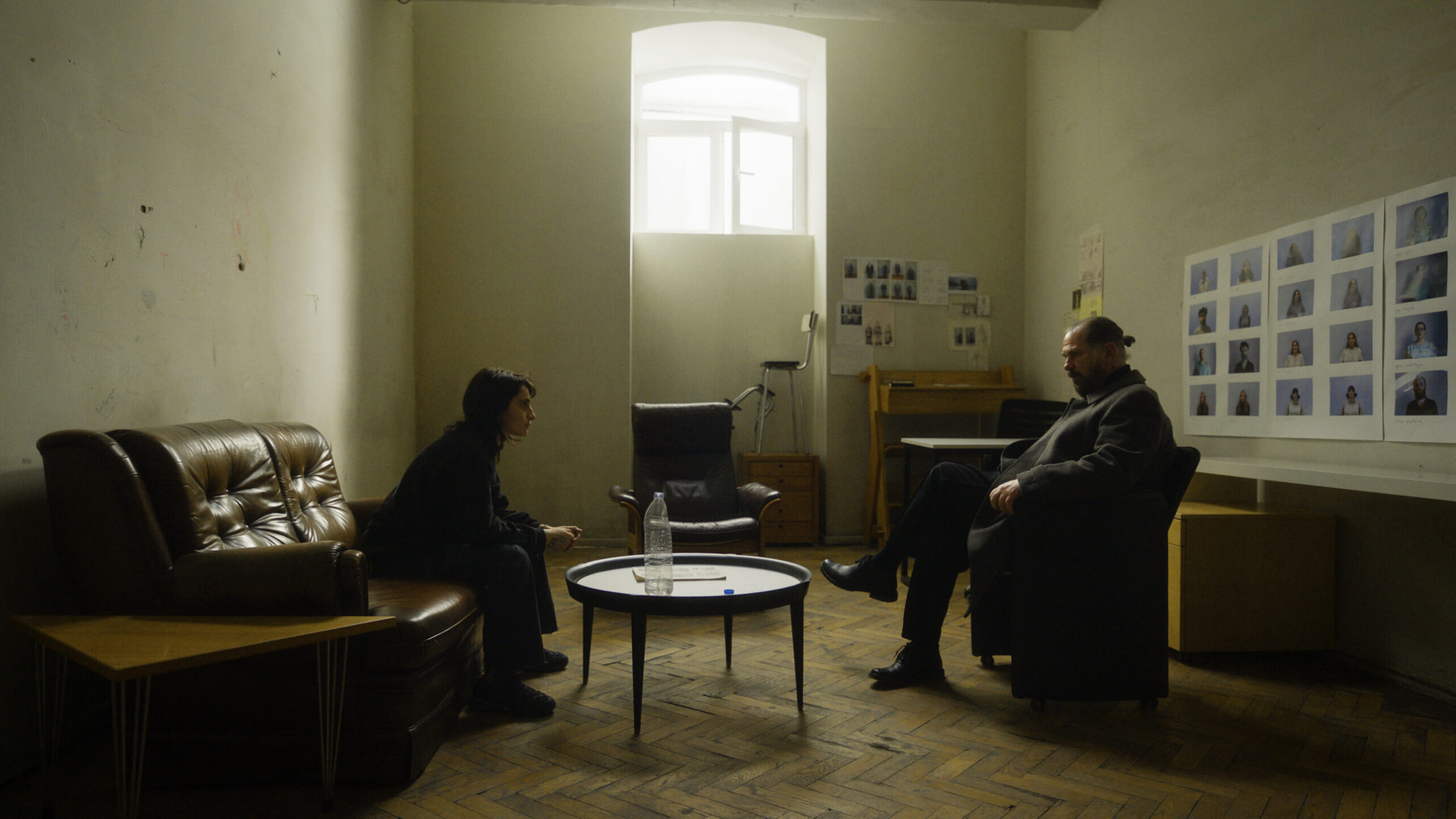
While Scary Mother swept audiences along on the imaginative flights of a woman writing erotic vampire novels her husband does not approve of, Supporting Role, with an almost contrarian perversity, puts the point of view of Niaz (Dato Bakhtadze), an entitled male chauvinist and once-revered actor, front and centre. We’re immersed in the faded, eccentric charm of Tbilisi through the eyes of the ageing star as he returns to the industry after a long hiatus, and is thrown into existential crisis upon finding his relevance has waned. He attends a casting audition for the bit part of a distinctly unheroic old man he’s been invited to play by Aza (Elene Maisuradze), a young woman director, or “little girl” as he later disparages her, and bristles that she has no qualms in firing out outlandish suggestions for getting into the role.
In a patriarchal society that is transforming in ways he is not ready for, Niaz is the past not the future, and his indignation gives rise to a cantankerousness that sours his encounters. Niaz does not make for pleasant company — all the more so because Bakhtadze is intense and brilliantly convincing in the role — which may be offputting for some audiences. But Urushadze’s love for every one of her misfit characters shines through, and it is not without empathy that we join Niaz on his anguished mental journey toward a new deal with fate, as he revisits the relationship wreckage of his regrets, and the family he walked out on. There is no room here for sentimentality, so the concluding poetic glimmers of real connection are hard-won.
Niaz is given three days after the audition to decide whether he wants the role, but this plot framework fades into the background as a much more cryptic, mystical and dreamlike logic takes over, still grounded in the sardonic humour and wry absurdity of lost chances. At first, as Niaz laments that directors no longer love actors, it seems the audition will be nothing more to him than a sardonic dinner table anecdote. But there is something in the project he struggles to name, but can’t shake, that works on his subconscious, as he wanders Tbilisi’s streets, and in and out of its ornate, battered apartment buildings and nighttime shadows (moodily shot by DOP Rein Kotov), in a strange delirium between surly, embittered outbursts and obsessive reflection. His parrot, sensing its own death was near, has escaped and expired. In the pet cemetery, he encounters two mysterious Armenians, who sense he has just a few days left himself — a premonition of mortality that escalates his fevered border-state.
On his meanderings around Tbilisi, Niaz stops in on an old acquaintance (Nino Kasradze) who fell three floors. After botched reconstructive surgery she now wears a mask and never leaves her apartment, but allows a group she found online to host a workshop on lucid dreaming. She is just one of a myriad of larger-than-life exiles from normality populating this vision of a twilight Tbilisi where the lines between hallucination and reality, and life and death, seem paper-thin. It’s hazy what all this means in a film as allegorical and full of tangents as it is charmingly offbeat, but its plea that it is never too late for integrity, in the final hours when the ego recedes, is unmistakable.
Director, screenwriter: Ana Urushadze
Producers: Davit Tsintsadze, Ivo Felt, Bacho Meburishvili, Sophio Bendiashvili, Zeynep Özbatur Atakan, Andrey Epifanov, Eleonora Granata-Jenkinson, Dato Bakhtadze
Cinematographer: Rein Kotov
Editor: Levan Uchaneishvili
Cast: Dato Bakhtadze, Nata Murvanidze, Elene Maisuradze, Irakli Kvirikadze, Zurab Sturua, Eka Demetradze, Sandro Samkharadze, Nino Kasradze, Davit Dvalishvili, Lasha Mebuke, Murman Jinoria
Production Design: Simon Machabeli
Sound Design: Harmo Kallaste
Music: Sten Sheripov
Production companies: Zazafilms LLC (Georgia), Allfilm (Estonia), Enkeny Films (Georgia), Zeynofilm (Turkey), Cinetrain (Switzerland), Melograno Films (USA)
Sales: Allfilm
Venue: Rotterdam (Tiger Competition)
In Georgian, Armenian
139 minutes