
The Gymnast
The Gymnast
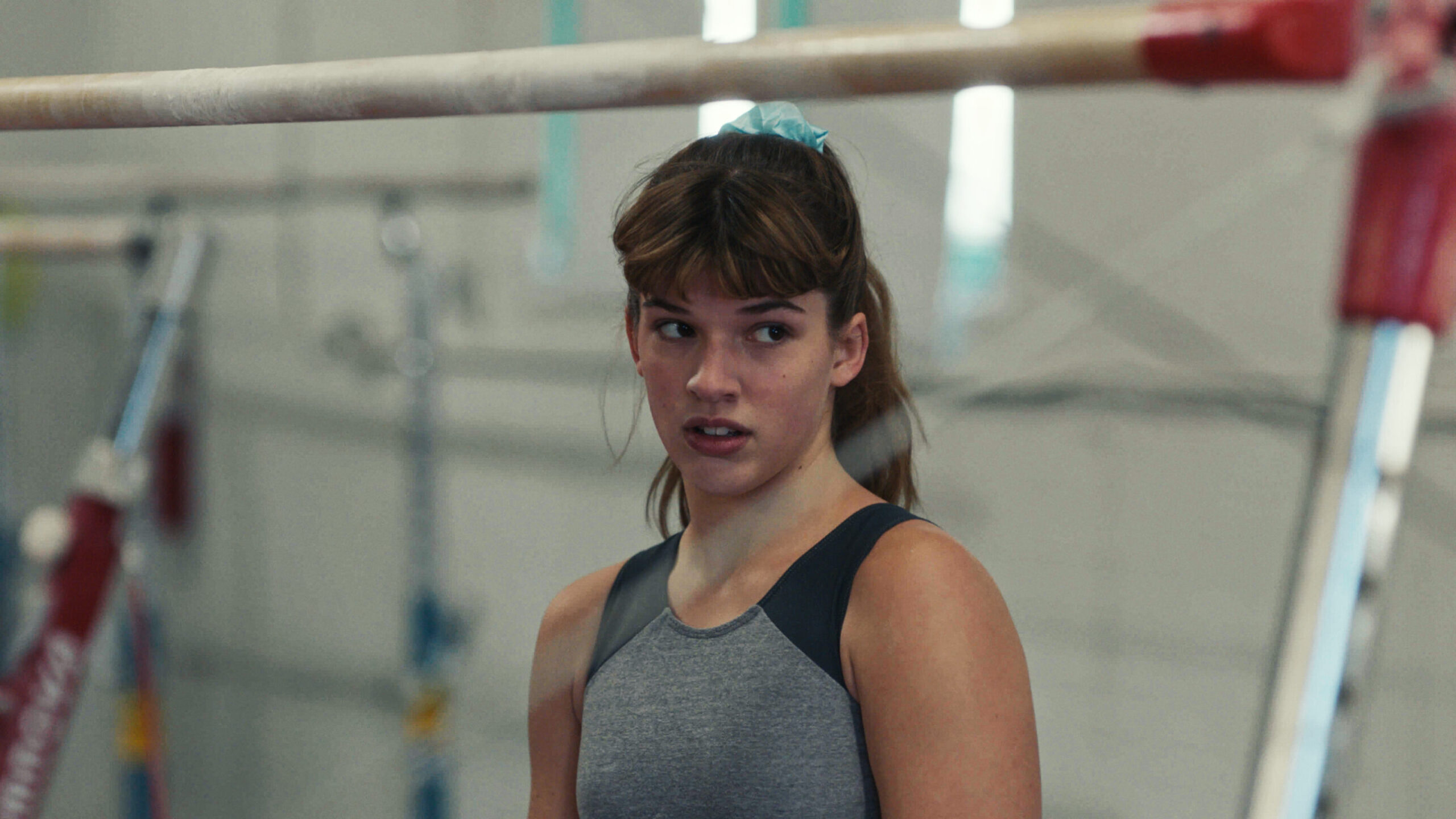
VERDICT: Writer-director Charlotte Glynn balances hard-nosed grit and tenderness in her quietly devastating portrait of an injured teen gymnast in working-class Pittsburgh.
US director Charlotte Glynn paints a quietly devastating portrait of ambition and intergenerational disappointment in her native Pittsburgh in her coming-of-age drama and fiction feature debut The Gymnast, which had its world premiere in the Tiger Competition at the Rotterdam International Film Festival.
Hard-nosed, downbeat realism is balanced with tenderness to moving effect in the story of a top-level teen gymnast who suffers a knee injury. She then finds herself faced with the prospect of a limited future of the kind her working-class dad, a frequent fixture at the local drinking hole, had hoped she would avoid, in a city hollowed out of hope after the decline of industry. The setting of what might otherwise be a somewhat conventional (and at times bluntly scripted) sporting-underdog narrative within a poignantly observed ‘90s Rust Belt America provides another layer of commentary on citizens short-changed by the mythology of the American Dream. Glynn’s refusal to resort to either consolatory platitudes or hopelessness elevates this to a timely consideration of disenfranchisement in a nation at an inflection point. This, combined with a convincing performance by newcomer and vlogging athlete Britney Wheeler in the lead role, should ensure plenty of festival interest, and signals a fresh directorial talent attuned to the struggles on her community’s margins.
Ringlet curls and velvet leotards place us firmly in the early 90s, as sixteen-year-old Monica trains toward a coveted spot on the national gymnastics team for the next Olympics. She has a determined drive that her father Rich (Ethan Embry) either never had or has long since lost to the mind-numbing boredom of his current low-paying job and the pressure of putting food on the table as the sole caregiver. Monica’s mother is largely out of the picture (it’s only later we learn substance abuse is a factor), and in some ways her no-nonsense coach Stephanie (Margarita Levieva) has been more of a constant fixture than even her dad. Cheerleading Monica now provides Rich’s greatest meaning in life, and home video excerpts of her training in her childhood years position her sporting endeavours as their prime mode of connection. But he feels most at home on a stool at the local dive bar, where on debauched evenings he hooks up with women not far in age from his daughter, desperate to grasp a past youth when he no doubt felt the rebellion signalled by his many tattoos would translate into a more free-spirited future on his own terms. The whole family focus is derailed when Monica stretches beyond what she’s ready for in practice, and tears a ligament in a potentially career-ending fall that will take a year to mend and may not see her back on form.
The drama around whether Monica’s knee will recover is ultimately secondary to the identity crisis her hiatus provokes in relation to her family, and the film is at its most astute when showing how easily the pull of generational patterns can set in amid setbacks. Glynn brings a humanistic lens to even Rich’s most questionable behaviour, understanding it as a self-destructive coping mechanism and societal symptom of disenfranchisement as much as an unsalvageable character flaw, despite the sense of shame his exploits cause Monica. When a disconsolate Monica starts to skip school and falls in with a crowd she can drink with in the park, echoes of her parents’ trajectories signal a risk to her plans. And, as she edges toward her first sexual encounter with a new boyfriend (Will River), the lack of respect for consent in the young men of the group adds another disquieting note of unease to what might be in store.
The line between success and failure is paper-thin in a film that puts great stock in decisive moments that could be turning points on the road to various possible futures. This is a coming-of-ager in which dream and reality collide with crashing, debilitating force, where hard work might not be enough, but the weight of circumstance is not a death knell either, and healing in a wider emotional sense is left as a real possibility in an ending more geared to generous compassion than shock or provocation. Pittsburgh, with the steel mills that once made it a hub of industry, is captured in wintry light by DOP Kayla Hoff in long shots that reveal a real tenderness for the contours of the city along with a clear-eyed acknowledgement of its toughness and the grit required to stay above water here.
Director, screenwriter: Charlotte Glynn
Producers: Ricky Tollman, Luke Spears
Cast: Ethan Embry, Margarita Levieva, Britney Wheeler, Will Mossek
Cinematographer: Kayla Hoff
Editor: Lia Kulakauskas
Production Design: Teresa Strebler
Sound Design: Fernando Henna
Production company: Hot Rod (USA)
Sales: Visit Films
Venue: Rotterdam (Tiger Competition)
In English
84 minutes