
The Odds
The Odds
VERDICT: Debut feature director Kewa Oni's The Odds is a vigorous caper set in West Africa's most populous city, featuring a winning cameo by Osita Iheme.
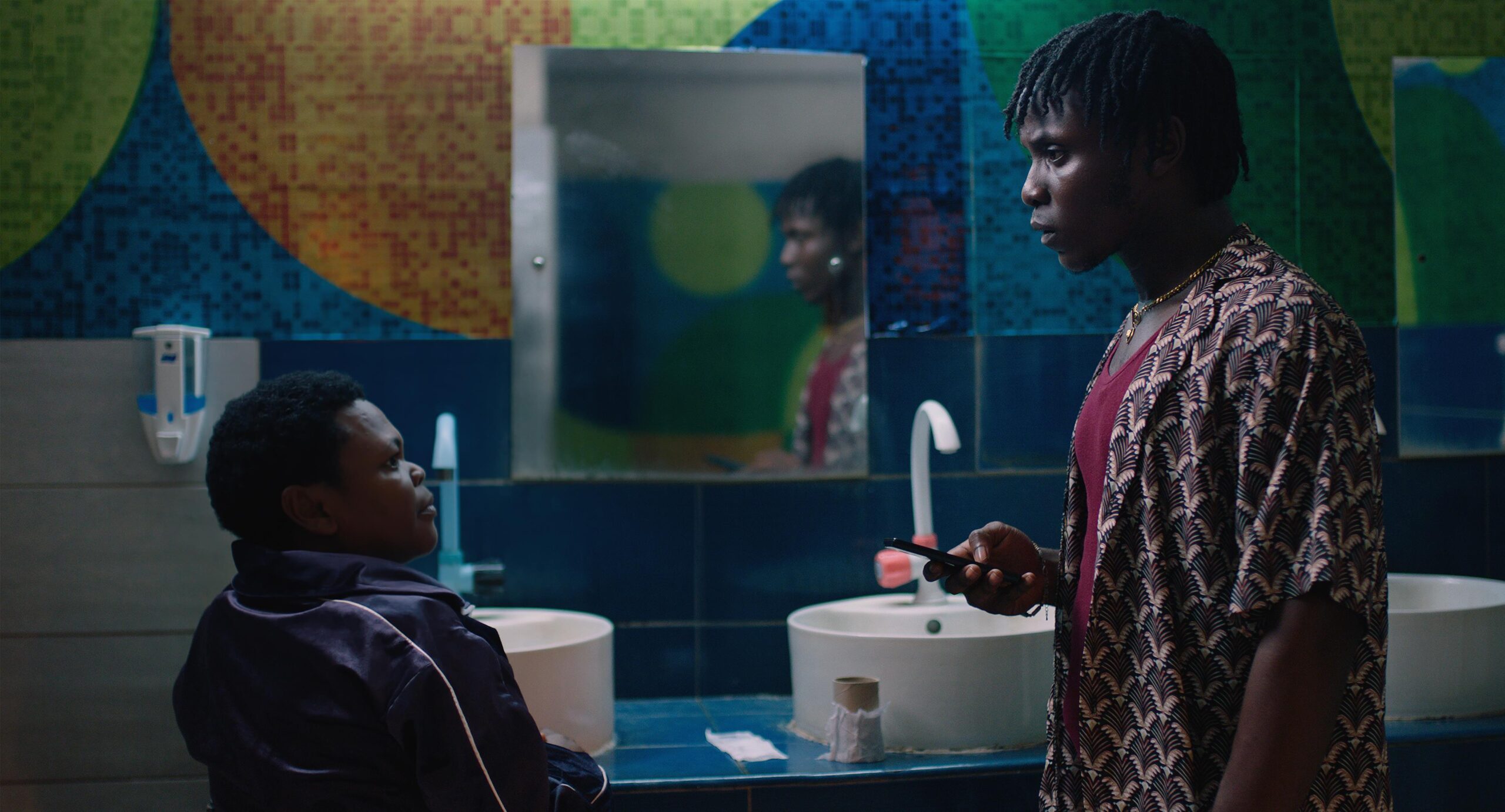
A near miraculous thing happens in the opening minutes of Kewa Oni’s The Odds, which premiered at FIC Luanda. A young man helps another man who is stuck in a toilet without tissue paper. In appreciation of his rescuer’s effort, the man in the toilet offers him a betting ticket, urging him — pressuring him — to put some money behind it. If it works out, his winnings will exceed 24m naira. Forget about converting that figure to dollars. The setting is Lagos, Nigeria; it’s a lot of money for everyone, maybe except for the city’s one-percent.
One extra quasi-miracle happens in that opening scene and it comes in the shape of the actor playing the tracksuit-wearing miracle worker: he’s played by Osita Iheme. That is unlikely to ring a bell with viewers unfamiliar with Nigerian cinema over the past two decades. Iheme is one-half of a famous comic duo in Nollywood. But you do not need to understand the actor’s fame to appreciate his charisma and the immensity of his aura onscreen. The film’s other actors get more screentime but, without doing too much, Iheme steals the opening moments. It’s brilliant casting. The gift his character bestows on Sule, the hapless young man, the actor gives to the movie itself.
Later, we see Sule, played by Molawa Davis, at home with his homies, a roommate and a girl who evidently likes him and comes around frequently. He lives in a bit of chic squalor in a cramped apartment. Oni has directed some of the most distinctive music videos for Nigerian artists and his touch—his way with colours and images — can be seen in the apartment’s production design. Most of his characters are young, urbane, and well-spoken.
Our hero plays the odds he’s given after a bit of dithering and, as you might imagine, little by little his money piles up. By the end of the day, it’s obvious that his life has changed forever. Or has it? Things in feature-length movies aren’t supposed to be conflict-free. In The Odds, the conflicts pile up with the same frequency as the cash. But the conflicts are likely not just the effects of dramatic tension. There’s a political angle to them. Betting companies are now a major feature in the lives of poor Nigerians. There might be an amoral filmmaker who makes a film in which a man bets, wins, and lives happily ever after — Oni is not that filmmaker.
In fact, Oni might have his sights elsewhere. Although the film turns into a crime caper of sorts once our hero goes out to cash in his cheque, The Odds is really a film about friendships, about what happens to friendships when one person in the group gets so ridiculously lucky that his mere existence transforms the texture of the relationship. The film takes place across 24 hours and the camera’s movements are often hyperkinetic, which doesn’t quite give the relationship between the film’s three main characters room. But what we lose there we gain in a film that just moves and moves. The introduction of other characters, mostly aggressive types antagonising Sule, means the film drifts away from its friendship theme until towards the end in a scene where a speech about friendship doesn’t quite land.
In the meantime, there are hijinks as the potential bountiful returns of Sule’s bet attract unsavoury characters, including corrupt cops and street-level thugs. If there’s an anti-betting lesson to be gleaned from the story, it seems to be that, at a certain level, the problem with betting is about who’s watching you win. Losing is already its own loss. The drama, for Oni, is what happens when you do win. His debut feature film joins at least two Nigerian films, Dare Olaitan’s Ojukokoro and Ema Edosio-Deelen’s Kasala, in looking at the lives of the young and hustling. Although different in theme and tone, all three films showcase the zany dynamism of Lagos.
As with that crazy city, not everything in The Odds work. Sometimes the fast pace works against the story’s emotional beats, but this is a film that’s frenzied and alive. And its last scene will please audiences wherever this film goes. It’s no spoiler to say Osita Iheme shows up — and, once again, performs another semi-miracle.
Cast: Molawa Davis, Osita Iheme, Ejiro Asagba, Folaranmi Oladaye, Gbemi Akinlade, Victor Osuagwu, Kelechi Udegbe, Ngozi Ezeonu, Tomiwa Tegbe
Producer, editor: Seun Opabisi
Cinematography: Femi Awojide
Music: Ré Olunuga
Venue: FIC Luanda (Guest Country)
Languages: English, Igbo, Yoruba, Pidgin