
Black Money for White Nights
Cherni pari za beli noshti
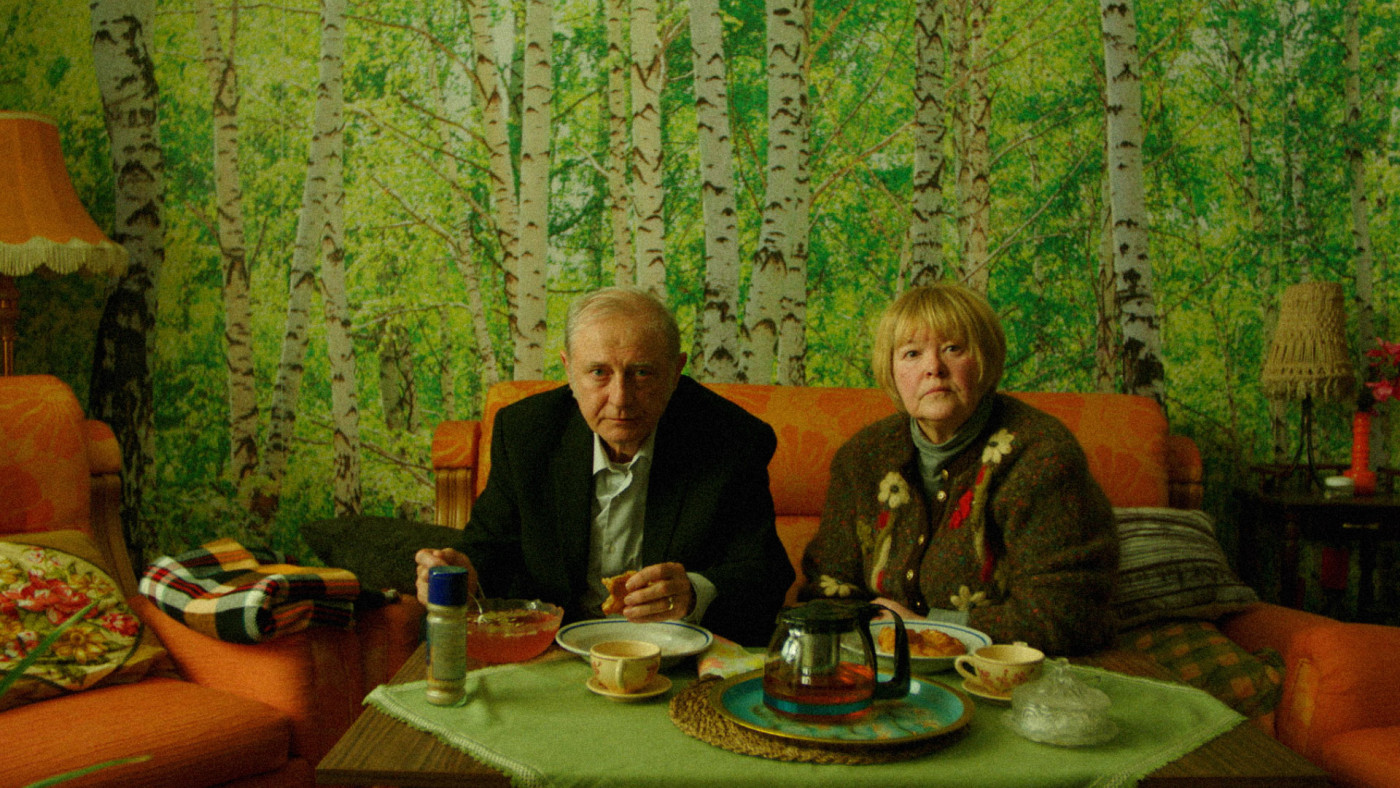
VERDICT: A callous scam upends an ageing couple's dream vacation in Kristina and Petar Valchanov’s acerbic, black-humoured social satire with a surprising heart.
The laughs are as dark and merciless as the swindling schemes in Black Money for White Nights, a tragicomedy skewering a lost society all out of solidarity from Bulgarian directing duo Kristina Grozeva and Petar Valchanov, which screens at the Sarajevo Film Festival after a very well-received world premiere at the Karlovy Vary International Film Festival. A married couple who are nearing retirement in Bulgaria have squirreled away enough from small bribes to buy a travel package to Russia to see the White Nights in Saint Petersburg and take the Trans-Mongolian train across the country. But when the bogus agency evaporates, they spiral into greater risk as they try to salvage their savings and their longtime dream, finding out the hard way that nobody wins for long when hustling is baked into the system of everyday survival.
Bulgaria’s arthouse directors are proving themselves endlessly adept and eager to address the theme of endemic corruption under the strain of capitalism and the resulting loss of dignity for the everyperson, and Black Money should travel easily on the festival circuit as an incisive yet robustly entertaining addition to this growing niche. It’s the fifth feature from Grozeva and Valchanov, who won Karlovy Vary’s top award in 2019 for The Father, another biting comedy about charlatanism. As a sharp, cynical satire on the collapse of community and the kind of financial scams that can leave whole lives in tatters, Black Money also recalls another recent Bulgarian winner from Karlovy Vary, director Stephan Komandarev’s 2023 Blaga’s Lessons.
The lifestyle aspirations of sixty-somethings Marina (Tanya Shahova) and her husband Gosha (Ivan Savov) are lampooned as uninspired and even a little tacky from the off. Artistic director Ivelina Mineva has pulled off a coup with the couple’s acid-green and orange living room, the birch-tree forest wallpaper encasing the couple in an imagined elsewhere that has a nightmarish gleam all the more potent when it’s announced on the news that Russia has just invaded Ukraine, a political reality the couple decide to sidestep, amorally content to look the other way so as not to puncture the fantasy of an idyllic vacation. After all, Marina needs such an occasion to wear the animal-print attire and other thrift-store items that she bought for the trip and shows off in an impromptu fashion parade at home.
The self-serving amorality that flourishes in a dog-eat-dog society in which living legally is not enough for a comfortable life is taken aim at very effectively in a film that, amid its jokes, makes room for a real undertow of sadness. The cracks in Marina and Gosha’s relationship widen as they react very differently to the fix they are in, and past secrets reemerge when the couple call on Marina’s sister Lucy (Margita Gosheva) for a hand. Despite the film’s ruthlessly satirical edges, there is also tenderness for the couple’s failings, and their hopeful naivete and determination to garner small joys in a world that offers scant opportunity for glory for anyone but the most powerful fish in an inescapable, muddy pond of lawlessness. Their detachment from politics is underlined even more, when they are caught between a Pride parade and far-right counter-protesters in the capital, which only makes them even more disoriented.
Marina, belatedly gnawed by guilt over pocketing banknotes from patients for preferential treatment as a maternity ward nurse, concludes the scam is God’s punishment. But Gosha, who as a station master as in on a side-hustle in stolen diesel, is not willing to take their humiliation lying down, and in a plot that stretches credibility as it gains in suspense and all-out danger, he gets in way over his head in a Bulgarian underworld of seedy bars and debt-collection heavies. Black money is the instigator not of dreams but of disintegration for this pair whose ordinariness the directors are at pains to point out; their fate not an outlier but a symptom of a wider decay. A tremendous, pitch-black finale as the credits roll is worth the wait, alleviating the relentless downward spiral by wryly suggesting capitalist Bulgaria might be a place not to escape, but to suffer together.
Directors: Kristina Grozeva, Petar Valchanov
Writers: Kristina Grozeva, Petar Valchanov, Decho Taralezhkov
Producers: Konstantina Stavrianou, Irini Vougioukalou, Kristina Grozeva, Petar Valchanov
Cast: Tanya Shahova, Ivan Savov, Margita Gosheva, Ivan Barnev, Sibila Petrova
Cinematographer: Alexander Stanishev
Editor: Yorgos Mavropsaridis
Music: Theodore Oikonomou
Sound: Ivan Andreev, Kostas Varympopiotis
Art Director: Ivelina Mineva
Production companies: Abraxas Film (Bulgaria), Graal Films (Greece)
Sales: Cercamon
Venue: Sarajevo (Adriatic Audience Award)
In Bulgarian
95 minutes