
Everything That’s Wrong with You
Everything That's Wrong With You
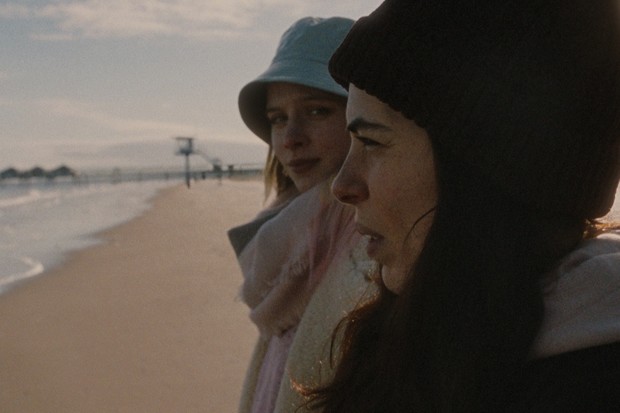
VERDICT: Social media collides with the vulnerability of grief in Slovenian writer-director Ursa Menart’s 'Everything That's Wrong with You', a raw, uneven portrait of a vacation friendship between two troubled young women.
Two lonely, very online twenty-somethings reevaluate their lives in the face of loss in Slovenian writer-director Ursa Menart’s sophomore feature Everything That’s Wrong with You, which had its world premiere in the Narrative Feature Competition at the Sarajevo Film Festival.
An emotionally raw drama edged with dark humour, it comes after her similarly themed 2018 portrait of a directionless twenty-something My Last Year As a Loser. Its acerbic bite, and a screenplay well-attuned to the way in which real-world connections are in crisis, as isolation and over-sharing paradoxically co-exist on social media apps, give a shot of fresh energy to the story of a formative vacation friendship between two angst-ridden young women, which otherwise slots into well-trodden coming-of-age territory, even though these off-course late bloomers are already adults.
Alja (Klara Kuk) has garnered a following as a loneliness influencer. She posts regular online content about having no friends, cooking Christmas dinner for one and other days passed solo. She doesn’t miss a day even when she can hardly stand up, due to a mystery illness that leaves her weak and coughing up blood. Things are no rosier for Marusa (an especially spiky Anusha Kodelja), who has just lost her mother to terminal disease. It’s been eight months since she came back to Slovenia to care for her, a stint during which her boyfriend in Berlin wasted no time cheating on her. She had already alienated her best hometown friend by not repaying a debt, and now she has gone off the rails partying as the only way she knows how to cope, even if losing control means throwing up in her purse at the funeral and other indignities.
Marusa’s shame spirals, adding to the unease of staying with her father and his children from another marriage on the farm where she grew up but now feels like an outsider. Alja’s posts, and their frequent message exchanges about their sense of alienation and everyday humiliations are a source of comfort. It’s on an impulse, drunk and high on prescription pills, that Marusa ends up at Alja’s door in a small German town after a bus ride with Billie, her late mother’s pet Dachshund, in tow, needing somewhere to crash, and a break from all of the scrutiny.
The lead actresses offer us up a convincing, awkward dance, oscillating between intrusiveness and guardedness, between two women who are superficially familiar to each other yet also strangers, and whose real-world social skills and grasp of healthy boundaries are not their strong suits. Marusa agrees to stay on for New Year in the town where Alja, who works as a nurse, decided to remain after her affair with a married man blew up.
The wintry backwater of Germany where the friends pass time is shot by D.O.P. Roy van Egmond with an eye for chilly, desolate beaches and inky night skies. The result is sufficiently atmospheric, though the off-season coastal locale remains rather functional, with a kind of placeless, western European could-be-anywhere feel to it.
Uncomfortable revelations are to come, as the two friends share more of themselves, and discover parts of each other they are unable to edit, as they can for optimal online reactions, when in close physical proximity. This is a film that, admirably, embraces flawed women without judgment (less so, the men all too happy to exploit them, another wise scripting decision.) Menart understands the seductions of technology, but is deeply sceptical of it as a marketed remedy for solitude, and is full of empathy for the desperate and dysfunctional coping mechanisms that young women sometimes cling to in times of great need, hiding their pain behind brittle exteriors amid efforts at validation.
Self-harm as a cry for help, through gradual actions as much as dramatic ones, is a theme. It is never romanticised or sensationalised, especially in its most disturbing (and more medically urgent) forms, with the director ultimately interested not in self-destruction but the small moments of connection that can prompt big shifts in thinking. This is also, ultimately, a film about expectations and disappointment, and the acceptance that is necessary for really growing up.
Director, screenwriter: Ursa Menart
Producers: Katja Lenarcic, Danijel Hocevar
Cast: Anusha Kodelja, Klara Kuk, Mojca Fatur, Marjuta Slamic
Cinematographer: Roy van Egmond
Editor: Lukas Miheljak
Music: Alenja Pivko Knezevic, Simon Pensek
Production companies: Vertigo (Slovenia), Thalia Production (Serbia), Chromosom Film (Germany), Living Pictures (Germany)
Sales: Duplicato Media
Venue: Sarajevo (Narrative Feature Film Competition)
In Slovene
80 minutes