
La Gradiva
.
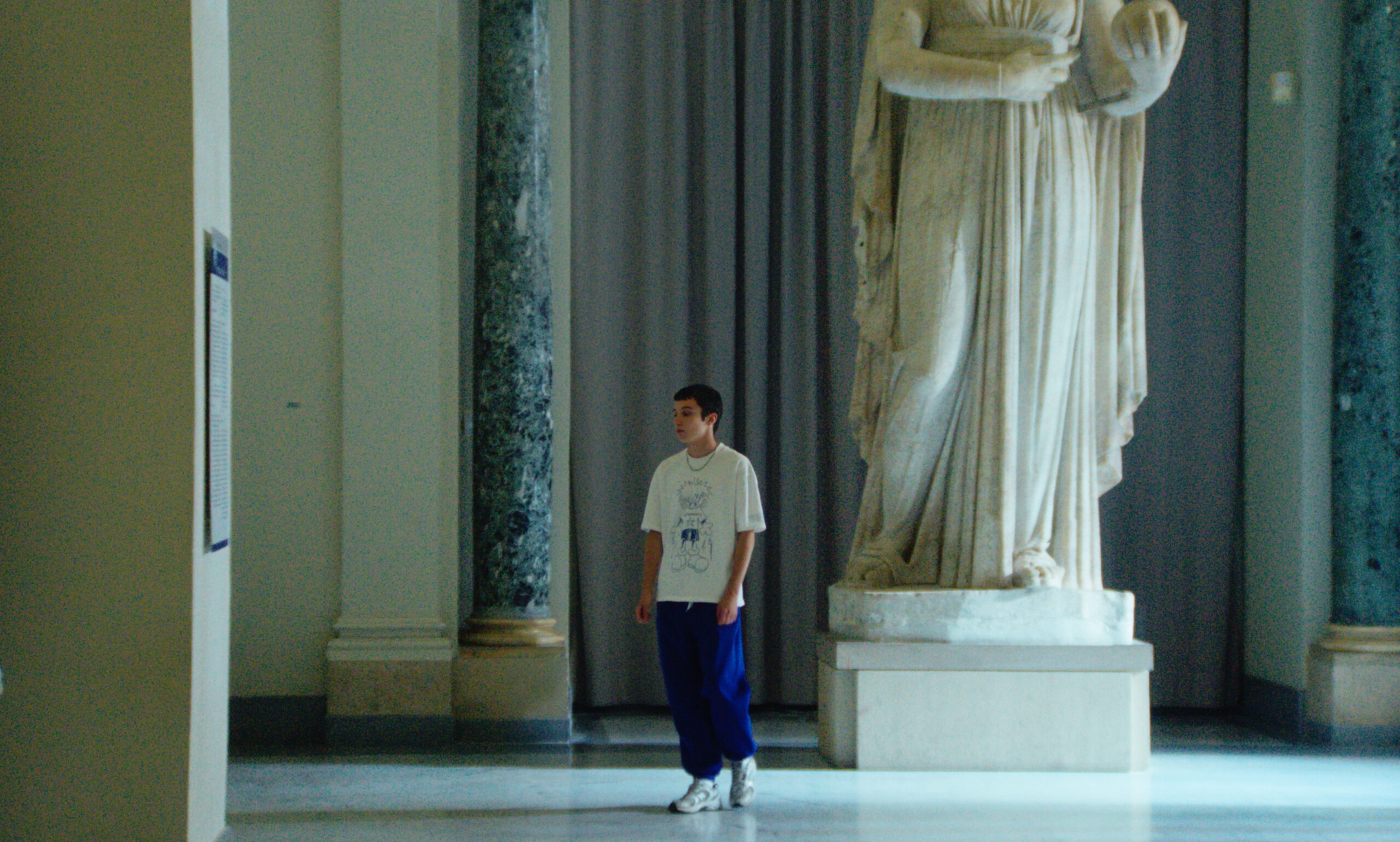
VERDICT: A school trip to Naples stirs up strong emotions in Marine Atlan’s strong feature debut ‘La Gradiva’, the big winner of Cannes’ Critics Week in 2026.
Regular film festival attendees and fans of French arthouse cinema may recognize Marine Atlan’s name from the many features where she has served as the cinematographer (most recently, Alexis Langlois’ Queens of Drama). Her renown is bound to increase exponentially now that she has transitioned into directing, considering her debut La Gradiva walked away with the main prize at the Critics Week in Cannes. That early triumph was but the first step in what promises to be a fruitful journey on the festival circuit, primarily among aficionados of young French cinema and those enamored with the sights of Naples.
Yes, the Italian city is at the center of this youthful tale, focusing on a French school class on a field trip in the neighboring country. Specifically, besides Naples itself, they’re in the area to visit the ruins of Pompeii and the bodies that turned to stone after the fateful eruption of Mount Vesuvius a couple of millennia ago. The visual impact of the relics of ages past, as well as the somewhat magical quality of the city which, like many locales in southern Italy, maintains strong ties to ancient customs and rituals, have their effect on the visiting youngsters, particularly one boy named Toni. By the end of the trip, no stone will be left unturned, emotionally.
Shot entirely with non-professional actors (the director claims to have taken her cue from a similarly youth-centric series produced by the French channel Arte), the film accompanies its teenage ensemble on a journey that is a discovery for them, the filmmakers, and us: per Atlan’s statements at the time of the film’s Cannes premiere, Naples is a difficult city to capture on celluloid, due to how dense and complex it is, so she decided – in tandem with co-cinematographer Pierre Mazoyer – to adopt Toni’s point of view and observe her surroundings in an attempt to understand them. The gaze through which we walk among the Neapolitans is at once awestruck and awe-inspiring, conveying the mystery and beauty of a city that, at least in Italian parlance, is so gorgeous one could die after seeing it up close (“Vedi Napoli e poi muori”, the saying goes).
The observational aesthetic has a documentary feel to it, capturing glimpses of everyday life without initially concerning itself too much with any dramatic thrust. Though clearly meticulously crafted (as becomes evident in the third act when the character arcs need to reach their natural conclusion), the film comes across as loose and lively, as though it were in service of the young protagonists and not the other way around. And through that apparent looseness it generates a lived-in quality to such a degree that, nearly two and a half hours after we started watching, we can’t help but feel we’ve become part of the group and would like to tag along for another trip.
Myth (the title is connected to a Pompeii artwork) and reality converge to craft an outsider’s view that is nonetheless of a piece with the earthy charm of Naples and its immortal atmosphere. Wherever Atlan goes next, this first leg of her new cinematic journey is a mesmerizingly solid foundation to build upon.
Directors: Marine Atlan
Screenwriters: Marine Atlan, Anne Brouillet
Cast: Colas Guignard, Suzanne Gerin, Mitia Capellier, Antonia Buresi
Producer: Inès Daïen Dasi, Angelo Barbagallo
Cinematography: Pierre Mazoyer, Marine Atlan
Sound: Paul Guilloteau
Production companies: Les Films du Poisson, BiBi Film
World sales: mk2 Films
Venue: Sarajevo Film Festival (Kinoscope)
In French, Italian
146 minutes