
Tomorrow a Long Time Ago
Morgen vor langer Zeit
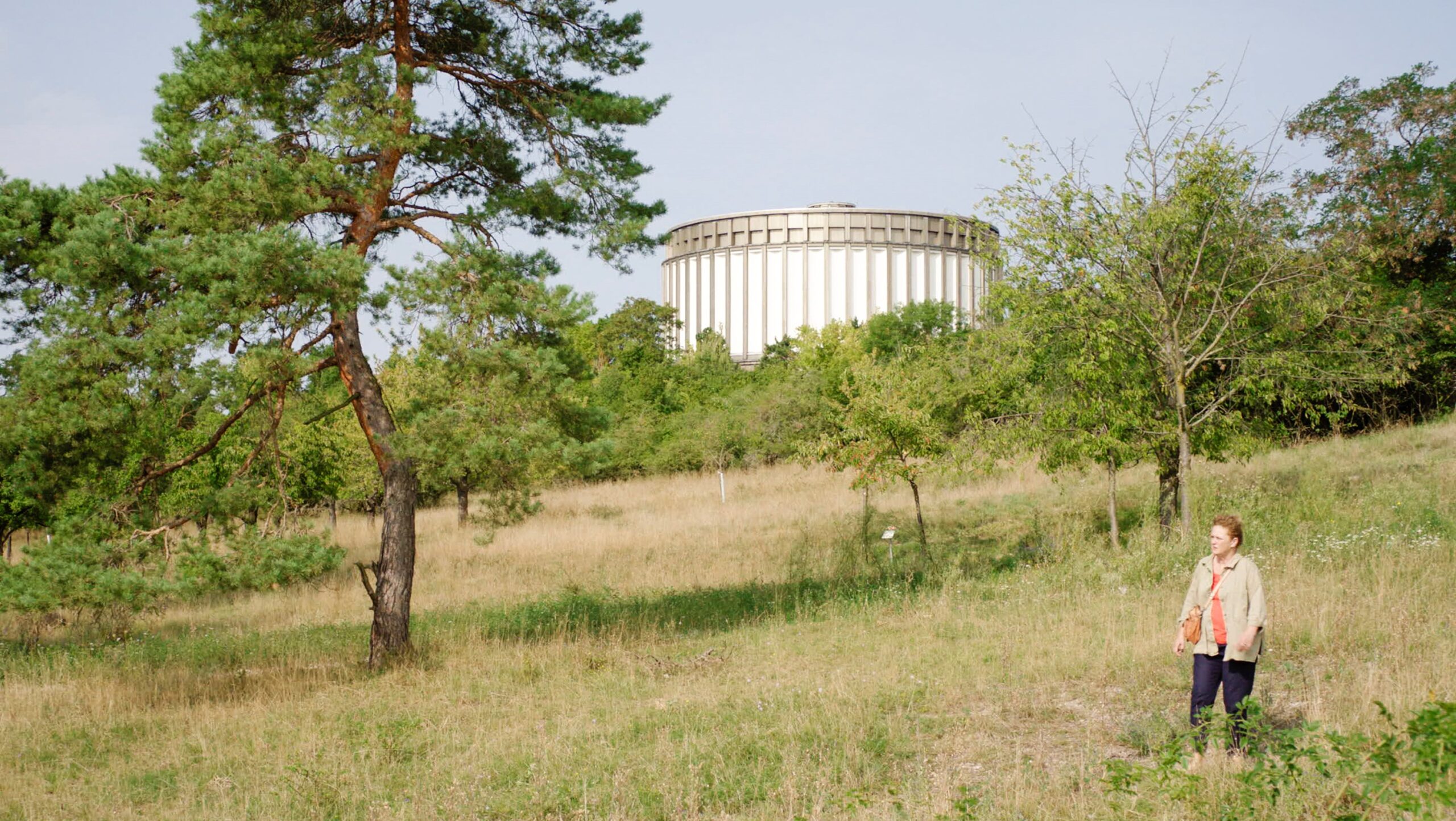
VERDICT: German reunification forms the backbone of an intriguing character study in Luise Donschen’s feature debut ‘Tomorrow a Long Time Ago’, screened in Locarno.
Having made a splash on the festival circuit in 2018 with her documentary Casanova Gene, German filmmaker Luise Donschen makes her fiction feature debut with Tomorrow a Long Time Ago, which unspooled in Locarno’s Concorso Cineasti del presente, the competitive section that spotlights emerging voices. Aficionados of recent German history will be particularly delighted to find something to chew on, while more mainstream audiences are likely to be divided on a film that can be equal parts fascinating and frustrating, depending on the viewer.
The central character is Patti (Gerti Drassl), a 50-year old woman living in a small village in East Germany. The year is 1990, and the country is undergoing reunification after the destruction of the Berlin Wall and the revolutions in the Eastern Bloc which will lead to the dissolution of the Soviet Union. Amidst all this, Patti loses her job and her best friend Jelena (Manuela Biedermann). Collecting discarded objects, she fills her apartment to such an extent it’s no longer habitable, at which point she sets out into a forest, embarking on a journey that will take her through history.
Per the accompanying statement on Locarno’s website, the film is rooted in Donschen’s own experiences, as she grew up during reunification and effectively spent her formative years rediscovering her own country. The title encapsulates that feeling very efficiently, as it alludes to a system where the split between “before” and “after” also entailed an intermingling of past and future for those concerned by the transformation (to quote the famous song from Animaniacs, Germany was “now one piece”). Like the nation, the picture is sort of suspended between two eras, on which it looks back in deliberate contemplation.
The unhurried pace and relatively sparse plot will not appeal to everyone, but they also highlight the work of the real star player of the project: Helena Wittmann, a director in her own right (and fellow Locarno alum with Human Flowers of Flesh) who reteams with Donschen to explore the Germany of yore. Each frame is meticulously planned, each (often static) shot composed in such a manner as to become the defining image of places, moments and people undergoing a profound renewal as everything transformed around them while ostensibly looking the same. It’s an artistic partnership that embraces the apparent paradox of the stillness of the moving image to sequentially revive and immortalize an era that comes to the screen almost frozen in time, the viewer having no choice but to sit in quiet observation, not unlike the characters silently coming to terms with the full ramifications of the events of 1990.
Walking alongside her protagonist, Donschen thinks about tomorrow, as a person and as a filmmaker. And to do so, she had to cast her mind back, to a long time ago, in a country that to some degree certainly feels far, far away. And in bringing it closer, she manages to blend the old and the new in progressively affecting fashion, up to and including the expertly calibrated final shots.
Director, Screenwriter: Luise Donschen
Cast: Gerti Drassl, Manuela Biedermann, Pola Friedrichs, Clemens Bobke, Nele Christoph, Uwe Preuss, Jan Kampmann, Peter Schneider
Producers: Julia Cöllen, Karsten Krause, Frank Scheuffele, Mariam Shatberashvili, Luise Hauschild
Cinematography: Helena Wittmann
Production design: Fanny Welz
Costume design: Marie Gerstenberger, Ulrike Plehn
Sound: Johannes Doberenz, Johann Meis
Production companies: Fünferfilm, New Matter Films
World sales: Fünferfilm
Venue: Locarno Film Festival (Concorso Cineasti del presente)
In German
93 minutes