
Venice Immersive 2026: Bumping Into New Experiences
.
VERDICT: The 2026 edition of Venice Immersive keeps pushing the envelope in terms of what is possible with augmented and virtual reality.
In celebrating its tenth edition, Venice Immersive – situated on the Lazzaretto Vecchio island, a stone’s throw from the Lido – confirms its standing as a fully-fledged part of the Biennale’s artistic programming and no longer the novelty within the film festival it was originally seen as. Back in the day, the section gained attention primarily through gimmicks such as John Landis serving as jury president. Now, the Lazzaretto is so well attended, this writer has not yet had the time, as this piece goes online, to try either of the two projects made using new XR glasses technology (Nevatars, co-directed by Andy Serkis, and Galapagos: The Last Eden, starring Margot Robbie).
Of the experiences I signed up for, the one most likely to enjoy a long shelf life for its visually innovative nature is Empire at Sea, an AR drama commissioned by the Lincoln Center and revolving around the consequences of climate change. Wearing headsets, the participants gather around the table, on which the story unspools as though we were watching holograms in a sci-fi movie. Users are encouraged to walk around the table to enjoy the narrative from all angles (different cabins on an oil rig that’s being used to build a city at sea), particularly when, at one point, multiple subplots overlap. How spectacular does it look? Let’s just say one member of my group reacted to the first scene by loudly exclaiming, “This is fucking cool!” Indeed it is.
Group experiences were also present in the shape of Everest: The First Ascent and Amsterdam 1652: The Hands of the City. In both cases, four participants are taken into a large space which, when wearing the required visor, transforms respectively into the Himalayas at the time of Edmund Hillary’s historic climb and the Dutch capital in the 17th century. The Everest project might prove too demanding for people suffering from vertigo, as it simulates the effect of going up the mountain, but otherwise both virtual tours are fascinating. One thing still needs to be worked on, though: even if minimally, people are bound to bump into each other, especially when one group is about to get finished and another has already entered the space.
The ongoing war in Ukraine was at the center of two of the more innovative experiences, both of which rely more on soundscapes than on visuals, taking the concept of immersive spaces to a new level: on the one hand, Spomyny is almost purely aural, as the room the user finds themselves in contains a series of tubes which, when one brings their ear close to them, relay real audio from the war zones. Even more powerful and harrowing is In 36,000 Ways, where pieces of shrapnel are hanging from the walls. One larger shard is placed on a pillow, and picking it up activates a description of the devastating effect missiles can have, with the user’s own heartbeat becoming part of the soundscape as the experience progresses.
On a more entertaining front, DisneyNature set the stage for its upcoming documentary Wolf (about the arctic version of the canine) with a VR version that is basically a behind-the-scenes look at the painstaking process of locating the animal, becoming sufficiently familiar with it, and then filming it. A visual treat, the experience also contains a few laughs, notably when the filmmakers refer to the wolves’ practice of communicating via urine markings as “pee-mails”. Fans of true crime stories will definitely get a kick out of Crafting Crimes, an interactive tour of famous murder locations (the Borden case in the installment I watched) where the user helps the host with the creation of the miniatures that recreate the crime scenes.
Having existed for a decade now, Venice Immersive can also proudly boast its own little family of returning artists, much like the regular film festival. One such name is Gilles Jobin, the Swiss choreographer who was back at the Lazzaretto with Sunset Motel, a black-and-white trek across the desert to the titular location, where bizarrely captivating dance routines are staged in rapid succession. People unfamiliar with the use of controllers might struggle at first with the concept of moving around despite sitting perfectly still, but once the motel is at arm’s length, the night becomes spellbinding. A similar effect occurs with Library of Dreams, a trippy experience where everything that transpires within the user’s field of vision is inspired by real dreams catalogued by the creative team.
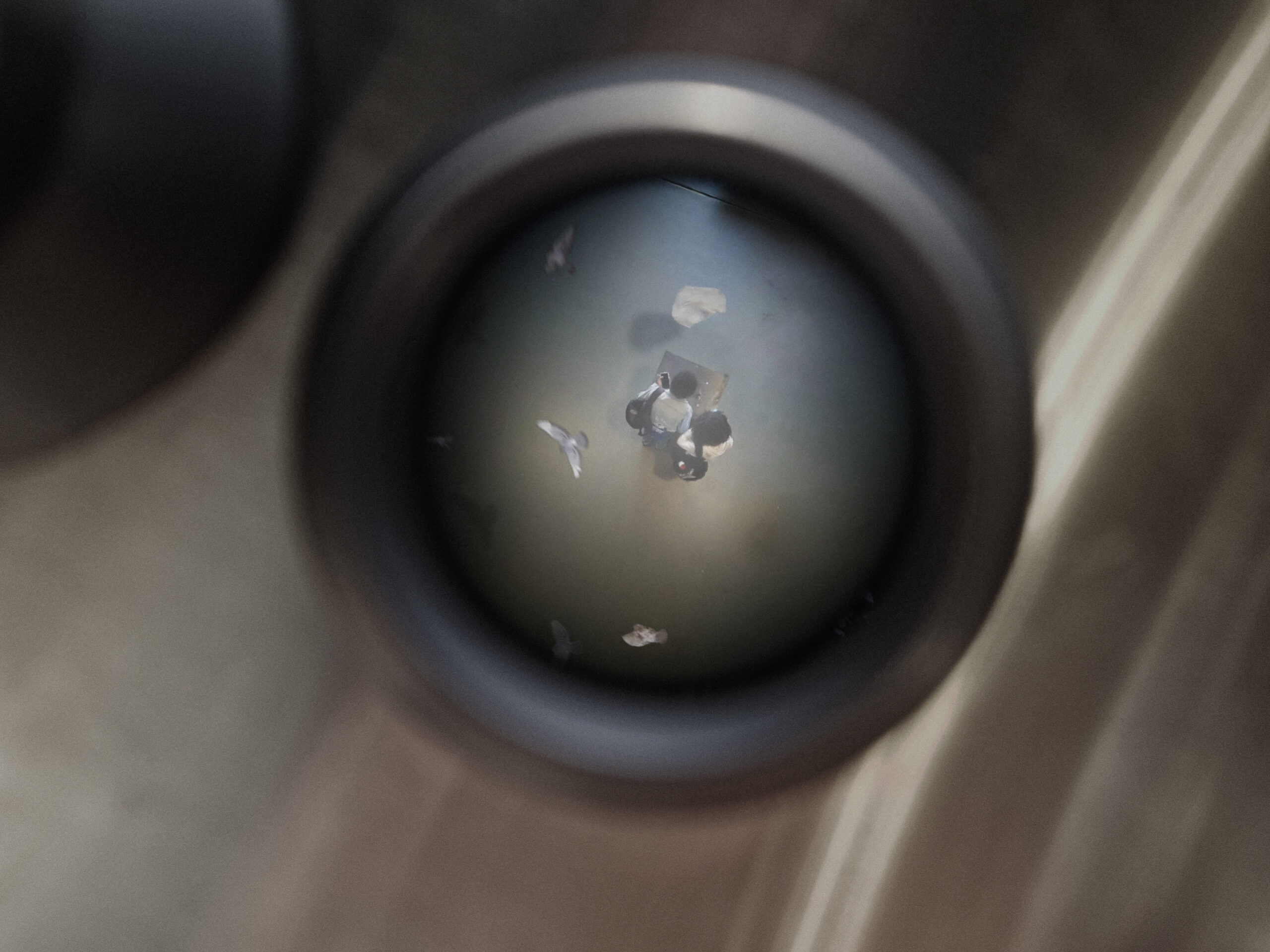
The section’s longevity also comes with being able to poke fun at itself, or at least at the idea of what the Immersive program entails. As such, the most memorable experience of the 2026 edition, of those I got the chance to take a look at, might be one humorously called Nothing to See Here. Using XR technology, the user looks into a booth, at which point they see themselves as though they were being observed from above by a bird. Then, an increasingly weird interaction occurs, and it’s essentially a meta commentary on the experience itself. It’s the kind of fun Venice Immersive has earned as a result of repeatedly showing that virtual, expanded and augmented worlds are an artform in their own right, and not a cute parlor trick.