
Miss Jobson
Miss Jobson
VERDICT: Bob Marley's friend, lawyer, and fellow Rastafarian is given the spotlight she typically shuns in this unhurried and mellow observational documentary.
Miss Jobson moves to its own rhythm, much like its subject.
Unlike many biographical documentaries, Amanda Sans Pantling’s film about Diane Jobson, the lawyer who is best known for her friendship with Bob Marley, isn’t concerned with getting across a story or being, in any way, definitive. Instead, it adopts a patient approach, creating a quiet and wholly appropriate portrait of the woman at its centre – someone who has spent their life helping and supporting others, largely avoiding any acclaim, and walking to the beat of her own drum. A Rastafarian defence lawyer most often seen with a spliff hanging from her lip, Miss Jobson proves a warm and engaging sketch that trades more on the vibes of a good hang as it does descriptive detail.
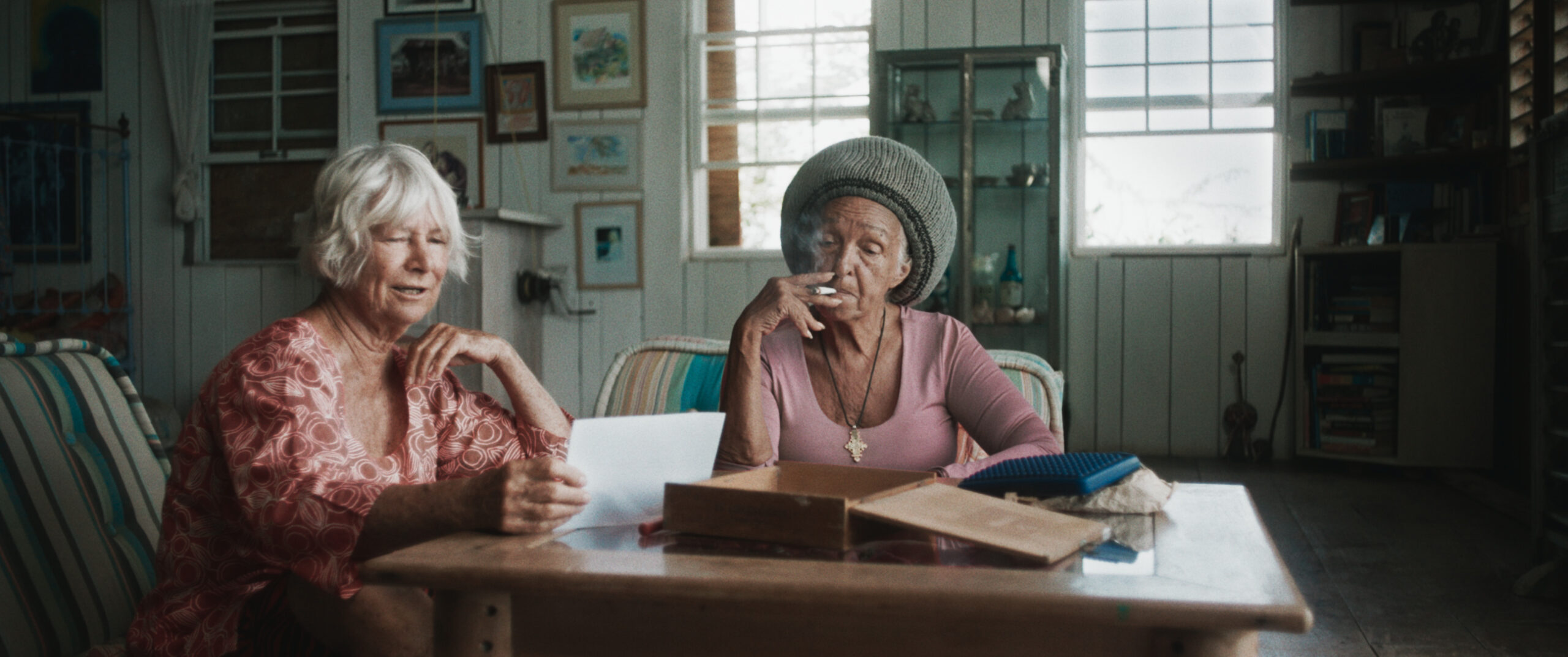
Although there are some sequences in which questions are evidently put to Diane in order to elucidate certain aspects of her life, largely the filmmaking feels unobtrusive. The modus operandi here seems to be to perhaps manufacture a situation – such as Diane going to visit an old friend – but then to allow life to take its natural course. This means that Diane comes across as utterly authentic; ill at ease discussing her own life, a matronly figure to many of the younger people who recognise her in the street or those who require her help to avoid legal trouble; and lighting up around those she loves. In one scene, her good friend Sally Henzell (the widow of Perry Henzell, director of The Harder They Come amongst other things) tries to get Diane to speak about her love life. She gets short shrift from a private woman who doesn’t see any compunction to discuss su h things.
Early in the film, Diane appears on a morning television show in Jamaica, allowing the film to surreptitiously introduce its main character to anyone unfamiliar – lawyer and friend of Bob Marley, involved in the early days of Tuff Gong Records, known to many as the “poor people’s lawyer.” Diane is uncomfortable with the adulation but the presenter makes no bones about the impact Diane and her work has had on people’s lives. Rather than recounting former victories, or amassing talking head testimonies, Pantling allows this to come out naturally in the film as Diane does her rounds, visiting clients in prison, conducting meetings in her office, celebrating someone’s acquittal with joyful family members. Multiple people imply, or state outright, that Diane has saved lives – she shushes them, lights up a spliff and carries on with her day.
At one stage, when she’s visiting Sally at her picturesque beachfront house, Diane speaks explicitly about Marley and – given he was her introduction to it – about what Rastafarianism means to her. Here she characterises it as an obligation to defend those who can’t help themselves and this is reflected in the legal work we see her undertaking. She is shown visiting a ghetto in Kingston where the police have been roughing up locals and encouraging her client to make a complaint in the hope of dissuading further violence – at one point she confronts a gun-wielding officer about his gloves, suggesting they’ve been reinforced to protect his knuckles when he punches someone. In one conversation, Sally asks her how she handles her conscience when defending killers and criminals. She unequivocally says she harbours no guilt at all, asking Sally if she’s ever been to the ghetto before adding that she would likely use a gun if she had to live there.
This side of Diane’s life is shown in small snippets, like a patchwork impression of her career and she admits on several occasions that she’s getting too long in the tooth to continue working for much longer. She describes herself as a frustrated artist and suggests she’ll perhaps retire and pick up a pencil again. What this life may look like is apparent in the sequences she spends with Sally, clearly an old and dear friend. They bicker and tease one another but the mutual affection shines through – not least when they take a road trip to swim in a cave the frequented as youths, cackling together as they fly down the motorway in a convertible.
The other moment in which Diane’s guard is most down is when she takes a trip to Miami to visit three of Marley’s sons – Rohan, Richard, and Robert. Described as mother, sister, auntie, teacher and many things in between, it is clear the important role that Diane played in their lives both before and after their father’s death and her love for them is evident as they recount funny stories from their childhood. Diane’s impact runs deep, within and beyond the Marley clan. At one point she mentioned Bob: “he had an answer – not a belief but a knowledge.” Watching Miss Jobson move to Diane’s unique rhythm, the same could easily be said of her.
Director, screenplay: Amanda Sans Pantling
Executive producers: Tammy Hart, Amanda Sans Pantling
Cinematography: Jurgen Lisse, Chris Browne
Editing: Juliana Montanes, Carlos Prieto Cabrera
Music: Sergio Bertran
Sound: Cora Delgado
Production company(ies): Hart Investments Ltd (Spain)
Venue: Oldenburg Film Festival (International)
In English
80 minutes
Read more of our coverage of Oldenburg Film Festival.