
Satoko Always
Satoko wa Itsumo
VERDICT: A subtle celebration of the transformative power of the written word, 'Satoko Always' features three women in very different stages in life.
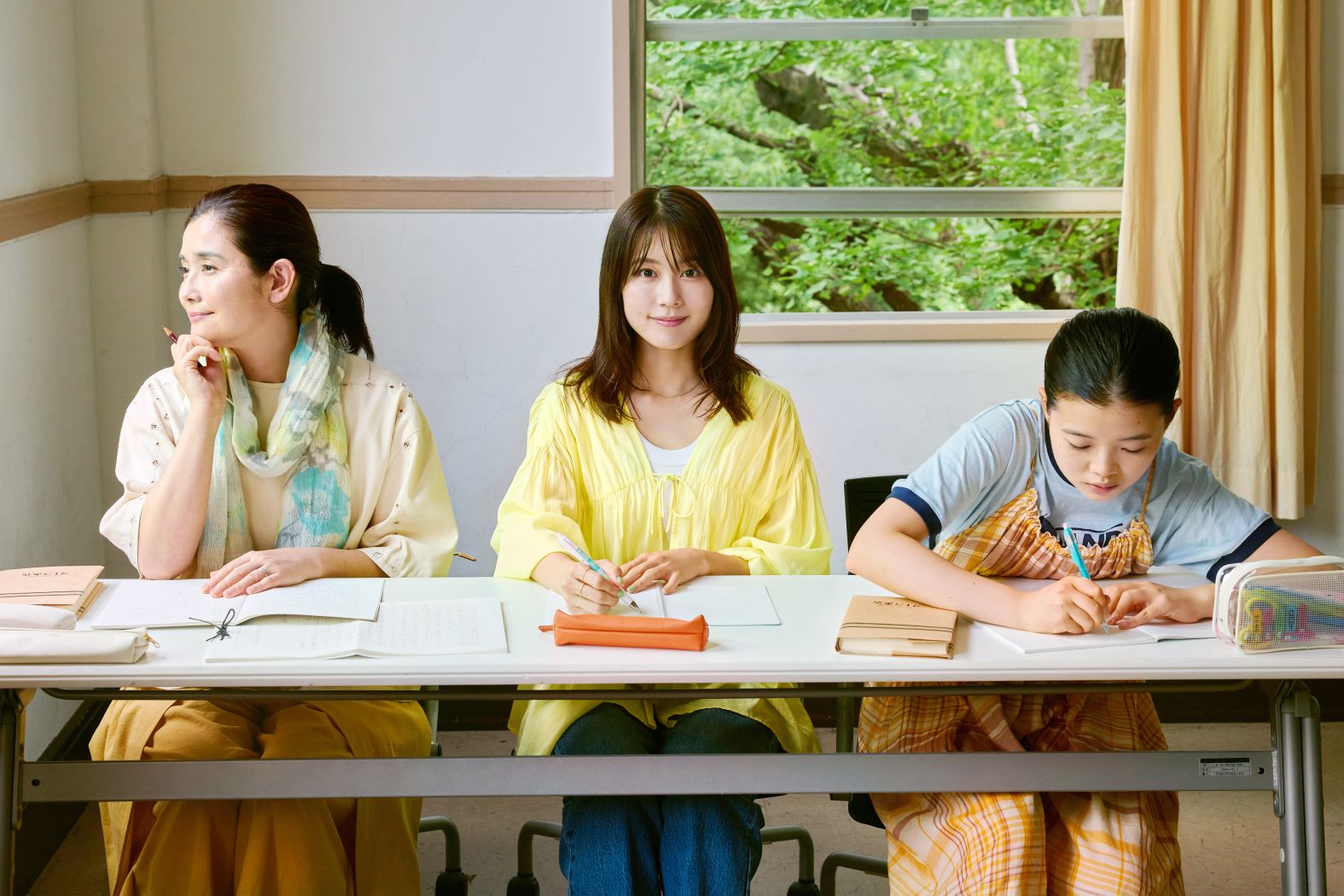
Revolving around a trio of women sharing a name and a burgeoning passion for penning stories on old-school writing paper, Satoko Always offers ceaselessly enchanting and engaging drama throughout its two-hour-plus running time. Teasing a career-best turn from Kasumi Arimura (Flying Colours), a much-welcomed lead role for Hikari Ishida (last seen in Renoir) and a disarming debut from teenager Kashun Himeno, Japanese cineasate Shuichi Okita splices the stories of his three protagonists with a screenplay that soothes and surprises in equal measure.
Bowing in competition in Busan a fortnight onwards from its domestic release in Japan, Satoko Always will then land in Honolulu for the Hawaii International Film Festival. With its clever structure, charming performances and a winning narrative about women breaking free of gendered social norms through the small yet very imaginative gesture of putting pen to paper, Okita’s most mature and high-concept outing (and his first in four years) should secure more festival bookings and commercial distribution because of its tone and Arimura’s star power.
Unfolding roughly in three chapters, Satoko Always is thus named because Satoko is always on screen – albeit embodied by three individuals very different in age, temperament and circumstance. The 15-year-old Satoko Nakai (Himeno) is a rolling ball of zany energy, her youthful joie de vivre clashing with her markedly un-girly face and an obsession with shiokara, a pungent condiment favoured these days mostly by pensioners. Satoko Nishida (Arimura), 35, is a pedantic publicity executive stuck in a rut as she faces younger competition at work and a frustrating affair with a married man (Joe Odagiri). Finally, there’s Satoko Iijima (Ishida), a cheery homemaker pondering on her future as her youngest son prepares to leave home for university.
Each with their own mundane interests – the wide-eyed teen with baseball, the jaded millennial with Korean soap operas, the mild-mannered Gen X-er with a session jumping on trampolines – the trio find themselves jolted out of their humdrum existence through writing. Nakai discovers her fantastically creative inner self as she draws inspiration from the thought of her aloof literature teacher (Yoh Yoshida) and a boy (Tohara Ogawa) she has a mild crush on; Nishida ditches the idea of her script-doctoring job and her useless lover by channelling her feelings onto paper; Iijima, meanwhile, gets to restart a vocation she has put on hold for her family’s sake.
Satoko Always is an unfettered celebration of creativity, and Okita doesn’t disappoint with the way he and his team – specifically DP Akiko Ashizawa and editor Masaya Ozaki – frame the very different strands. Matching Himeno’s refreshingly unselfconscious performance – comical expressions, jangly limbs and more – the director unleashes his teenage protagonist’s transformation with sharp dialogue, quick cuts and a hilarious break-the-fourth-wall sequence – a screwball schtick resembling his more outlandish comedies of yore.
While comparatively more conventional, the other two sections tally with the slightly different mental state the two older Satokos are in, with the thirty-something moving about in her claustrophobic urban setting and the fifty-something wandering around a bright suburbia void of substance and meaning. With his latest film, Okita manages to inject warmth and inspiration into the lives of characters contending with solitude and anxiety, a celebration of craftmanship in the age of automation.
Director, screenwriter: Shuichi Okita
Producers: Ryohei Tsutsui, Miyuki Sato, Suguru Kubota, Yuya Tanaka
Cast: Kasumi Arimura, Hikari Ishida, Kashun Himeno
Cinematography: Akiko Ashizawa
Editing: Masaya Ozaki
Production design: Norifumi Ataka
Music: Satoko Shibata
Sound: Takaki Yamamoto
Production companies: Amuse Creative Studio
World sales: Hakuhodo DY Music & Pictures
Venue: Busan International Film Festival (Competition)
In Japanese
138 minutes