
Ria
Ria
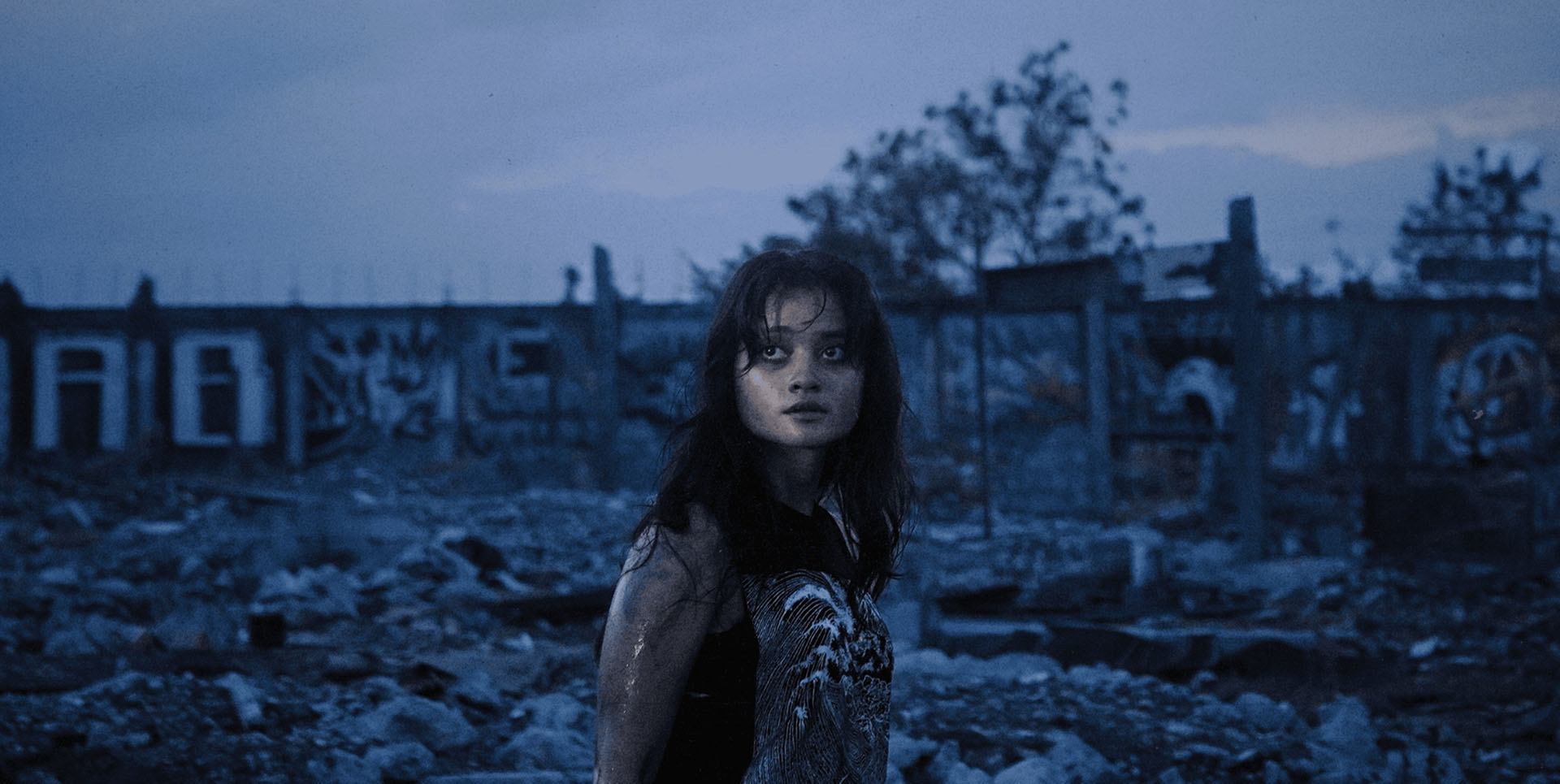
VERDICT: The portrait of a fiery punk on stage and off, Arvin Belarmino's 'Ria' celebrates rebellion against a greedy society and an unjust system.
A meek chambermaid by day and a manic rocker at night, Ria may be poor in material resources but not in spirit – and she stands central to Arvin Belarmino’s electric first feature. Receiving its world premiere in the Vision Asia section at Busan, Ria is a piece of relentlessly direct and devastating drama from beginning to end, with the Philippine filmmaker throwing in the odd dose of melodrama to keep things flowing for audiences of all ages and persuasions. Featuring a stunning turn by Nour Hooshmand as the titular rebel, the Philippine-Dutch-Norwegian-Saudi-Japanese co-production could have used a tighter edit. But as is, this raucous title should please punks and programmers no end in an age where politically-charged cinema is absolutely necessary.
Hooshmand made her acting breakthrough last year in Cinemartyrs, a genre-mashing historical drama in which she plays a beleaguered filmmaker who gets more than she bargains for when she tries to fill in some gaps in history by re-enacting a 19th century war massacre. Compared to that, her performance in Ria goes straight to the heart rather than the mind, as she plays a young woman who channels all the anger she accumulates during the day – the exploitation she experiences and witnesses at work, the frustration of having to scavenge for food – and projects them to her audience during nightly gigs in the slum she and her fellow hardcore punks call home.
Like the music – and the film in general – the role doesn’t call for subtlety. And she really dials it up to 11 when necessary, like the beginning of the film when she drives the moshing crowd crazy with a chorus that demands the masses “burn the state, crush the state, serve it on a plate”. The reason for Ria’s fury is quickly explained: their community is under siege by property developers, with thugs cutting electricity and water to houses or simply burning them down, to force people to leave. Meanwhile, other similar hubs offer solidarity and solace, and Belarmino goes out on a limb to recreate their ambience, where residents eagerly talk about their ‘zines and communitarian lifestyles.
The near-nihilist attitude of the young punks stands in stark contrast to the fatalist resignation of their mentor Olga (Sylvia Sanchez), a saintly figure whose way of doing good is to pick abandoned kids up off the streets and provide them with whatever they need. But it’s evident her approach to social justice is no longer enough. Now a sickly matriarch, Olga spends her time mourning her dearly departed partner (whose remains are entombed next to her bed) and observing the ascent of villainous capitalists in her community. Through Olga’s generous presence and ominous demise, Belarmino and his screenwriter Kyle Danelle Romero signal the futility of old-world courtesy: revolution, as they say, was never going to be a dinner party.
In some ways, however, Ria is indeed a party, a celebration of those who are hell-bent in their determination to fight a good fight for ideas and ideals they deem worthy to believe in. Admittedly, the film lags as the protagonist is momentarily dragged through well-worn narrative tropes commonly seen in social-realist melodramas. One of these is the stretch in which Ria nearly succumbs to porn barons, who use the hotel she works in as a clandestine set. On the surface, hope is certainly in short supply here. But the battling vigour of its characters, brought vividly to life by DP Geia de Vera, hints that all is not lost, despite the triumph of populist tyrants and their scions.
Director: Arvin Belarmino
Screenplay: Kyle Danelle Romero
Producers: Kristine De Leon, Alemberg Ang, Wesley Yap, Pavel Feldman, Alexander Seliverstov, Maria Sophia Atayde, Jossette Atayde, Jefferson Moneo, Rafael Laperal
Executive producers: Chad V. Vidanes, Alex Roc, Antonio Enco, Fabiola Caraza, Patrick Hackett, Pavel Feldman, Alexander Sliverstov
Cast: Nour Hooshmand, Sylvia Sanchez, Iana Bernandez, Veronica Reyes, Anastasia Bartolome
Cinematography: Geia de Vera
Editing: Renard Torres
Production design: Roma Regala
Music: Kid Moxie
Production companies: WAF Studios, Daluyong Studios, Nathan Studios, Human Films, Fildago Films, Prowler Pictures
Venue: Busan International Film Festival (Vision Asia)
In Filipino
95 minutes