
The Flower
Hwagoksa
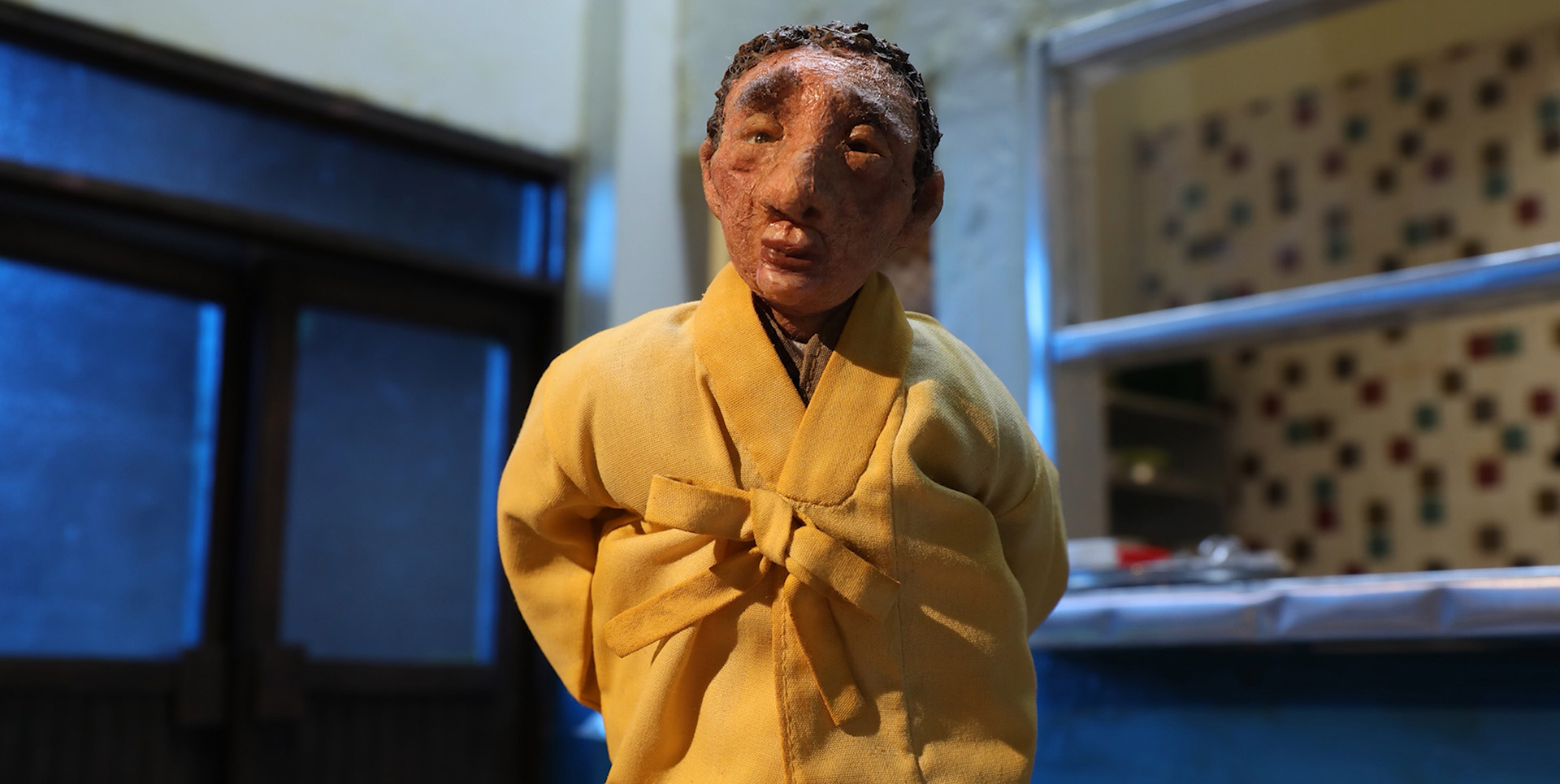
VERDICT: The first feature by Korean Academy of Film Arts graduate Kim Si-jin is a delicately designed stop-action animation that is at once funny and moving.
In The Flower, a crematorium owner uses his own imminent death to enlighten his worldly staff about the value of old-school human goodness in an increasingly cynical age. Though much younger than his protagonist, writer-director-producer Kim Si-jin may well identify with the old man’s philosophy. Making its bow in the Busan International Film Festival’s Vision Korea sidebar, this film is a showcase of the talent in Korean animation, alongside the main competition title Long Long Night.
Defying the advent of automated special effects and AI, the Korean filmmaker’s feature-length debut is a stop-action animation which thrives on painstaking artisanship and – perhaps just as importantly – a story steeped in human frailty and warmth.
The film is made almost entirely with miniature figurines carved out of wood and moulded with clay, proof there’s still a lot of value in crafting art by hand, with heart, and through dedication to whatever form interests the maker. Nodding both to mainstream comedy (with the use of devices such as quick stuttering zooms) and arthouse drama (through its monochrome flashback sequences), The Flower is at once accessible and inventive, a film that speaks to all ages with its reflection on mortality and how it fits in with the pragmatism permeating modern life.
The Flower begins with the long-hospitalised Mr Lee (voiced by Park Ji-il) learning of the diagnosis of his terminal disease and deciding to return to his crumbling crematorium to wind down his days. He soon discovers his staff have altered the business a lot while he is away. His manager Mi-yeon (Beom Do-ha) hawks gold-plated urns to grief-stricken relatives, the meek in-house Catholic priest Peter (Lim Jin-woong) offers rituals for whatever denominations families demand, and the Buddhist monk Yun (Yang Hee-moon) charges excessive “spirit money” and, most ominously, is conspiring to have the whole place demolished to make way for his own temple.
In a series of comical verbal to-and-fros, Kim delivers belly laughs and competent drama to great effect, with the best scenes mostly revolving around the rows between the scatter-brained manager Mi-yeon and seemingly amoral monk Yun, who leaves everybody aghast when he growls: “The director finding his way to the Buddha might give us a chance to survive!” Amidst all this, the director also interweaves moments of intense melancholy linked to the grumpy Mr Lee’s own reflections and nightmares about what he witnessed in his work, and what he sees for himself in the future, for example; or his subdued yet enlightening conversations with his wayward staff.
It’s hardly a spoiler to reveal Mr Lee will soon die, an inevitable development made intriguing by the bizarre consequences that entails. His demise is more than necessary: it provides the other characters a pause for thought and a chance for redemption, of course. But Kim also uses the void Mr Lee leaves behind to heighten our sense of the space in the crematorium. Handling his own cinematography and editing, Kim recreates the film’s objects and backdrop with meticulous care, giving the viewer impressive close-ups of the endearing clutter lying around the run-down place.
One of the more sensual highlights of the film is a feast Father Peter whips up to mark Mr Lee’s return to work. It’s a very ordinary commoner’s spread – eggroll rice, kimchi stew and so on – but Kim’s wizardry manages to evoke the taste and emotional resonance of these dishes. Though raw in places, The Flower remains an immersive experience that deserves appreciation and admiration.
Director, screenwriter, producer, cinematography, editing: Kim Si-jin
Cast: Park Ji-il, Beom Do-ha, Yang Hee-moon, Lim Jin-woong
Production company: Korean Academy of Film Arts
Venue: Busan International Film Festival (Vision Korea)
In Korean
71 minutes