
Closure
Bez konca
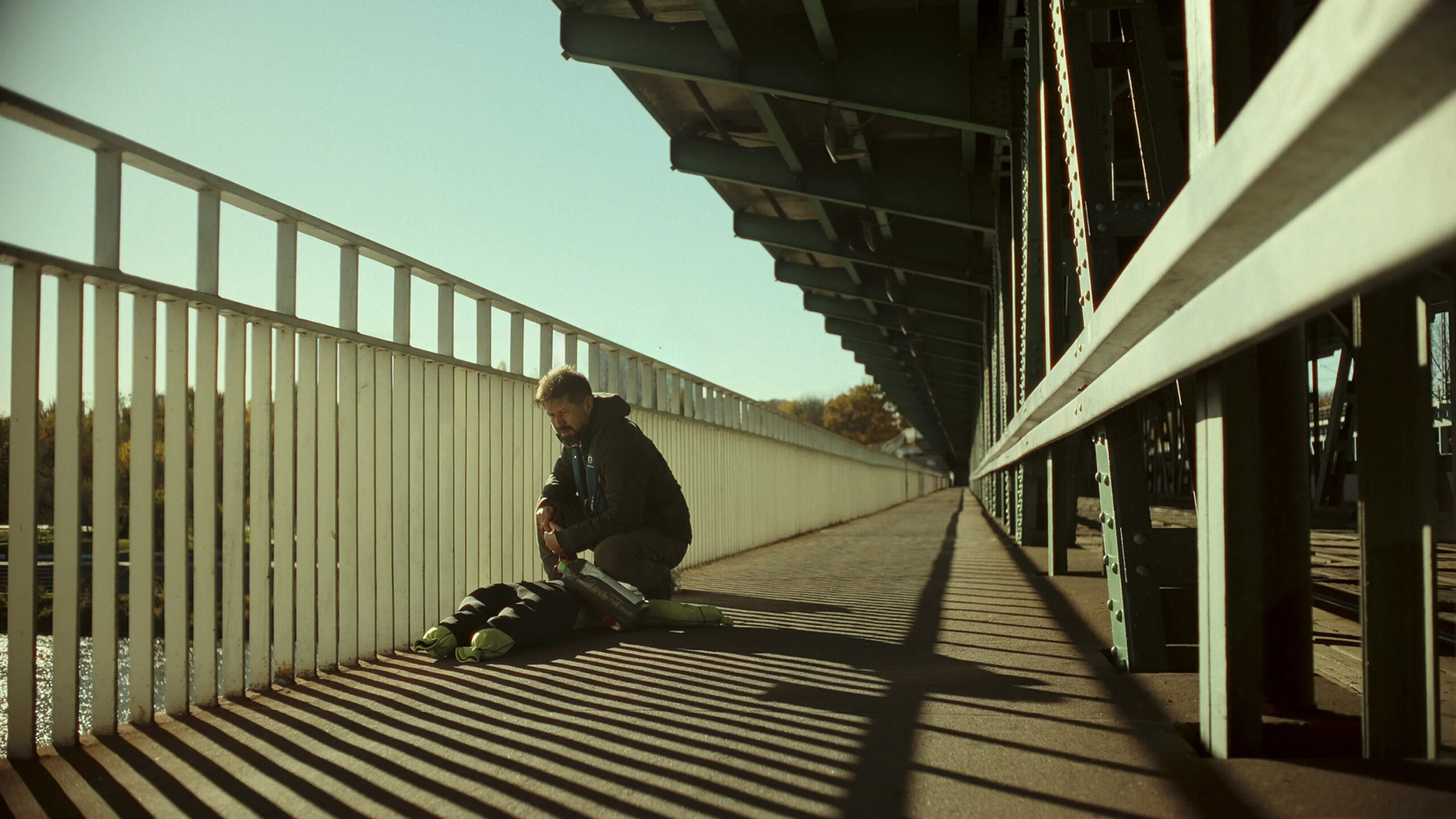
VERDICT: Stark, unblinking and quietly profound, Polish documentarian Michal Marczak charts the existential journey of a father trapped in a search for his vanished son.
Polish director Michal Marczak established himself as a documentarian with a sensitive, intuitive ability to tap into the rhythms and flow of group dynamics and the youthful idealism of radical dreamers a decade ago with his acclaimed Warsaw summer-parties hit All These Sleepless Nights. Now, it is bracing to see that talent for open, empathetic connection with his subjects matured and brought to the vastly more sobering, daunting topic of teen disappearance, suicide and complicated grief in Closure, which screens in the Audience Competition at DOK Leipzig, part of a successful festival run since its premiere at Sundance.
Marczak accompanies a father on his regular, obsessive searches of Poland’s Vistula River, as he looks for more than a year for his son, who vanished from a bridge without a trace — one case among more than half a million young people reported missing in Europe and the US each year. Haunting, unflinching, and finally regenerative through the tenderest hints of reconnection with world as it is, this is a portrait of unexplained tragedy and humanity’s desperate need for meaning that defies the easy conventions of true-crime spectacle in every way, and reaffirms Marczak as a distinctly unique voice in Polish cinema.
The 2023 disappearance of sixteen-year-old Krzysztof Dyminski, who was last seen on CCTV standing on Warsaw’s Gdanski Bridge, gripped Poland, as his family and the police, uncertain whether he jumped or walked away, followed up a flood of reports of believed sightings from the public. Rather than delving deeply into Dyminski’s backstory, Closure becomes less focused on solving the mystery, than charting the psychological shifts of Krzysztof’s father Daniel, as he struggles with whether to end the river search that has begun to consume his life, and to find a way to make peace with the terrible uncertainty that gnaws at his waking hours and dreams.
There is no romance to these searches on the river: they are bleak and gruelling, as crews sift through heavy weeds and debris, and place the tiny expedition parties in a state of constant tension. There are false alarms, and, more disturbing, even viscerally nauseating to the seekers, the discovery of actual bodies of others who have lost their life in the Vistula, occasionally bringing closure to other families. Underwater footage reinforces a sense of the muddy depths of a realm that can never be thoroughly trawled. There is still no sign of Krzysztof in the water, but a parallel social media deep dive of his TikTok account by Marczak reveals the teen had an interest in others’ posts about death, suggesting suicide ideation and online life as an isolating, unseen undertow.
The family grasps at consolatory hope in any form, even if it leans into superstition. Daniel, despite many months of fruitless river expeditions, says he feels they are close to finding his son now. He has resisted setting a date to end the search, and in talks around the dinner table with his wife Agnieszka and surviving son Patryk, he pushes an autumn culmination back into winter. The family relate dreams they have had in which he is still alive, which they go over for clues. Daniel throws loaves of bread off the bridge to track their path, an ancient method for locating the drowned he was told about. In conversations with Marczak around a campfire, Daniel unloads his troubled replaying of the past and his crisis of meaning. His friends and relatives express concern he will cross a line after which there is nothing left to him but the river.
But quietly, miraculously, as the solution-oriented father starts to shift in his grief, he is able, in moments underplayed and never forced, to appreciate and reconnect with the present moment and beauty of what remains. The defining turning point is simple, as Daniel asks Marczak to record the birdsong they hear to listen to during car rides, but it hints at a change that is deep, fundamental, and a sort of roadmap for a bearable future. By the end, as Daniel marks his fiftieth birthday, the film has become more for the living than the dead, a poignant portrait not only of a loss, but of the seasons of grief and the regenerating power of supportive community — and proof that documentary cinema can serve as a tool of healing connection and focused reflection.
Director, Cinematographer: Michal Marczak
Editor: Anna Garncarczyk
Producers: Monika Braid, Michal Marczak, Remi Grellety, Katarzyna Szczerba, Karolina Marczak
Composers: Pawel Mykietyn, Dirk Dresselhaus, Ilpo Väisänen, Hildur Guðnadóttir, William Basinski
Sound: Katarzyna Szczerba, Konrad Blaszczyk
Production companies: Braidmade Films (Poland), Warboys Films (France)
Sales: Autolook Filmsales
Venue: DOK Leipzig (Audience Competition)
In Polish
105 minutes