
Sumo: Spirit Weighs Nothing
Sumo: Spirit Weighs Nothing
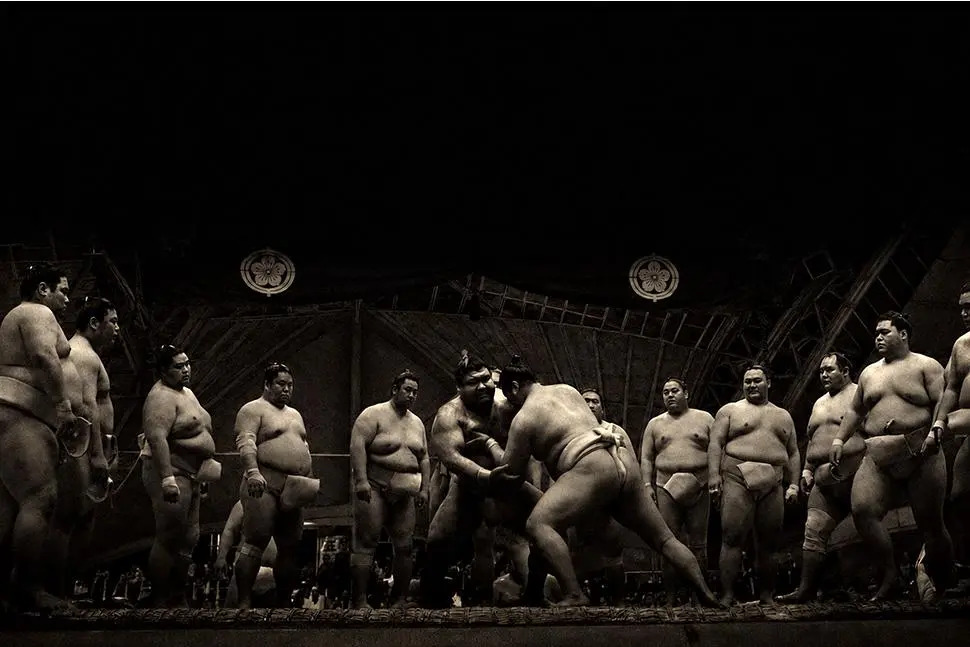
VERDICT: Emotional vulnerability is granted as much space as reverence in Erik Shirai’s absorbing, handsomely packaged doc window onto a declining Japanese tradition.
In Sumo: Spirit Weighs Nothing, Japanese-American director Erik Shirai offers fascinating, rare and surprisingly sensitive insight into the closed, masculine world of sumo wrestling, and the daily challenges of its athletes, strongmen who have a much lower life expectancy than other men in Japan, as they commit to “live short but boldly,” as one of them puts it.
The slickly packaged, ESPN-produced documentary, which world-premiered at the Venice International Film Festival and now screens in the Audience Competition at DOK Leipzig, is essentially an effective crash-course for western audiences in understanding and appreciating a declining sport (Shirai’s 2015 The Birth of Sake demystified another Japanese tradition, that of sake-brewing.) But while it is very reverent toward the sumo tradition as a way of life, emphasising its ritual elements and warrior ethos, it does not hold back on the heavy toll it takes on athletes’ bodies and the unrelenting psychological pressure to perform the rikishi (professional wrestlers) face as they give all they have to climb the ranks and stay at the top.
A potted summary of the origins of sumo is subtly woven into a documentary that switches between a warm sepia that nods to ancient heritage and more naturalistic colour. The film asks whether the tradition, which originated 1,500 years ago as a Shinto ritual to appease the gods for a good harvest, and was popularised by feudal lords who treated rishiki like samurai, can endure in a changed world in which fewer kids are signing up for training. While success still makes wrestlers popular celebrities with devoted fandoms, the gruelling nature of the sport is detailed through the strict regimens and ups and downs of several wrestlers, concluding with the retirement of the reigning yokozuna (highest-ranked champion), Terunofuji Haruo, due to ongoing health issues, and the rise of a nineteen-year-old rookie, Yonezawaryu Daiki.
The stable of wrestlers whose training we observe is run by Master Sakaigawa, a sixty-two-year-old who comes across as a strict but fair force in the rigidly hierarchical and rule-bound environment, demanding full commitment from his cohort, but never needling them when they are too down. As part of weight training, wrestlers are tasked with consuming a huge number of calories per day, and eating in the sumo school is considered a skill requiring the same level of commitment as practice sessions, sometimes prompting trepidation among new recruits. Yonezawaryu expresses initial reservations over the sport’s rigid demands, as he sees first-hand the physical risks, and bristles at the school’s curfew and his circumscribed freedoms. Through a series of tournament match-ups, losses and victories, we share the wrestlers’ on-edge apprehensions.
At the other end of the professional arc is Terunofuji Haruo, a Mongolian yokozuna whose doctors warn him that his body has reached its limit, but who is determined to go for one more championship win, or at least until a new yokozuna to carry on the rituals can be found (yokozuna are thought to be closest to God, and ceremony also factors large.) His wife, Tsegmed, and baby also feature prominently. She is unswayed by celebrity, and her solid support through his years of hardship when he was coming up in the field, when he dropped into the unpaid division and had knee surgery (“I married the man, not the fighter,” she says), are praised by her husband as the backbone of his will to succeed. The sequences on their relationship are a welcome inclusion in an otherwise very male-dominated film.
While the yokozuna does not relish the prospect of a lifespan cut by ten to twenty years, he says he finds meaning in sacrificing to shore up national pride. This fits with a film that plays it fairly safe by including nothing too critical or scandalous about sumo. That said, in a landscape of commercially-inclined documentaries that are all too happy to reach for lurid spectacle to sell their stories, the mindful respect that drives Shirai’s portrait stands out as refreshing.
Director: Erik Shirai
Editor: Frederick Shanahan
Cinematographers: Hiroshi Hara, Erik Shirai
Producers: Maria Delgado, Teddy Leifer, Sam Stanley, Sigrid Dyekjaer, Yusuke Kamata
Cast: Terunofuji Haruo, Hiradoumi Yuki, Yonezawaryu Daiki, Kosei Motomura
Music: Rutger Hoedemaekers
Sound: Takuya Kawakami, Yamato Kamei, Fusako Aratake, Yasuhiro Arihara, Yasuaki Kusachi, Andrew Tracy
Production companies: ESPN/Disney (US), Rise Films (UK), Real Lava (Denmark), Generation 11 (Japan)
Sales: ESPN (Maria Delgado)
Venue: DOK Leipzig (Audience Competition)
In Japanese, Mongolian
99 minutes