1.5°C: Pyropolitics and the New World
1.5°C: Pyropolitics and the New World
VERDICT: Lukas Marxt’s mesmeric, surreal documentation of the LA wildfires rejects dialogue and analysis for an immersive, visceral experience of collective labour in a world ablaze.
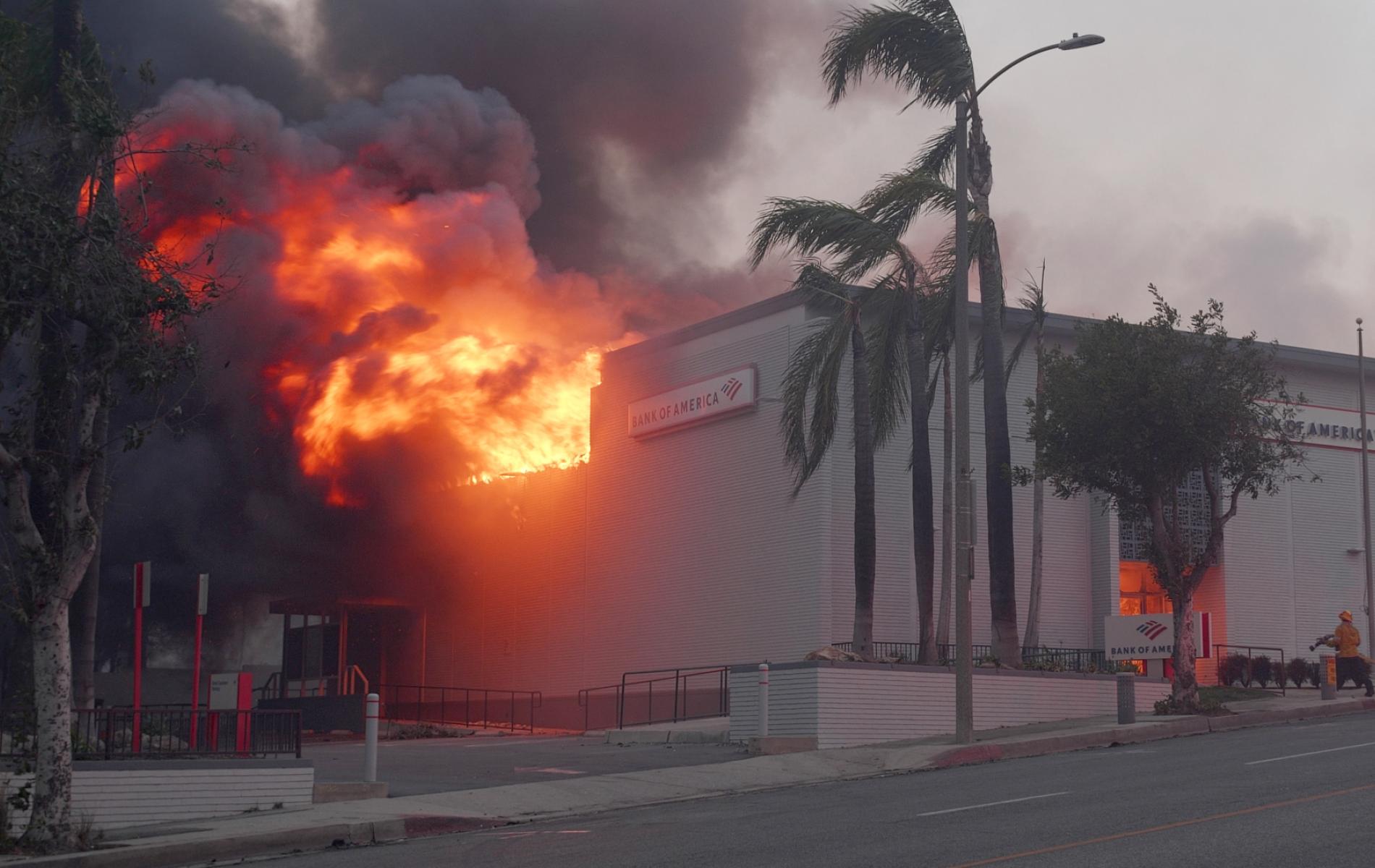
The crackle of fire, with its primal familiarity, takes on an urgent edge of apocalyptic warning in 1.5°C: Pyropolitics and the New World, which immerses us in documentary footage of the wildfires in and around Los Angeles of January 2025, as they rip a path of devastation through the city. Austrian filmmaker Lukas Marxt has explored the landscapes of California and the destructive impact of humans upon them in non-conventional documentaries before, such as 2024’s Among the Palms the Bomb, or: Looking for Reflections in the Toxic Field of Plenty, which also screened at DOK Leipzig and dealt with traces left by nuclear experiments. He is back at DOK Leipzig with 1.5°C: Pyropolitics and the New World, which has its world premiere in the international documentary competition, and takes its title from both the Paris Agreement global warming target limit, and philosopher Michael Marder’s concept that we are now in the grip of an era of pyropolitics — the stable and shadowy underside to the territorial power games of geopolitics — and must find a language to deal with the chaos of a world ablaze.
Audiences looking for a simple primer to understand the causes and cures of a pessimistic and unpredictable global era of climate anxiety and combustible uncertainty will not find it in Marxt’s meditation. The film is virtually dialogue-free. Save a reference to Marder’s thought in a beginning title and a few contextualising figures quantifying the areas wildfires now consume annually at the end, it is not geared toward political or historical analysis. Numbers and facts of the climate crisis have been repeated by scientists and newspapers for years to no avail, after all, and what Marxt is more interested in is taking us inside a visceral encounter with environmental realities on the ground; with the red-hot flames, the sheer scale of their encroachments, and the surreal transformations wrought on inhabited space, so that we might glean through the power of the cinematic experience what through logic alone we do not. The result is a snapshot of calamity that is loose, with the audience left to connect the dots on its meaning, but it is, as a spectacle of catastrophe and damage control, gripping and mesmeric.
We are first taken close in with a team of firefighters and their efforts to halt the spread of a ferocious wildfire that has made the sky glow orange and blacken with smoke. Their torches cut beams through the night’s darkness and their chainsaws cut back palms, as choppers whirr and the flames burn with an overwhelming, relentless roar. Clothed in yellow protective gear, their communication as they shout between one another is calm and efficient, their toil steady. It is a picture of collective, and coolly collected, efficiency, in the face of nature’s terrible, unleashed force. A media interview reveals many have been called back from holidays. The film is a tribute to the potency, once activated by a crisis so immediately life-threatening it cannot be ignored, of group solidarity in action. But the crews’ stoic labour under pressure raises the question of why policy-makers were not able to head off the need for such tremendous, organised exertion.
The absence of sense-making narration as a guide allows us to fully appreciate the surreal unreality of the situation, which, in the artificial illumination of headlights on firefighter hats, takes on a distinctly cinematic quality. The iconic palms of this lucrative mecca of entertainment are just as vulnerable as trees anywhere, in a climate emergency that does not differentiate. From firefighters, we move to equally well co-ordinated relief efforts in evacuation shelters for citizens and pets. Striking visual details — a street sign bearing the quaint name Mariposa (butterfly in Spanish), stands amid scenes of urban devastation, prey to a nature transformed into a sparking, deadly fury. But it’s the crackle of flames that stays with us, as a visceral reminder that there will be more of these extreme fire events, that already have in the past two decades doubled in frequency and intensity, if climate targets are not met and a warming world addressed.
Director, editor, producer: Lukas Marxt
Cinematographers: Lukas Marxt, Carson Davis Brown
Composer: Jung An Tagen
Sound: Rene Peltsch
Production company: Sunburst Film (Germany)
Sales: Argos – Centre for Audiovisual Arts
Venue: DOK Leipzig (International Competition Documentary Film)
Without dialogue, English titles
73 minutes