
My Notes on Mars
My Notes on Mars
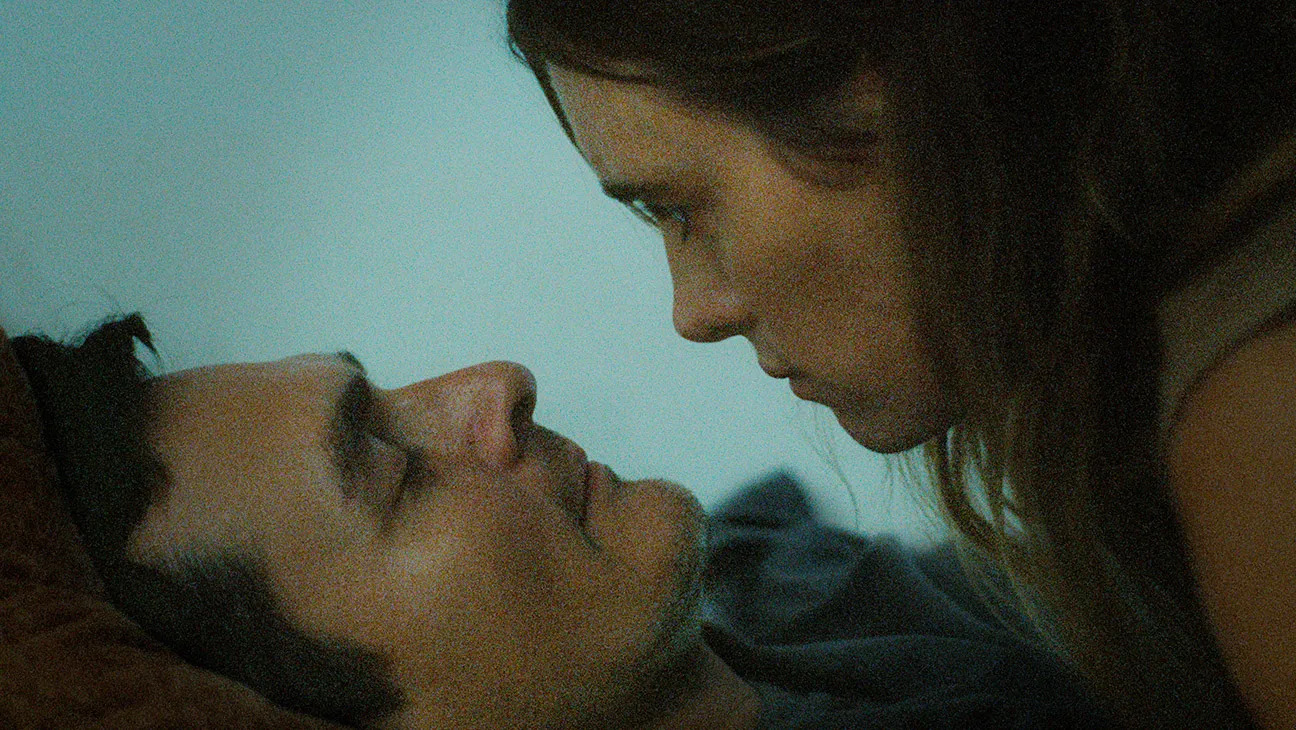
VERDICT: Lili Horvat’s eerie sci-fi on marital breakdown, space conquest and the limits of knowing absorbs as a mood piece, even as it plays its mysteries a little too safe.
Outer space is an intoxicating but lonely obsession for a troubled astrophysicist in My Notes on Mars, Hungarian director Lili Horvat’s third feature, and her English-language debut. Part marriage breakdown drama and part eerie sci-fi, the film, which had its world premiere at Venice and is the opening film of the International Film Festival Mannheim-Heidelberg in Germany, merges melancholy with an existential uncanniness around the idea of unstable and unknowable identity, and home as insecure, before shifting into the wholly supernatural.
Mistakes are often made in the sphere of mathematics, it’s pointed out at one point, because when things don’t confirm what we think we know, we are reluctant to recognise them. Horvat is more than happy to allow the universe to remain a realm we have no tools to fully understand, and feels no need to explain the film’s central mystery — where a brilliant but psychologically struggling astrophysicist went when she vanished for two months, and who she is when she returns — instead leaning into haunting atmosphere and the emotional textures of unease. The film, while engrossing, is a little too conventionally straightforward in its plotting, as it echoes Andrei Tarkovsky’s sci-fi arthouse classic Solaris (and its remake by Steven Soderbergh) in its inter-planetary vision of the unsettling return of a dead relationship to a guilt-ridden husband, but does not go all-in on dream logic. In the end, it feels neither strange enough, nor grounded enough in the real, to hit at full force.
Mackenzie Davis is convincingly willful and mercurial as Margot, a gifted MIT researcher who has recently quit her profession after a mental breakdown and moved to Hungary for a year or two with her husband, Sam (Rupert Friend), a horse-breeder tired of taking second-place to Margot’s work. Both are nearing their forties, and Sam is pushing for a baby. But Margot is still obsessed with her work, skipping out on planned time together, and staying up at night feverishly scrawling notes on her hypothesis that the planet Mars is completely habitable. It’s Friend who provides the audience’s emotional anchor, giving a nuanced, deeply felt performance as a man in the futile desperation of knowing on some level his marriage is over, but gripping to any shred of consolatory hope. After one abandoned date too many, Margot reluctantly joins Sam on a hike in the mountains, and doesn’t make it back — at least not until the day of her memorial, when she stuns a room convinced she is dead by wandering in wearing the same hiking outfit she was wearing on the outing where she vanished.
Blues and grey-greens dominate the film’s palate, with D.O.P. Robert Maly creating a misted, almost mystical moodiness to scenes of alienation and contemplation in the craggy landscape (the alpine sequences were shot in Austria), and to recurring moments gazing at the allure of Mars, a glowing red dot in the sky that promises so much, or simply embodies everything we can never really get close enough to know. The scenes of horse-breeding and training are less evocative, but serve to position Sam as a man of the earth-bound outdoors, out of synch with Margot’s cerebral explorations.
As with many psychological horrors of disappearance, return and impenetrable identity, Margot inspires not just relief but fear when she reappears, becoming a repository for an era’s anxieties. Not only does she not remember her husband, and is obsessed now instead with a young astrophysics researcher (Atanaz Babinchak) she met at the observatory, she is intent on burning her notebook, concerned with what NASA and others might do with the knowledge for Mars colonisation. The film is ultimately a timely meditation on humans as an environmental threat, and a warning about scientific advances that might not be synonymous with progress.
Director, writer: Lili Horvat
Editor: Karoly Szalai
Cinematographer: Robert Maly
Producers: Dora Csernatony, Lili Horvat, Alexander Dumreicher-Ivanceanu, Bady Minck, Jovan Marjanovic, Mirsad Purivatra, Naima Abed, Emilie Georges, Anne Carey, Evan Moore
Cast: Mackenzie Davis, Rupert Friend, Atanaz Babinchak
Music: Gabor Keresztes
Sound: Rudolf Varhegyi
Production companies: Poste Restante (Hungary), Amour Fou (Austria), Obala Art Centar (Bosnia-Herzegovina), Parangal Film (Montenegro)
Sales: Paradise City Sales
Venue: Mannheim-Heidelberg
In English
111 minutes