
Mannheim-Heidelberg director Sascha Keilhoz on the 75th edition’s “call to action”
.
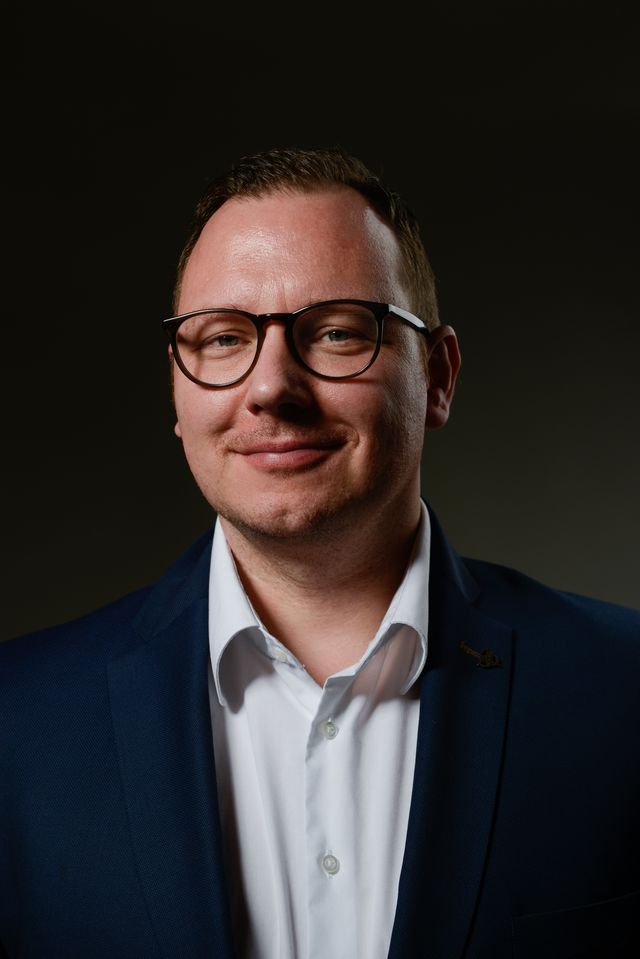
VERDICT: In his seventh year as IFFMH’s artistic and commercial director, Sascha Keilholz reflects on how the festival is meeting this moment of global turbulence, and facing the future.
The International Film Festival Mannheim-Heidelberg has kicked off its 75th edition across neighhbouring cities of Mannheim and Heidelberg in Germany’s southwest, at a time the film festival landscape in Germany is under acute political and post-pandemic pressures. IFFMH’s artistic and commercial director Sascha Keilholz has helmed the festival since 2019, weathering the challenge of taking over the position just before the major disruptions of Covid-19, which pushed the event temporarily online. In an interview on the eve of this year’s edition, he reflected on a renewed sense of mission for the festival as a beacon for new filmmaking talent and a vital hub of public debate, community and fresh cinematic directions.
The festival celebrates its 75th anniversary this year, at a time of great political turbulence and anxiety in Germany and the wider world, what with the rise of the AfD, concerns over AI, and so on. How do you see the role of cinema, and the festival, in meeting this moment?
There seems to be a lot of fear amongst people. Especially several fears of loss: Loss of control, loss of relevance, loss of economic wealth. Furthermore many people are experiencing forms of loneliness. Festivals, at least those organised like the IFFMH, can create a sense of community. And cinema itself gifts us not only with a very intense sensorial experience, but also a group experience. As an international film festival, we celebrate a welcoming culture. We love to exchange very different perspectives – aesthetically, intellectually and politically – and discuss them. With our focus on emerging directors, we are presenting new perspectives, some of them definitely unknown or unfamiliar to us and our audience. From this point of view, we attempt to foster an openness to change.
Can you comment on Imagine Futures! as your choice of motto for this edition?
We took the anniversary as a chance to question ourselves. To reflect on where we come from, where we stand and which direction we want to go. We even published a book which is representing and documenting this process. It starts with a historical analysis of the festival’s founding years, describes what we stand for right now and then reflects on how we can imagine possible futures. We did not just want to look back, but to emphasize what the festival has always been: a kind of seismograph, a sensitive indicator in terms of discovering new talents, presenting new trends and showing a glimpse of things to come. We have deliberately chosen to frame the motto as a call to action in order to emphasise the participatory nature of the festival.
Can you tell us why you chose Marine Atlan’s La Gradiva as your Centre Piece film?
It is not only one of the best debuts in recent years, but one of our absolute favourite films this year. Coming-of-age films have been very relevant recently and especially for this festival edition. Aesthetically La Gradiva is simply brilliant. Everything that is going to happen within the two and a half hours screening time is condensed within the first sequence. The casting is amazing. A wonderful combination of professional and non professional actors. Leading Man Colas Quignard is nominated for our Young Audience Award.
Trine Dyrholm is a guest of honour. What can audiences look forward to with this homage?
Our whole programming team loves her work. It is actually the first time we are honouring an actress for her oeuvre. She has always been choosing very demanding projects, has always been taking risks and exploring herself. I think it’s going to be fascinating to compare her performances in films spanning several decades, up to her latest role in The Guest.
Your festival is framed as a festival for discoveries. What new directions are exciting you most in cinema right now?
I am very impressed with Iranian and Hungarian cinema, for example. You Don’t Belong Here is a mesmerizing contribution to the Romanian New Wave. Furthermore, there is great variety in queer cinema this year, which fascinates me. From La Bola Negra to The Riverbank, Coward, Lovers Sleep Alone and I Rarely Wake Up Dreaming. Then Berenger Thouin’s aesthetic concept of depicting history in L’Age D’Or is something that deeply impressed me. This year’s “class” of French cinema is also reflecting on resistance versus collaboration, which is quite fascinating; Moulin, László Nemes’ latest film, is another example. Lars Eidinger, who portrays Klaus Barbie, will be present at our German premiere. In uncertain times, with the rise of nationalist and radical tendencies, as you mentioned in the very beginning, many filmmakers seem to approach stories at pivotal points in history. There is an urge for people to take a stance.
For us at IFFMH, this is the year where our Cutting Edge Talent Camp very visibly breaks through at our festival. It is a programme for film-school-students with their first projects. Two of those projects will compete in our main section On The Rise and three other alumni are presenting their new films. In this respect, it is a very interesting year for us and young international cinema rooted in Germany.