
Tear Gas
Tear Gas
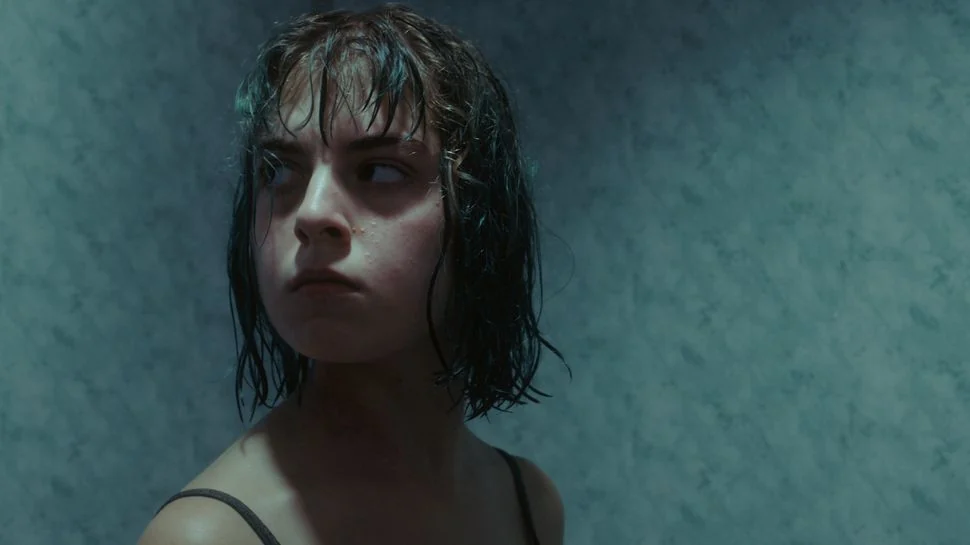
VERDICT: Uta Beria’s sensorial immersion into the bruised heart of Georgia’s resistance movement is a poetic gesture of hope for a fragile future in an era of Gen-Z revolt.
In a politically turbulent year of Gen Z-led protests across Europe, Georgian director Uta Beria’s feature Tear Gas, an on-edge, atmospheric snapshot of a nation at an urgent crossroads and a teenager whose future is locked in the chokehold of oppressive geopolitical forces, captures the spirit of our troubled moment. His prickly and enigmatic sophomore feature (after 2019’s well-regarded Negative Numbers, set in a youth detention centre), which screens at the International Film Festival Mannheim-Heidelberg in Germany after its premiere at the Locarno Film Festival, where it won the Youth Jury Award, was partly shot within real demonstrations in Tbilisi, and defies glib and easy thrills.
In a film of barebones plotting more attuned to unspoken and cross-generational emotional undercurrents than the surface minutiae of daily incident, we’re immersed in the nightmare of bodies stuck between repression and revolt. Standing one’s ground, on contested territory or in public dissent, carries physical, visceral danger, but is presented as the only link to continued inter-generational meaning and identity in a Georgia under ongoing, creeping occupation by Russia. The lack of a propulsive, fleshed-out narrative will limit release prospects. Nevertheless, this is an impressively singular vision of rebellion’s rhythms, shot with moody potency as a disorienting, sensorial half-world in arresting cinematography by Goga Devdariani; a unique and darkly evocative meditation on displacement, solidarity, violence and resistance, in which the body is both a freedom vector and a targeted battleground.
Sixteen-year-old Elene (Taisia Eradze) is being raised by her father (Gaga Shishinashvili) and grandma, played by Mzia Arabuli, the internationally renowned star of Levan Akin’s Crossing and here an indomitable presence. She is missing her mother (Kato Kalatozishvili), who has left amid a rough divorce. With green highlights in her hair and a brooding demeanour, she could be any angst-ridden teen, but she’s been allowing herself to be choked out in judo class without signalling for release, and her family is concerned her difficulties may go beyond mere growing pains. Trauma, after all, runs through this society like a faultline, making it hard for citizens to breathe. The opening, which includes still historical archival images where each face of those forced to flee conflict is a summary of injustice, is clear on what Beria regards as a primary cause: the wars of 1993 and 2008, and the nearly 300,000 Georgians internally displaced by Russian aggression. A coffin is carried stealthily through a forest, almost mystically beautiful as its trees stand illuminated by strips of sunlight. The family is slipping across the border to bury a relative in their home soil, but must flee back from bullets, their ache to return to their seized houses renewed.
When Dali joins her neighbours on a trip to Tbilisi for a protest rally, she persuades Elene to come — despite Elene’s policeman father being there on duty. As three generations of women (Elene’s mother is also there) weave through the crowds, more bewildered and out of sorts than outraged, we’re drawn into the choreography of a fractured society. The family dynamic, reflecting Georgian society’s polarisation in microcosm, is more allegorical than it is entirely credible, but when Elene locks eyes with her father through his visored helmet as he takes his place in an intimidating wall of colleagues in riot-gear, who will brutally beat activists when the mood turns later in the night, her sense of betrayal of Georgian by Georgian bites deep.
The political specifics of today’s ongoing Georgian anti-government protests are treated in broad strokes only. Solidarity with political prisoners, and opposition to the “Russian law” (the newly introduced foreign agents’ law, echoing one used in Russia to stifle dissent) get mentions in rally speeches and news broadcasts, anchoring a general taste of the anger in opposition circles that Georgia has turned away from aspirations to join the European Union and is on an anti-democratic course.
Tear Gas is itself a monument to resistance through cinema, and long-running protest action on Tbilisi’s Rustaveli Avenue. Funding woes meant the film took five years to complete, amid the Georgian ruling regime’s crackdown on free expression in recent years, and an ongoing boycott of the Georgian National Film Center by hundreds of industry professionals. A snatch of news footage shows a protest procession heading from the Film Center to join a larger rally at parliament — a nod to repression and resistance that started in the field of culture, and has fanned out into wider civil society. It is fitting, then, that in the most inspired and poignant sequence, Elene ends up sheltering from tear gas on the red seats in an empty screening auditorium, in a bitter-tasting and parody of a date, with the young, long-haired lad that has helped her out of the air-positioned chaos. It’s her first time in a cinema, she notes, and she faces us as if in a mirror. But nothing is playing where she sits. The noise outside draws her back to the protest, a brief glint of romance lost in the shadowy undertow of wider historical forces.
Director, writer: Uta Beria
Editor: Nodar NozadzeCinematographer: Goga Devdariani
Producers: Nino Chichua, Anna Khazaradze, Uta Beria
Cast: Mzia Arabuli, Taisia Eradze, Gaga Shishinashvili, Kato Kalatozishvili, Boris Adronikashvili
Music: Rémi Boubal
Sound design: Andreas Mühlschlegel
Production companies: 1991 Productions (Georgia), Tripode Productions (France), 70 Steps (Germany)
Sales: Split Screen
Venue: Mannheim-Heidelberg
In Georgian
96 minutes