
Cairo XR 2026: New Egyptian Realities
.
VERDICT: The second edition of Cairo XR, the Cairo Film Festival’s sidebar devoted to new media, provides a fascinating overview of the best uses of immersive technology.
As immersive media gain increasing prominence in the festival space (with Venice at the forefront), the Cairo XR program, introduced last year, was not just limited to the selection offered to the public. As part of the Cairo Industry Days, a panel took place exploring what tools and resources will be necessary to create a viable pipeline for the use of such technology in the Arab world, and when speaking to TFV, Abderrahmane Sissako said he decided to resort to immersive storytelling for his latest project partly because he wanted to bring that whole productive ecosystem to African cinema.
As for the program itself, it is once again housed at the El Hanager Arts Center, a stone’s throw from the Cairo Opera House, where the gala screenings take place, and the Hanager Cinema that is home to the Classics lineup. After the test run of 2025, the XR team has implemented a significant change by jettisoning the museum structure whereby visitors were encouraged to follow a set path from one installation to the next with guidance from staff members, which led to organizational hiccups in terms of managing the flow of people. Now, the layout is similar to the one used by other festivals, with each project having its own room. The one lingering flaw is the presence of a project – in this case the Austrian augmented reality exhibition Voyage dans la Lune – that must be accessed via QR code, a somewhat impractical notion in a space with no public wi-fi.
As one enters the XR space, the first glimpse of what is to come is Human.ID by Mohamed El Araby, one of the emerging talents in the immersive landscape when it pertains to Egypt. Based on the fact we have different identities on different social media platforms (we’ve all seen the memes about our personalities on Instagram vs. LinkedIn, for example), the installation requires the visitor to walk alongside a wall, whose visuals and audio shift from one side to the other, highlighting the multiplicity of people’s digital selves. At one point, a voice says, “We are always watching”, which is humorous and ominous in equal measure.
The European contingent is represented by one of the winners of the 2024 Venice Immersive program: hailing from the UK and narrated by Tilda Swinton, Impulse: Playing with Reality is a 40-minute interactive mixed reality experience where the user navigates a space that, in the early stages, replicates the brain activity of a person with ADHD, before switching to the stories of four individuals recounting their struggles. It’s enlightening and (deliberately) overwhelming, so it’s best to take a break before embarking on the next journey.
Taiwan is the country behind The Awake, a 360-degree trip to the world of ALS patients, where the viewer’s vantage point reflects that of people who are largely restricted to communicating with their eyes. The harsh reality then collides with increasingly surreal imagery, as some of the scenes between the afflicted and their loved ones turn into eerie choreographies that feed the gradual sensory overload. Less visually aggressive, but not less connected to harrowing real-world occurrences, is the Canadian project Murmuration, where the stories of migrants arriving in Sicily are transposed in a dreamlike form that takes us underwater to observe the full scale of what happens on these perilous journeys.
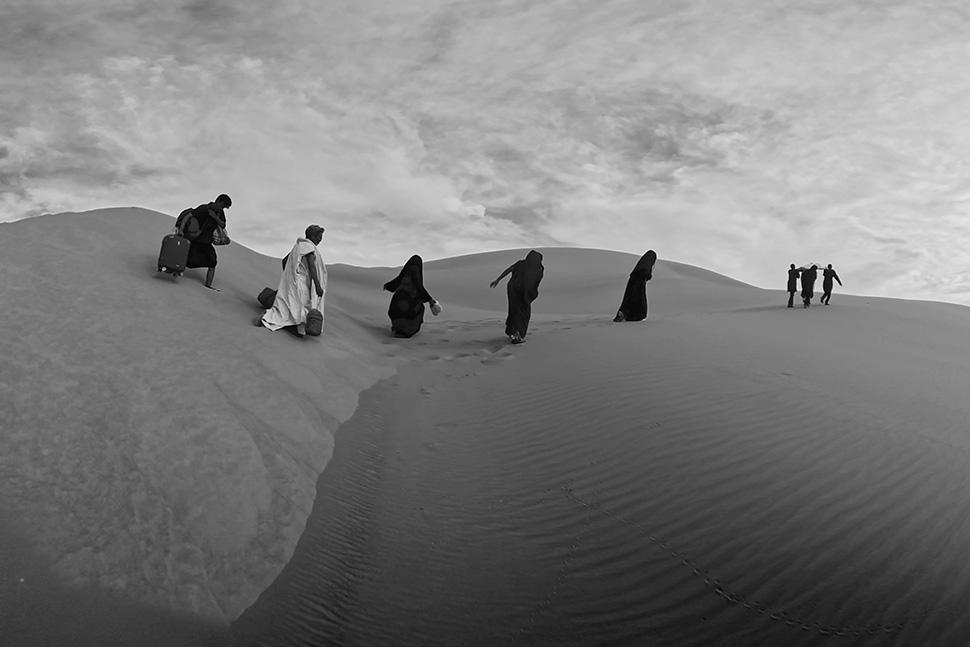
The aforementioned Sissako film, Artou, premiered in Venice before making its way to Cairo, and it’s a striking example of using the immersive technology in service of the story the filmmaker wants to tell. In this case, the 360-degree environment allows the viewer to follow a coffin’s journey from France to the deceased’s village in Mauritania from every possible angle, but Sissako’s directorial eye makes sure our gaze never strays for too long from the central presence of the body being laid to rest in its native land. Almost entirely dialogue-free, it’s a masterful encapsulation of Sissako’s cinematic fascination with stories tied to human bonds and home.
Finally, and ideally bookending the 2026 XR experience with Human.ID, another Egyptian creation: Untold Buried Recollections: 8 Montazah Street. An interactive multiplayer game devised by UBR Studio and meant for four users at a time, it takes us inside a haunted apartment where we get to relive the last days of a family that lived there six decades prior, before then having to deal with the malignant entities that linger in the walls. Tremendously entertaining, albeit perhaps not for the faint of heart. And on that note: if the scare setting yours truly picked was “mild”, how terrifying is the other mode?