
An Interview with Tizza Covi and Rainer Frimmel
.
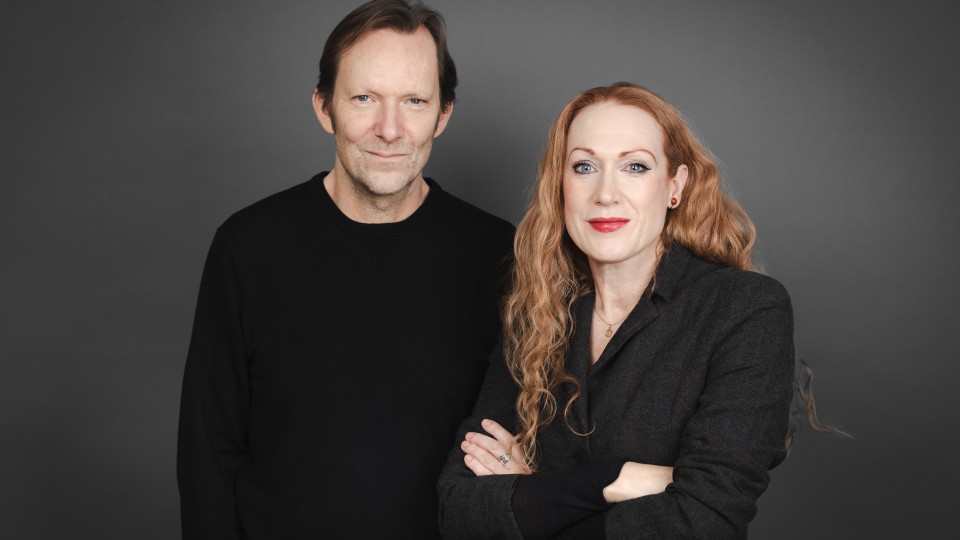
VERDICT: The Austrian-Italian director duo Tizza Covi and Rainer Frimmel talked to us about ‘The Loneliest Man in Town’ and their approach to filmmaking in general.
When I sit down to have a chat with Tizza Covi and Rainer Frimmel, it’s the morning after the Egyptian premiere of The Loneliest Man in Town, shown in the Out of Competition strand at the Cairo International Film Festival. Their latest work has been on quite a journey since its gala premiere in the Berlinale competition in February, with screenings at events like New Horizons in Poland, the New York Film Festival and, of course, the Viennale, shortly ahead of its theatrical release in Austrian cinemas.
A duo since 1996, when they were both studying photography in Vienna, Covi (born in Bolzano, Italy) and Frimmel released their first film as co-directors, the documentary Das ist alles, in 2001. Their first fiction film, Little Girl (2009), premiered at the Directors Fortnight in Cannes, marking the start of a wide array of experiences on the festival circuit: Locarno, Venice and Berlin have hosted the world premieres of subsequent projects, which have also screened in Toronto and San Sebastián, among others. “It’s nice that we are not tied to a specific festival, like some other filmmakers might be,” says Covi. “Whenever the film is ready, we send it to the festivals.”
Being selected for the main competition in Berlin this year was the biggest platform they’ve had to date, but that hasn’t changed how they view their approach to cinema, which exists in a sort of hybrid space, a liminal area where different levels of reality converge (“We stay radical, but we still get seen,” is how Covi puts it). Specifically, their non-documentary films revolve around real people, often tied to the arts, who play fictionalized versions of themselves. That was the case for Vera Gemma (daughter of Spaghetti Western actor Giuliano Gemma), who starred in 2022’s Vera and won the award for Best Actress in the Orizzonti section in Venice (Covi and Frimmel won Best Director). The increased exposure she gained from that picture helped her land a role in Sean Baker’s next project, scheduled for 2027.
Where do the ideas for these films come from? “It’s all about our interest in people,” says Frimmel. “These are people we’ve met previously through our photographic work. Speaking only for myself, I am fundamentally a documentarian. I’m not interested in creating a story of my own. I’m interested in what these people have to say.” Literally, since any written dialogue is rarely shown to the cast, who improvise their lines within a framework provided by the directors. That also happened with Alois Koch aka Al Cook, the Austrian bluesman who stars in The Loneliest Man in Town. They first met him fifteen years prior to making the film, and it took some time to convince him, according to Covi: “He’s not very sure in front of the camera, because he’s searching for perfection, and there’s no room for perfection in our stories.”
Indeed, their philosophy has always been to use cinema to spotlight people who live on the sidelines, almost rejected by society. Frimmel clarifies one aspect, though: “Al’s loneliness is of a special kind, it’s self-imposed. It’s more about him not being understood, and living in the 1950s with his style of clothing, rather than not having friends.” Making a film about him was also a way to make a sociopolitical statement, as the narrative focuses on Koch having to deal with the impending demolition of his home. Covi explains: “We wanted to address the topic of gentrification, specifically in the context we know, in Vienna, where young people have to live on the outskirts of the city, because the center is not affordable.”
Going back to the experience of the festival circuit, has there been a memorable moment on the journey with this latest film? Covi replies: “It’s quite special because Al never got to travel, and now people get to know him and his music. Yesterday, here in Cairo, we met people who already knew him: one old woman who used to live in Vienna, and a father of a girl with a collection of his albums.” She adds: “What we like is that people everywhere can identify with our stories, because a cinema projection is a huge room filled with empathy. With this film, a lot of people can relate to solitude, loss, but also having to leave your house.” Frimmel concurs: “This is the beauty of cinema, it’s universal. It can be understood everywhere, and people can connect and feel empathy.”