
Busan Pivots to Genre
.
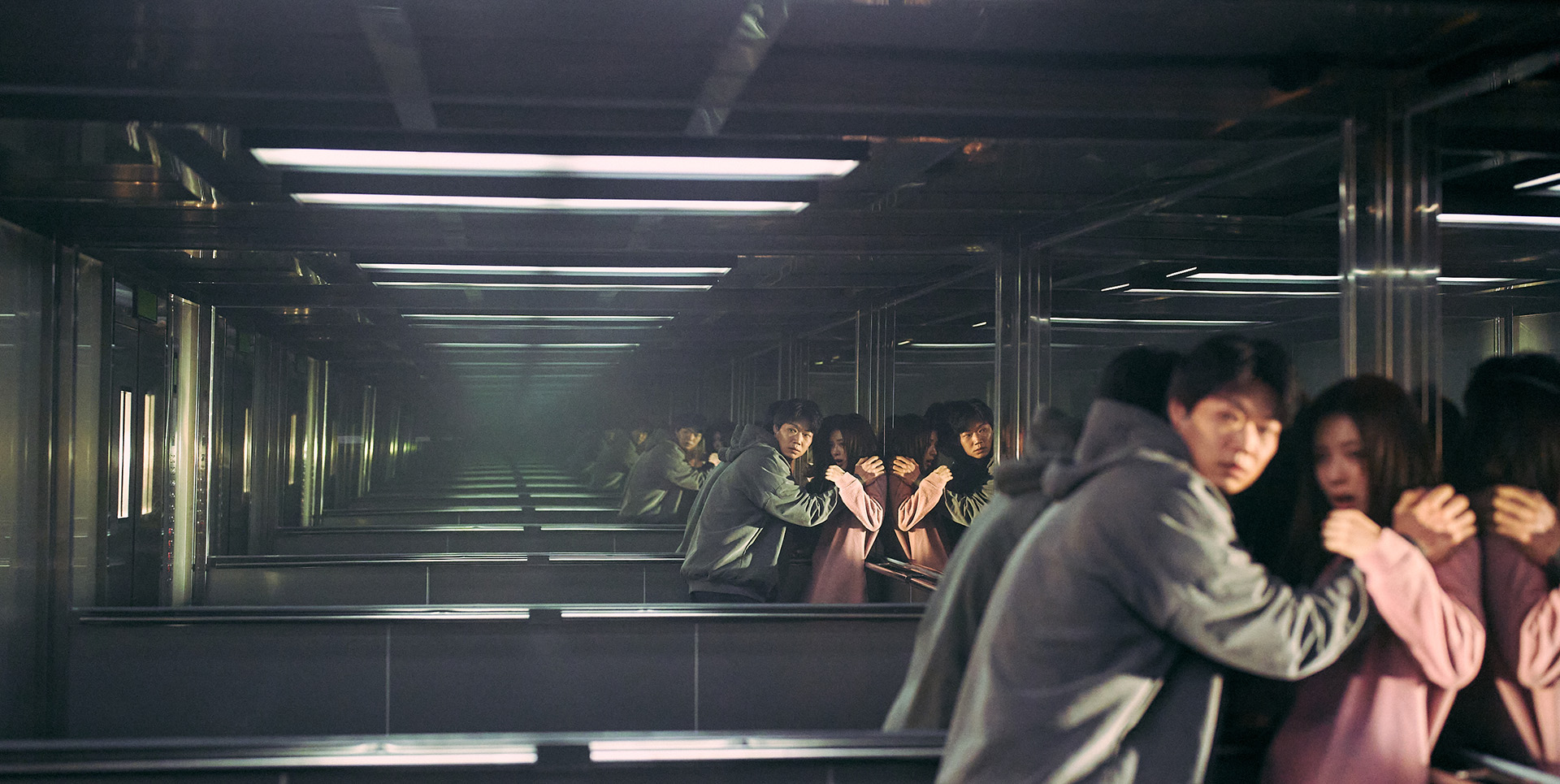
VERDICT: From thrillers and horror to actioners and road movies, genre films have played a special role in Korean movies; here programmer Jung Jihye weighs their importance in Busan's official selection.
by Cho Hyo-jin
When it opened in South Korea, Na Hong-jin’s wild sci-fi action comedy Hope was a phenomenon. It was the director’s first film in ten years and the highest-budgeted movie in the country’s history. Though it premiered in Cannes competition, it caused such divisive opinions at home that a popular film critic was asked to ‘apologize’ for his appraisal. (Fortunately, he did not.)
But the more interesting side of Hope is that it was sold to more than 200 countries pre-release, breaking the Korean record for the highest overseas sales gross. It also grossed $5 million in its opening weekend in North America, where it was shown across 1,560 screens. It entered the North American weekend box office Top 10, a very rare feat for a non-English live-action film in the land of sci-fi/action movie powerhouses. Many Koreans interpreted this as proof of the Korean cinema’s potential to break through the barrier of the “one-inch subtitles,” the maximum that English-speaking audiences are commonly said to allow.
Indeed, globally praised Korean films that brought fame and recognition to their home country have often belonged to certain genre traditions, such as thriller, horror, and action. Think of Parasite, Train to Busan, Old Boy, etc. These films’ success overseas often fueled their domestic popularity and the industry’s growth. It became natural to see more genre films in Korea in general, and not just in commercial or high-profile auteur-driven projects.
This year’s Busan International Film Festival selection, which includes animation and noir in competition, reflects this. Of the 29 Korean feature fiction films in the official selection, 11 have prominent genre elements or follow traditional genre set-ups, which is nearly 38%. Some are genre films through and through (Shaving, Sapiens, Final Interview), while others employ elements of a certain genre scheme, even mixing different ones (Earbug, Space, The Birds). Even among the short films in the Wide Angle – Korean Short Film Competition section, five of them fall into the realm of mystery, thriller, horror, SF, and/or fantasy.
It is also interesting that not just newcomer filmmakers, but mid-career directors such as Jang Woojin (Cosmic Trace) and Park Hong-min (Space), use genre devices to tell the story in their latest works. Significantly, BIFF has included Hope in the official selection (Korean Cinema Today section) scheduled to have IMAX screenings during the festival. Have genre films become Korean cinema’s face? Or ‘hope’?
BIFF’s programmer for Korean films, Ms. Jung Jihye, says it wasn’t their intention to showcase genre films in their selection. Rather, as she explains, choosing the finest works happened to highlight this tendency in current Korean cinema.
While most Korean blockbusters and commercial projects for theatrical release have shown a strong penchant for following genre traditions over the last couple of decades, in recent years smaller, independent projects also tend to incorporate a lot of genre elements in their films to varying degrees. Especially since sci-fi and fantasy are often thought to require high budgets, it’s remarkable that many Korean indies find creative ways to realize their visions.
As for the reason behind such a trend, Jung mentions the rise of streaming services. “As the environment around a film’s production and release changes with streaming platforms and the rise of ‘series,’ a lot of projects are made as genre content. The way audiences watch has changed as well. These new circumstances could have brought in the creative talents making genre-focused works.”
The implications of such a trend, in Jung’s opinion, are less about commercial considerations and more about the social, political, and private lives of the filmmakers. “When these films deal with aspects of everyday lives, there are moments we encounter unusual and surreal situations or imaginative devices coming out of nowhere. I am questioning whether it means that the filmmakers feel the current reality is ‘not real enough,’ or very unusual,” suggesting that, if so, what it says about our world could lead to a more interesting and complex reading of these films.
On a related note, many Korean films presented at this year’s BIFF follow the structure of a road movie. The main character’s (figurative and literal) journey drives these stories, usually leading them to engage with old and new characters in unfamiliar settings. Jung says, “It’s especially prominent in the Vision – Korea section, where we showcase the most recent works of Korean independent arthouse cinema. Some Detective, Not for You, Things I Left at the Theater, The Birds, and Nothing Has Happened Yet come to mind.”
She senses the need to transcend the given reality. “In these films, the protagonists feel frustrated in the ‘here and now.’ The people they meet, the coincidences, the wandering and the traveling itself during their journeys are what refreshes their minds and ours. It seems the filmmakers are saying that the ‘here and now’ cannot provide solutions, and yet, these works read as their attempt to live out the ‘here and now’ differently.”
When asked whether she thinks the trend is partly driven by the global success and recognition of past Korean genre films, she remains cautious. “Talking about the commercial impact these new films may have requires deeper consideration.” What these genre-oriented ventures by the current generation of filmmakers could bring to the industry, and whether they will shape the future of Korean cinema, remains to be seen.
This observation risks generalization, of course. In an interview with The Film Verdict, festival director Jung Hanseok said the global notion that most noticeable South Korean works are always genre-focused is only half true. Programmer Jung Jihye agrees, noting that genre films remain a strong pillar of Korean cinema but not a framework broad enough to encompass the wide spectrum of the current industry. “Beach Fictions boasts drama and character-building skills, while Long Long Night, Earbug and The Flower provide this year’s best animated works. The official selection presents a wide variety of films by both established and beginning filmmakers,” she says. “And many unique films that are not bound by specific genre structures are waiting to meet the audiences.”