
Cairo After Dark: Horror Returns to the Big Screen
.
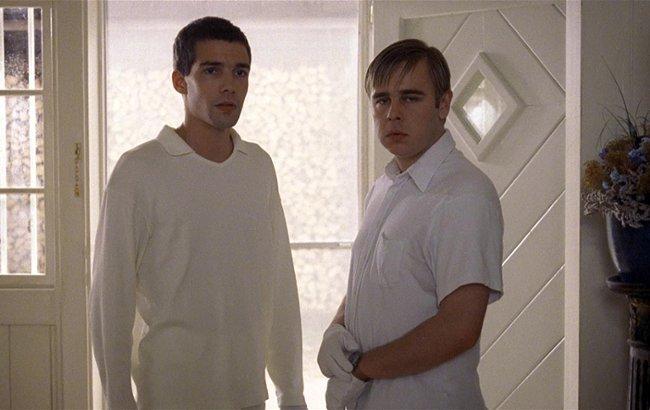
VERDICT: From Egypt's answer to 'The Rocky Horror Picture Show' to Haneke's 'Funny Games', Cairo's Midnight Screenings show a renewed interest in horror.
Six years after Tim Curry’s Dr Frank-N-Furter sang “I’m just a sweet transvestite” in The Rocky Horror Picture Show (1975), Egyptian filmmaker Mohamed Shebl came up with his own version, casting popular working-class singer Ahmed Adaweya as Dracula. The result was Anyab (Fangs, 1981), a bizarre musical horror film that brought extravagant dance numbers, vampires and social satire together in Egyptian cinema.
Although Shebl’s experiment was not a success, and the film struggled commercially and was largely dismissed by critics, 45 years later Anyab is enjoying an unexpected second life. Last month, on Halloween, Cairo’s independent Zawya Cinema played the film, while international screenings in Minneapolis, Los Angeles and Amsterdam have been introducing international audiences to this cult oddity and reintroducing Egyptian film fans to a largely overlooked gem.
This renewed attention comes at an interesting time. Cairo International Film Festival (CIFF) audiences have a date with a good scare, as the festival brings together contemporary thrillers, horror and noir films alongside some of the most unsettling classics of world cinema. The festival’s Midnight Screenings programme, curated by Egyptian critic Karim El-Dalil, brings together four new productions and four classics, arranged in pairs that explore different approaches to violence, suspense, fear and paranoia.
The selection includes Michael Haneke’s disturbing Funny Games, David Lynch’s surreal psychological thriller Lost Highway, Jacques Tourneur’s atmospheric Cat People and Matteo Garrone’s dissettling The Embalmer.
The programme opens on 13 November with the world premiere of Saudi filmmaker Hanaa Al Omair’s Traveller’s Hell. The film follows a young woman who offers a stranded stranger a ride on a mountain road notorious for mysterious disappearances and violent murders. Al Omair directed Netflix’s first Saudi original series, Whispers. In her new film, she brings a new perspective to Saudi Arabia’s growing commercial genre filmmaking. It is refreshing to see Arab filmmakers experimenting with this genre, and voicing the rich MENA storytelling tradition via suspense and horror, while staying true to the local context.
Argentine director Joaquín Cambre’s Drumskin, on the other hand, follows a woman caring for her husband, who has been left in a vegetative state. Drumskin offers a slow-burn revenge plot as the stressed wife becomes obsessed with the person responsible for her husband’s condition and seeks revenge. French director Guillaume Nicloux’s Mi Amor follows a young DJ to the Canary Islands, where her best friend mysteriously disappears. Finally, Léa Mysius’s The Birthday Party turns preparations for an ordinary celebration in an isolated marshland home into something sinister.
Mohamed Ahmed, an engineer from Giza who attended Zawya’s Fangs screening, is excited to watch Michael Haneke’s Funny Games on the big screen. Although he has watched it before on his phone, he is looking forward to experiencing the sinister film with a larger audience.
“I remember going with my father [to the movies] to watch Scream, and I remember watching I Know What You Did Last Summer on a pirated copy that was transmitted via hard drives. I am a big fan of horror films, and I think that this program should get more publicity and it should get more films in the program.”
The films are paired with classics that share their themes and artistic language. For example, Traveller’s Hell is presented alongside Lost Highway, while Drumskin is matched with The Embalmer. Mi Amor is paired with Cat People, one of the landmarks of Hollywood horror, which relies on shadows, psychological tension and suggestion rather than elaborate monsters and jump scares.
Perhaps the most disturbing pairing is The Birthday Party with Haneke’s Funny Games, a film about two seemingly polite young men who enter a family’s holiday home and subject its occupants to a series of sadistic acts in an unsettling display of violence. The film repeatedly challenges the audience’s desire for conventional thriller entertainment, making it an unusual choice for viewers expecting the usual pleasures of a horror film.
For the programme’s curator, El-Dalil, the eight films share an interest in the ways danger emerges from familiar situations and relationships.
“Danger does not force its way into our world; we open the door to it,” he writes in his introduction to the festival programme, referring to concealed desires, strangers and guests welcomed into people’s homes. “Closeness is the real danger when you venture out alone at night.”
One of my most memorable festival experiences was at Kurja Polt, a genre film festival in Ljubljana, Slovenia. In 2022, I watched Benjamin Christensen’s silent horror classic Häxan (1922) on its 100th anniversary, accompanied by live music. Watching its disturbing images of witchcraft and superstition unfold on the big screen, with musicians performing live, was a chilling and unforgettable experience.
Such screenings demonstrate how horror benefits from the collective cinema experience, as the Midnight Screenings programme also challenges the conventional separation between arthouse cinema and genre films. Horror, thrillers and noir can provide storytellers and filmmakers with opportunities to play and experiment with ideas about politics, gender and state-sponsored violence.
Egyptian cinema has its own history of horror, although the genre has rarely enjoyed the popularity of comedy or melodrama. Mohamed Radi’s Al-Ens wal Gen (1985), starring Adel Emam and Yousra, became one of the country’s best-known supernatural films. Shebl followed Anyab with Al-Taweezah (The Talisman, 1987), in which a family is terrorised by supernatural forces after refusing to sell their home.
More recently, Marwan Hamed’s The Blue Elephant and its commercially successful 2019 sequel brought supernatural horror and psychological drama to mainstream Egyptian audiences. Both scored big at the box office, demonstrating the continuing commercial possibilities of horror and suspense.
Beyond mainstream productions, independent film programmers have begun revisiting Egypt’s neglected genre films. Earlier this year, the Manassat Film Festival explored Egyptian horror through a workshop titled A Horror Tale (Hadouta Tekhawwif). The project returned to filmmakers and films whose work has often been neglected in discussions of the country’s cinematic heritage, with Anyab among the titles revisited.
This year, interest in horror films is extending beyond conventional screenings. CIFF’s XR exhibition includes the Egyptian horror experience Untold Buried Recollections: 8 Montazah Street, which invites four participants to investigate the troubled history of a Zamalek flat through an interactive narrative. Set in a haunted Zamalek apartment, it follows four players who uncover the terrifying past of a physicist’s family and confront supernatural creatures as they attempt to escape.
For decades, many Egyptian horror films occupied an awkward place between critical rejection and commercial entertainment. Low budgets, experiments with familiar Hollywood formulas and unusual performances made them easy targets for ridicule. Those same qualities are now attracting the attention of programmers and cinephiles who are rediscovering the films through screenings and festivals.
For now, with Saudi, Argentine and French thrillers sharing the programme with Lynch, Haneke and Tourneur, CIFF is offering Cairo audiences a chance to discover and rediscover just how many forms fear can take.