
Hello Mother
Hello Mother
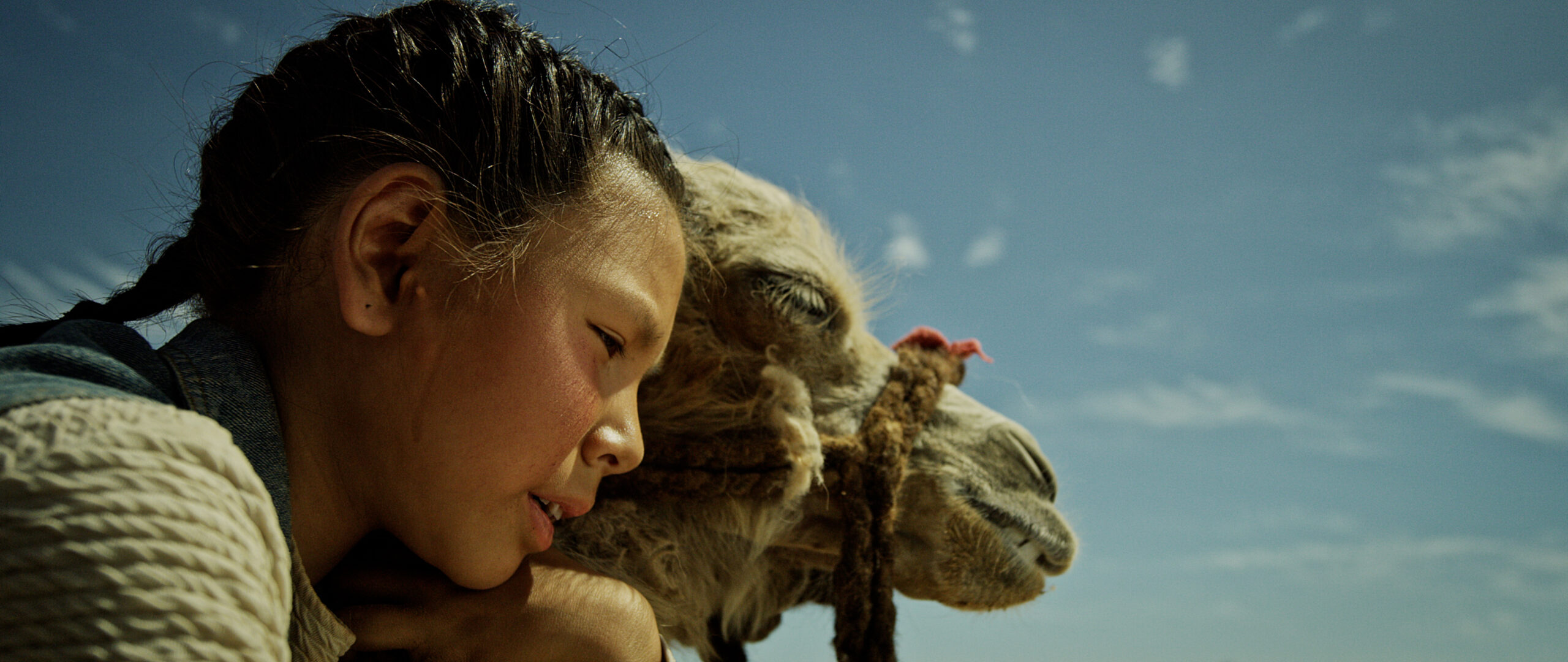
VERDICT: A young girl must wrangle a drunken father and a new step-mother in Byambasuren Ganbat's charmingly comedic and utterly earnest Mongolian melodrama.
Maternal relationships lie at the hear of Hello Mother.
The film is constructed around the notion of the ‘Khuuslukh’ ritual, a traditional custom in Mongolia that is an attempt to reunite a mother camel with a calf that she has rejected. The ceremony may already be familiar with international audiences after Byambasuren Davaa and Luigi Falorni’s docudrama The Story of the Weeping Camel was nominated for an Oscar in 2005 centred on the same rite. In Hello Mother, the rejected camel is a symbolic twin to Khuvizaya (Nartai Uuganbayar), a rambunctuous young girl living with her father in the wilderness of the Gobi Desert, longing for a mother who died in childbirth. Byambasuren Ganbat’s debut feature is a highly sentimental portrait of the search for maternal connection, built around a winning performance from the delightful Uuganbayar.
The film takes place deep in the desert where there is no power or running water, the nearest settlement is miles away and the urban environs of Ulaanbaatar lie 1,000 km distant. Here, Khuvizaya – shortened by her family to Zaya – lives with her father, Puntsag (Erdenezaan Puntsag) and some extended family including her grandmother (Mendbayar Dagvadorj). Puntsag can often be found deep in his cups, so it falls to Zaya to drive him home from the town on their desert quad bike, and help wrangle their goatherd. She’s a spirited tyke who’s happy to give lip to the other local drunks and exudes a forced independence – her hair like a bird’s nest and with dirt often smeared across her face. She has a affectionate yet antagonistic relationship with her two male cousins, and despite his routine intoxication, a close bond with her father, who has had to raise her alone.
This equilibrium is thrown out of balance when a sophisticated and beautiful woman, Suren (Uranchimeg Urtnasan) appears in town on the latest bus. When Zaya asks her father about the “angelic lady” he is taciturn, but evidently she is a childhood love of Puntsag’s who left him heartbroken. Unbeknownst to Puntsag, she in the town on the run from the family of her late husband, who believe she should pay his debts. She and Puntsag quickly become an item again and while her father’s newfound sobriety is a blessing, Zaya bristles against this woman arriving in their home, making demands and taking down the photograph of Zaya’s mother than has been up on the wall.
These different strands of the story coalesce in different ways through the film with the central family dynamics being complicated by Puntsag’s penchant for a tipple and Suren’s past trying to catch up with her. All the while Uuganbayar embodies in Zaya a vulnerable desire for a feminine influence beyond that of her grandmother and a tomboyish rebelliousness that manifests in pelting Suren with spitballs and punching her cousin square in the jaw when his teasing goes too far. There are some moments when the structure wobbles a little – the film’s final third feels episodic in a way that it hadn’t early doors – but Zaya’s story gives a through-line that keeps it anchored.
Where some audiences may struggle is with the level of melodrama. The story is a highly charged one and all of the emotions are given full room to express themselves, often against the backdrop of the sweeping desert dunes. There are theatrically exaggerated exchanges, only heightened by Chinbat Orkhonbaatar’s score leaning hard into their weight, bordered on – and sometimes veering entirely into – schmaltz. However, the performances actually manage to temper this somewhat with their rawness. Even as the strings swell and Puntsag and Suren argue atop a dune, the actors manage to make even the most overwrought moments feel authentic and moving. Any histrionics are also undercut by the film’s humour, with all characters being allowed moments of self-deprecation and Zaya regularly undercutting the atmosphere with her appealing charm.
Ganbat shows assurance balancing all of these elements, aided by Baatar Batsukh behind the camera, who keeps the film feeling interesting with some fun canted angles and depth of image whilst also maintaining a classical feeling – and one that captures both the majesty and desolation of the desert when appropriate. When the film makes a brief sojourn to the captial city, Zaya’s dizziness surrounded by skyscrapers and noise is also expertly handled. Still, it’s back in the desert when the Hello Mother‘s heart belongs, with the weeping mother camel who accepts her calf again, and the hope that Zaya’s fractious home life might lead to a similar moment of cathartic embrace.
Director, screenplay: Byambasuren Ganbat
Cast: Nartai Uuganbayar, Erdenezaan Puntsag, Uranchimeg Urtnasan, Mendbayar Dagvadorj, Bayarmaa Batkhuyag
Producer(s): Baatar Batsukh, Trevor Doyle, Alexa Khan, Anudari Tsoggerel
Cinematography, editing: Baatar Batsukh
Music: Chinbat Orkhonbaatar
Sound: Tsegmed Orgodol
Production design: Orgilbayar Bayarsaikhan
Production company: Three Flames Pictures (Mongolia/USA)
Venue: Oldenburg Film Festival (International)
In Mongolian
106 minutes
Read more of our coverage of Oldenburg Film Festival.