
Hussein Fahmy on the Past and Future of the Cairo Film Festival
.
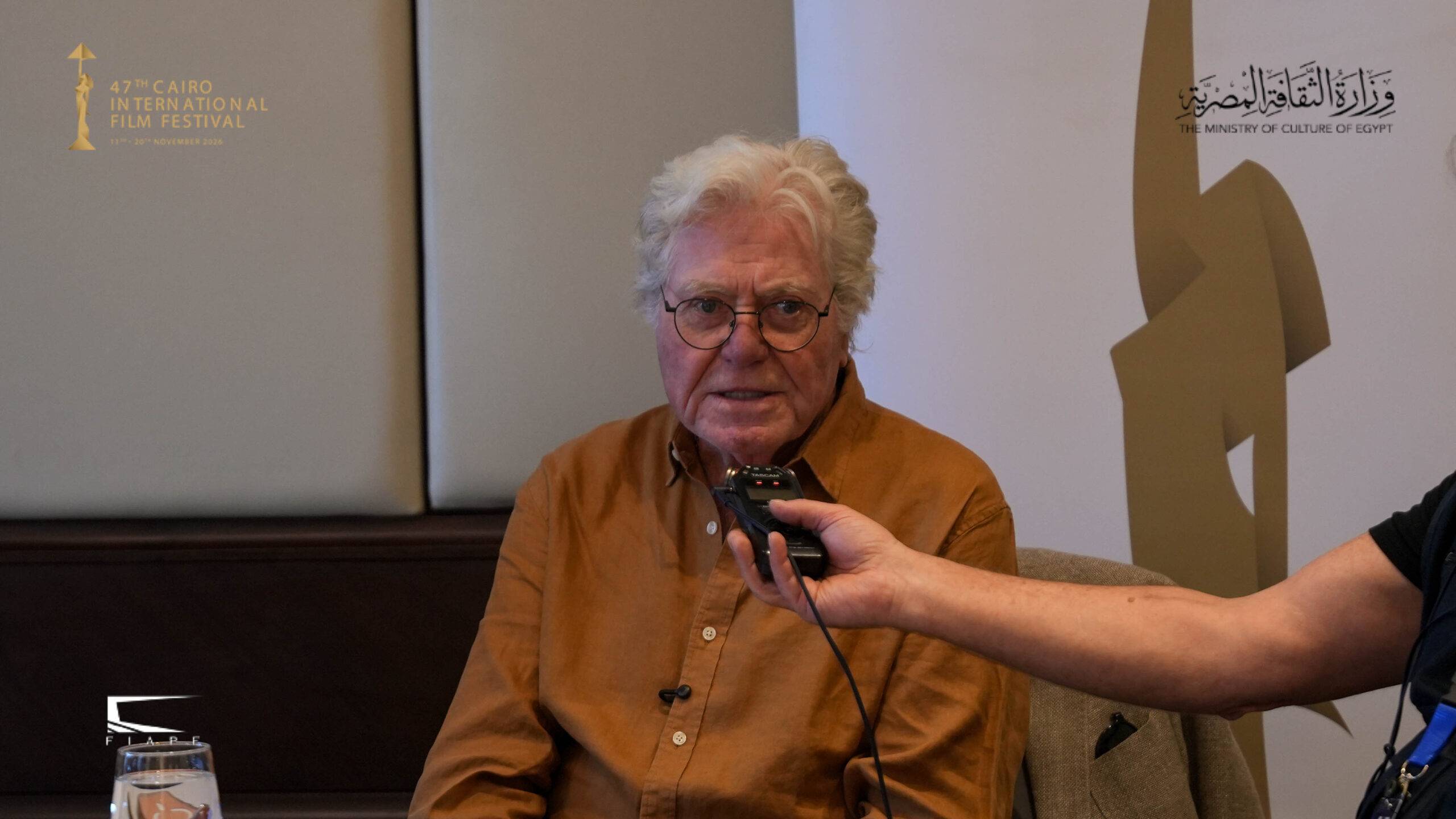
VERDICT: The president of Cairo Film Festival returns to face the new challenges of a politicized world.
Hussein Fahmy, the personable and authoritative President of the Cairo International Film Festival, is now on his second round at the job. After a four-year stint that ended in a feud over the image of the festival he had in mind, Fahmy agreed to return to the festival for another go. And for the last five years he has dedicated himself to the job with the same love he has for his acting career, which has brought him acclaim as one of Egypt’s most beloved movie stars.
His most recent film? The China I Have Known, directed by a 25-year-old Chinese woman filmmaker. It is a country he has been involved with for some time, as Egypt is a partner in the Belt and Road Initiative, designed as a geopolitical leap forward for the Asian nation.
Listening to Pres. Fahmy describe his ideas for the Cairo Film Festival, it’s clear he doesn’t rein in his international outlook and ambitions: “I want it to be on the same level as Cannes, Venice and Berlin.” In support of this aim are new festival sections like Cairo Kids, a sidebar aimed at attracting children to the movies for their first experiences as viewers, and a growing Classics section that plays a substantial role in the spectacular opening and closing night ceremonies.
On opening night, Fahmy took to the stage in a lavish production he likens to “sequences in a movie”. The evening’s leitmotif was water, which appeared to gush onstage from the wall-sized, restored print of Something of Fear, directed by Hussein Kamal in 1969. In it, a landlord punishes local farmers by cutting off their water supply, until a young farm woman played by Shadia challenges him by opening the water on her own initiative. Fahmy makes a topical connection to the present day, when Ethiopia has been threatening to cut off Egypt’s water.
It is not the only political reference he makes. Like many other festivals in the Middle East and beyond, Cairo has found itself at the center of a cultural whirlpool, in which cinema plays a leading role. The powerful documentary Naza, which won the Special Jury prize in Venice for its shock interviews with anonymous whistleblowers in Israeli intelligence, is a case in point. Fahmy addressed the sensitive question of why the Cairo Film Festival, which is government sponsored, is not willing to program it, despite its obvious regional interest.
“Why won’t we screen it here? The festival has announced that we resent Zionists and what they are doing to the Palestinian people: we along with the whole nation take the side of Palestine. The film is a very good movie, but it was made by Israelis. The filmmakers are still Israelis even if they take sides with Palestine. I cannot screen it.”
He goes on to make a comparison: “Understand that the national sentiment in Egypt is not so much anti-Jewish as anti-Zionist. Just as we must differentiate between Islam and the Muslim Brotherhood, the Israelis have to differentiate between Judaism and Zionism, which is a very aggressive movement.”
In recent years, the festival has maintained a firm cultural stance against screening films involving Israeli production or funding. The 45th Cairo festival was cancelled in 2023 due to the ongoing Israeli-Hamas war and escalating regional tensions. It returned in November 2024 and November 2025 with strong themes of pro-Palestinian solidarity and a decision to refuse multinational sponsors with ties to Israel, replacing them with local Egyptian sponsorship and funding.
“The main interest of festival is to introduce our audiences to new Arabic cinema from the Mideast and Africa,” continues Fahmy, who also notes tensions in the air. “The new generations show their widespread resentment of social standards. People are under economic, social and political pressure and they’re not happy.”
In the meantime, president Fahmy has his sights set on new projects to safeguard Egypt’s film heritage. One of these is the founding of a Cinema Museum, he told The Film Verdict.
“I am on the board of the Egyptian Company for Culture and Films. We have several theaters and film studios and some 150 historic films. Despite refrigeration, over time some have turned to dust. I have made it my mission to restore 130 films, because I feel Egyptian cinema is worth it.” A first batch of 22 restorations, plus seven additional titles, are being screened parallel to the festival, and the screenings are packed.
“We can only restore six to eight films a year,” says Fahmy. “I’m very keen to do all 130.” He surely has the will to make it happen.