
Imperium
Imperium
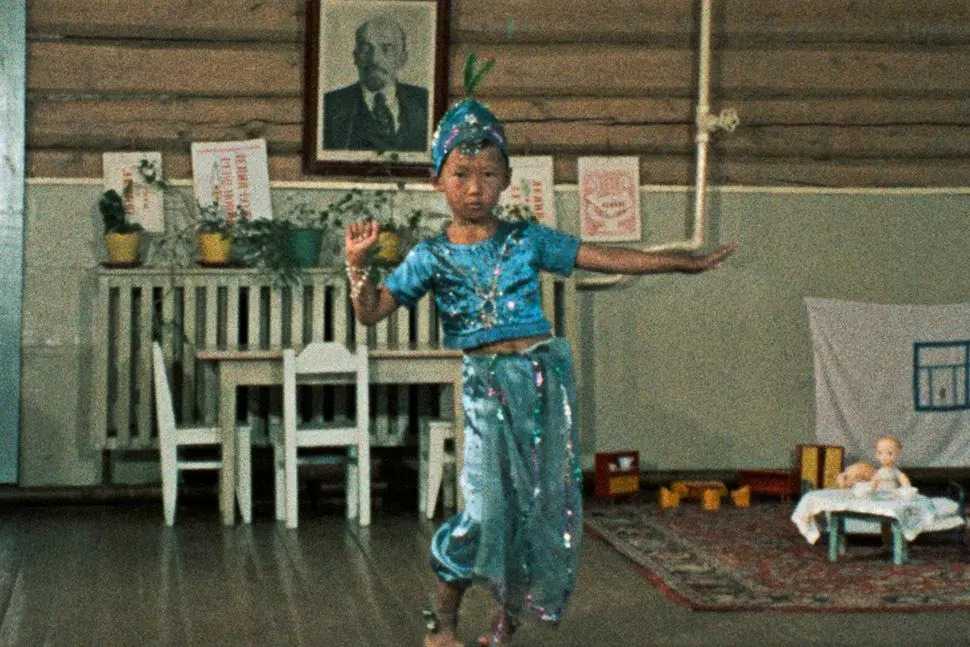
VERDICT: Sergei Loznitsa’s Imperium is a mesmeric, sprawling, sparely unadorned journey through the disparate corners of an imagined state monolith that never really existed.
Ukrainian director Sergei Loznitsa’s Imperium, which had its world premiere out of competition at the Venice Film Festival, is, like the area of land it journeys over, vast and sprawling, clocking in at nearly three hours as it traverses, via archival footage shot by Italian filmmakers in the early 1970s, the territories that the Kremlin ruled under one yoke as the Soviet Union.
Loznitsa has proved himself adept at both fiction and documentary, in interrogating the terror of authoritarian regimes in Europe and the workings of historical memory, in films such as Two Prosecutors (2025) and State Funeral (2019), both of which reckoned with the Soviet era, its lies and repressions. Loznitsa imposes no narration or overt ideological commentary on Imperium, nor does he offer up background on the filmmakers or specifics of their mission. Instead, he allows the irreducible diversity of the peoples recorded in the footage to reveal itself, showing that no monolithic, standardised Soviet Union existed, despite the Kremlin’s imperialist drive to centralise control, extract resources and indoctrinate its inhabitants (the one face identically reappearing on walls throughout this culturally multitudinous expanse is Lenin’s framed portrait.)
Loznitsa has never in his archive work been one to over-explain, or insist on an interpretation. Audiences already somewhat versed in Russia’s imperialist practices will find it easier to join the dots in this long, mesmeric journey with a hands-off guide, but patience pays off with a real sense of depth and scale inaccessible in more conventional, potted historical documentaries.
We start in Moscow, at the heart of Soviet power, with parades celebrating communist ideals in a sea of red flags, and footage from Red Square that captures some of the sites most recognisable to tourists, from Lenin’s Mausoleum to GUM state-run department store. Then, we start heading east, taking in the ancient Golden Ring cities of Zagorsk, Suzdal and Vladimir and their Orthodox monasteries. So far, so iconically Russian. But very soon, a land opens up that contradicts the idea of the USSR as a standardised monolith, and undermines — especially for those alert to detail — Soviet propaganda’s falsehood of a unified, harmonious brotherhood of peoples.
We take in factories and mines in the autonomous republics of Bashkiria and Buryatia, where men labour to extract wealth for the Soviet colossus. In Yakutia, games with reindeer herders persist, but many men now toil in the mines. One we see is blackout drunk every day on the spirits Cossacks introduced to the region centuries before. Velvet antlers, a coveted commodity, are sawn off reindeer, and admired by Russian traders. A group of young Russian hippy-dippy artist types, presumably from the city, turn up with a guitar in the Far East, high on confidence and singing about wandering the globe with friends, while indigenous locals look on skeptically. From the perspective of today, as disproportionate draft numbers to the frontlines ravage these ethnic communities in Russia’s ongoing imperialist war, their expressions of guarded mistrust haunt.
As we travel through Central Asia, and the Kazakh, Turkmen, Kirghiz and Uzbek republics; through the Caucasus, on the streets of Baku and into the mountains of Georgia to Ushguli; to Kyiv in Ukraine and right up through the Baltics, stopping off in Riga and Tallinn, the breadth and proliferation of different traditions is staggering. Buddhist bells ring in Kalmykia; avant-gardist performance artists gyrate on a stage in Estonia.
Segments are separated by a simple red frame, and little contextualising information is offered other than place names. Loznitsa’s spare and rigorous show-don’t-tell approach resists overt exoticisation, even as the European outsider lens of the original footage means collective scenes of public life and ceremonies predominate. By the time we end up in Saint Petersburg, it’s nigh-on impossible to believe we never left the state, or that all we have seen could ever be known or controlled under one central authority. And indeed, the end title simply informs us that the Soviet Union ceased to exist in 1991. It was the concept, we understand, that was illusory; the peoples could not be erased or subsumed by it so easily.
Director, Screenwriter: Sergei Loznitsa
Producers: Philippe Bober, Anne-Claire Martin, Giovanni Pompili, Philippe Bober, Anne-Claire Martin, Uljana Kim
Editor: Audinga Kucinskaite, Sergei Loznitsa
Sound: Vladimir Golovnitski, Ivo Heger
Music supervisor: Vladimir Tarasov
Production companies: Essential Filmproduktion (Germany), Kino Produzioni (Italy), Société Parisienne de Production (France), Studio Uljana Kim (Lithuania)
Sales: Coproduction Office
Venue: Venice (Open – Out of Competition)
In Russian, Ukrainian, Kazakh, Uzbek, Georgian, other indigenous languages of the Eastern Soviet Union
175 minutes