
Laundry
Uhlanjululo
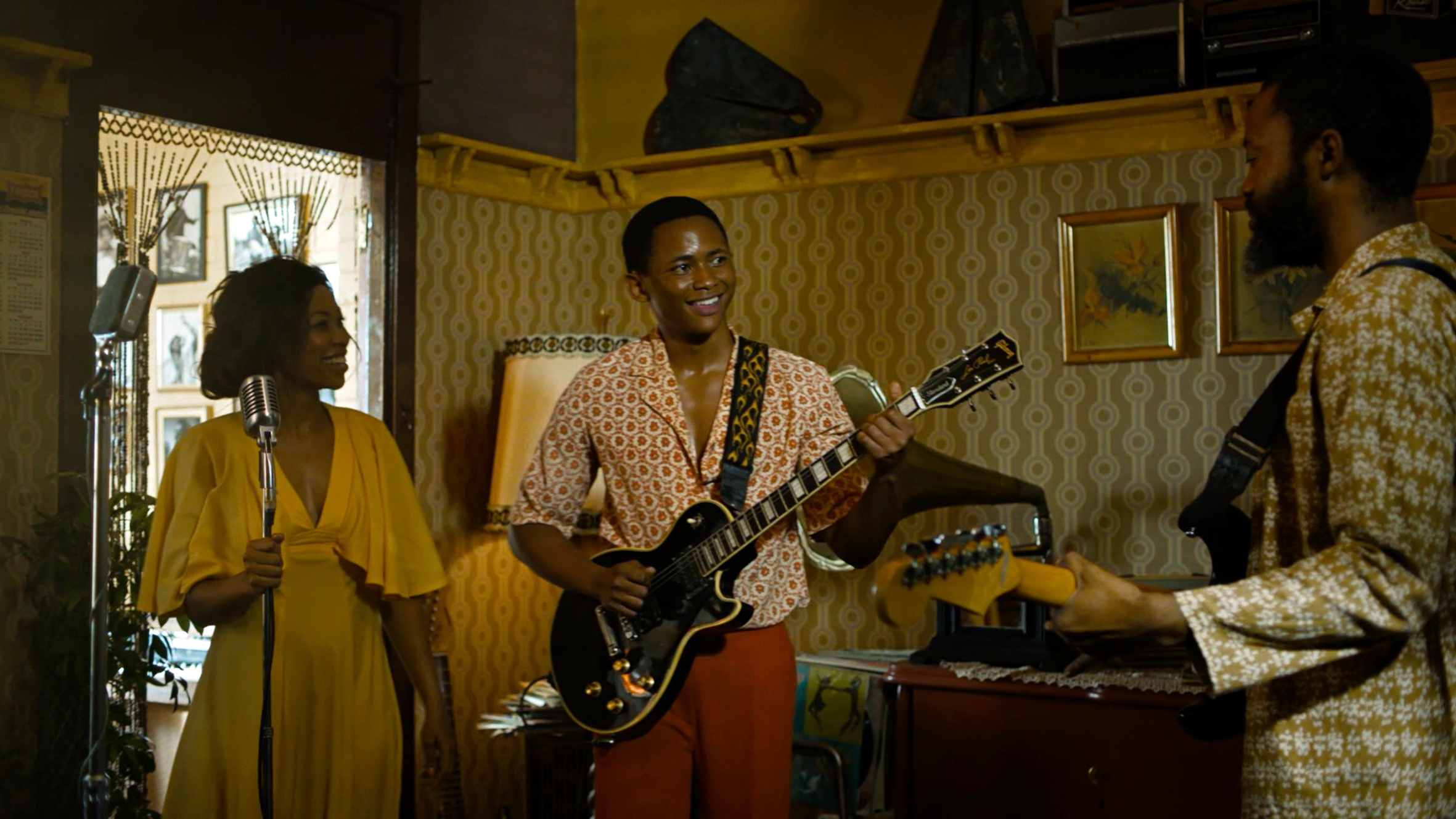
VERDICT: A black family in 1960s apartheid South Africa is thrown into turmoil when the patriarch is arrested in this riveting but gut-wrenching drama.
Khuthala doesn’t want to work in his family’s laundry.
An avid young musician, Khuthala (Ntobeko Sishi) bristles at the suggestions of his father, Enoch (Siyabonga Shibe), that he should prepare to take over the business once he leaves school. Instead, he wants to join a band and travel to the USA. However, the harsh realities of the world will put that dream in jeopardy as father, son, and the rest of the Sithole family must navigate life in 1968’s South Africa and the raging injustices of the apartheid system. Zamo Mkhwanazi’s feature is a beautifully shot historical drama that captures the vibrancy of 60s Johannesburg as well as all of its racial disparity. Having premiered back at Toronto last year, the film has enjoyed a ranging festival life and screens this week in the international strand at Oldenburg Film Festival.
It’s an incredibly assured feature debut from Mkhwanazi whose most recent shorts have bowed at Cannes and Toronto. She shows a strong command of her storytelling, dropping the audience into 1960s Johannesburg without ceremony and allowing any relevant historical context to emerge naturally through the narrative. Apartheid needs little explanation to most audiences, but the nature of its cruelties is re-established here as well as Enoch’s position as an ‘exempted native’ which has allowed him to retain the laundrette in an area now reserved for white-owned businesses. Mkhwanazi, who also wrote the screenplay, incorporates these elements into scenes that drive the drama forward, not least one in which a room full of sneering white officials ridicule him, leading to his arrest.
Khuthala, meanwhile, has become aware that the singer Lillian (Tracy September) – who may well have had an affair with Enoch – is planning to leave the country having been offered an opportunity for her and her band in America. Despite the situation with his father, this potential avenue out of the laundrette – and South Africa – becomes all Khuthala can think about, leaving his eager sister Ntombentle (Zekhethelo Zondi) to support his mother, Madga (Bukima Cebekhulu) at the shop. There is an evident naivete to Khuthala who passes the threats to him and his people on the street without paying too much attention, and Sishi’s performance perfectly encapsulates this.
Lillian brings artistic cool to Khuthala’s life – as she perhaps had to his father’s – and his is allowed to jam with the band, skipping out on the launderette while his mother is out of town. She, of course, cannot post Enoch’s bail herself, and needs a registered male family member to travel to the city and do it for her. The music scenes are a real high point, offering a glimpse into a cultural resistance that the buttoned down acquiescence of the laundry must be utterly devoid of. One jamming sequence in particular, where Khuthala plays guitar and Lillian wails with righteous fury, is electrifying.
However, such plans as escaping to America become more complicated and Mkhwanazi’s script tightens the screw on such fanciful hopes as the hard facts of the Sitholes’ situation becomes more evident. Their position is one in which they are walking a constant tightrope to retain a relatively privileged position among the black people of the area, and the film explores the deals and backhanders that have allowed this to remain the case. As an eviction notice is served, threats in the street begin to escalate, and Khuthala witnesses Enoch’s brutal treatment in prison, the weight of the machine and the cost it demands of the people being crushed by it grows ever clearer.
This doesn’t feel necessarily feel bleak in the way that such political inevitability often can – Laundry retains its colour and handsome composition in Gabriel Lobos’ photography and the rhythms of the music from Tracy September, Tshepang Ramoba and Mpumi Mcata. Instead, that very elegance lands the crux of message even harder. As Khuthala is placed in a position where he must not only choose a path forward for his own future, but make decisions that can have far-reaching implications, the consequences can be grave. Zamo Mkhwanazi pulls no punches in this regard, and her film is all the more powerful and resonant for it.
Director, screenplay: Zamo Mkhwanazi
Cast: Ntobeko Sishi, Bukamina Cebekhulu, Siyabonga Shibe, Tracy September, Zekhethelo Zondi
Producers: Philippe Coeytaux, Zamo Mkhwanazi, Jim Stark, Nicolas Wadimoff, Marco A. Orsini, Gary Springer
Cinematography: Gabriel Lobos
Editing: Christine Hoffet
Music: Mpumi Mcata, Tshepang Ramoba, Tracy September
Sound: Richard Mohlari, Francois Wolf
Production design: Gavin Scates
Costume design: Nompumelelo Sinxoto
Production companies: Akka Films (Switzerland), Kude Media (South Africa)
Venue: Oldenburg Film Festival (International)
In Zulu, English
109 minutes
Read more of our coverage of Oldenburg Film Festival.