
My Own Personal Gulag
My Own Personal Gulag
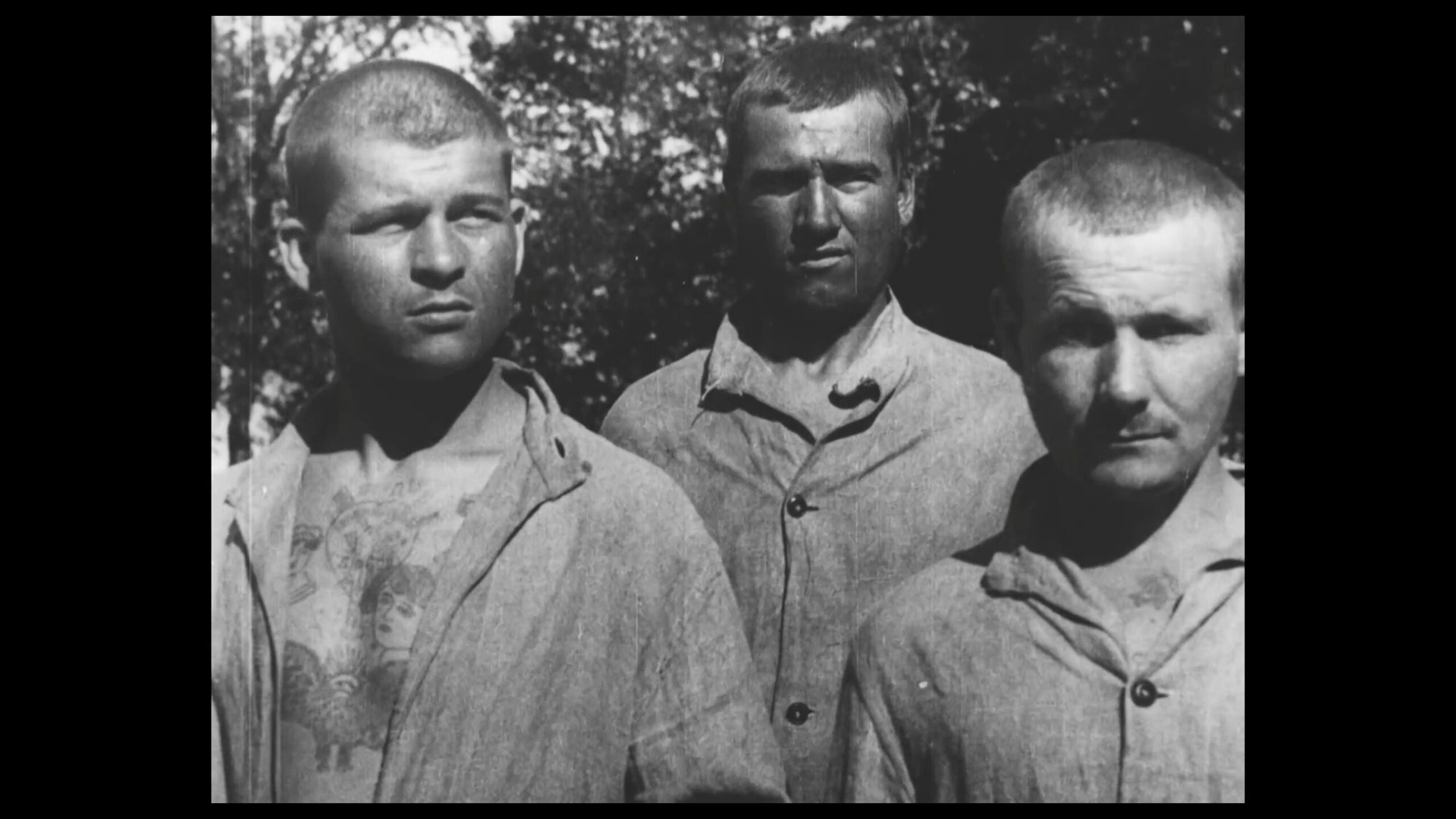
VERDICT: Lina Gorbaneva's archive-driven documentary finds hypnotic beauty, secrets and lies buried in Russia's Soviet-era cinema vaults.
A deep dive into the Russian state film archives becomes a sentimental journey in My Own Personal Gulag, a personal passion project for Spanish-based actor and film-maker Lina Gorbaneva. The child of diplomat parents who fled the former Soviet Union for exile in Spain when she was just a child, the director bookends this arty collagist documentary with hazy, dreamlike, impressionistic memories of leaving her homeland. But her central project is an excavation of the wider political truths and tragic untruths long buried in Moscow’s celluloid vaults.
Following its world premiere at IDFA this week in the more experimental Envision section, My Own Personal Gulag will have niche appeal to art-house audiences, academics and film historians. All the same, it is an impressive piece of work that blends the personal with the political, part audio-visual poem and part scholarly essay-film.
My Own Personal Gulag draws heavily on vintage propaganda footage from the silent era, including films by Soviet cinema legends Sergei Eisenstein and Dziga Vertov. But Gorbaneva has the opposite agenda to the original film-makers, deconstructing the fake news, stage-managed lies and complicit cultural collaborators who helped create a palatable narrative around Stalin’s homicidal reign of terror. As such, the subject matter feels very timely. The source material here may be a century old but it invites disturbing parallels with current authoritarian regimes, especially Putin’s Russia.
Despite that playful nod to Depeche Mode in the title, My Own Personal Gulag is rooted in weighty historical matters, chiefly the founding of the Soviet Union’s notorious “gulag” prison colonies. Solovki, a former Russian Orthodox monastery on a remote cluster of islands in the White Sea, was the first of many. Opened in 1923, the complex was initially used to incarcerate political opponents of Lenin’s newly installed Bolshevik government, but they were soon joined by thousands more dissidents, clergy, ordinary criminals, civil war veterans and other spuriously detained enemies of the Soviet state. In its later years, it became a brutal concentration camp and site of mass execution, a grim blueprint for similar Nazi institutions.
A recurring anti-hero throughout the film is author Maxim Gorky, once an anti-Bolshevik critic, later one of the Soviet Union’s chief literary propagandists, who was co-opted by Stalin to promote the Solovki prison as an “historic experiment” in political re-education. “The last of the old bourgeois world will be reborn here and a new human material will emerge,” he gushed following a visit to the island in 1929, though he was well aware the real conditions had little in common with cheery propaganda films depicting the camp as a benign commune with its own theatre. Gorky kept quiet about the forced labour, torture, starvation and summary executions, including children.
Two years later, Stalin enlisted Gorky again to head a brigade of artists serving as “engineers of human souls”, lending his literary prestige to the White Sea-Baltic canal project, which was built with forced labour in harsh conditions, claiming an estimated 25,000 lives. The official books and films promoting the canal’s construction, including Gorky’s, cast it as a triumphant exercise in rehabilitation. Gorbaneva includes clips from socialist realism films promoting both the camp and the canal, highlighting their hidden falsehoods, including well-fed security agents posing as jolly inmates and brave prisoners making coded protests on camera.
Alongside footage focussed on Solovki and the canal project, Gorbaneva also draws on a prestigious archive of classic early Soviet-era films including Dziga Vertov’s Moscow: The Run of the Film-eye (1927) and Man With A Movie Camera (1929), Sergei Eisenstein’s Bezhin Meadow (1927) and The General Line (1929), Oleksandr Dovzhenko’s Earth (1930), and dozens more. Borrowing from these masters of montage technique, she creates her own modernist monochrome collage from snippets of staged drama, vintage newsreel and antique animation. She also punctuates the film with striking visual motifs: explosions in reverse, plants pushing through wet soil, early science-fiction cityscapes, and more.
The director’s snippets of narration also cherry-pick quotes from Soviet-era dissidents and Kremlin critics including Alexander Solzhenitsyn, Anna Akhmatova and Olga Sedakova. She ends with a nod to Roadside Picnic, the eerie sci-fi novel by Arkady and Boris Strugatsky that inspired Tarkovsky’s classic dystopian thriller Stalker (1979). Even if Gorbaneva’s intended meanings sometimes feel opaque, her assemblage of arresting visuals and intertextual echoes is often hauntingly beautiful. An underlying audio collage featuring breaths, moans, handclaps and found sounds amplifies the dreamy, experimental mood of this melancholy meditation on Russia’s never-ending problem with murderous strongman leaders.
Director, screenwriter: Lina Gorbaneva
Editing: Meritxell Colell Aparicio, Lina Gorbaneva
Sound: Alejandro Castillo
Sound Design: Eva Valiño
Producer: Lluís Miñarro
Production company, world sales: Eddy Saeta (Spain)
Venue: IDFA (Envision Competition)
In Russian
84 minutes