
Still Night, Burning House
.
VERDICT: Carol Nguyen's debut feature documentary is a tender and poetic examination of what's left in the wake of a suicide.
In Carol Nguyen’s debut documentary, Still Night, Burning House, it takes just fifteen minutes for a troubled man’s keepers—his brother and his wife—to replace each other as he suffers a crisis. In that interval, he commits suicide. Decades later, the late man’s niece interrogates her father, the brother who left the victim, about what transpired on that tragic night.
Nguyen is the niece seeking answers. Her father’s response to her questions about his late brother Thach form the film’s spine, around which related subjects come into some focus. Inevitably, her father, Hoang, is wracked by guilt: what if he had waited fifteen minutes for his brother’s wife to arrive? Would things have been different?
It’s a hard question and, to her credit, Nguyen doesn’t exactly offer comfort but she does give him a chance to assuage his conscience, asking if perhaps what happened that night was fated. Her father, a stoic fellow whose English isn’t fluent, says he definitely played a part in bringing his brother to that tragic fate. “If I had understood more, it probably wouldn’t have ended up like that,” he says.
For Thach’s widow, the pain remains decades later. “When I think of him, I just get so sad. So I stop thinking,” she says, before adding that because “he passed early I had to suffer early”.
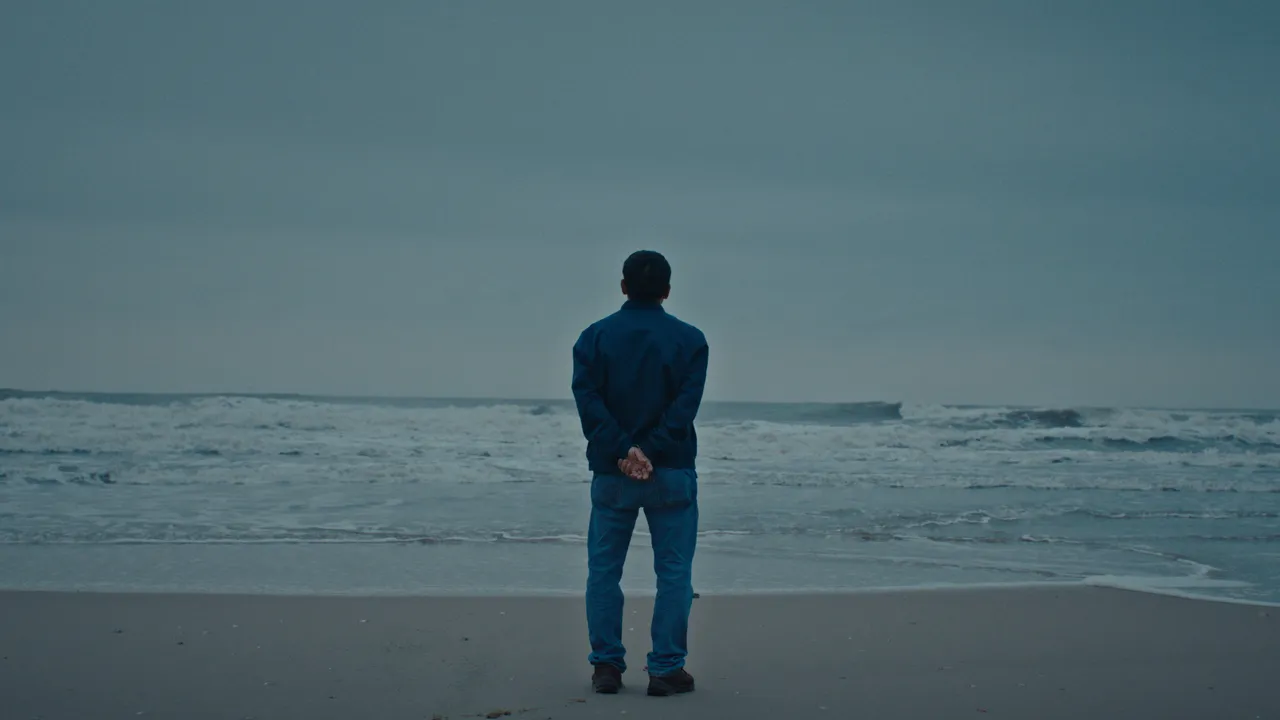
Nguyen is more lyrical documentarist than probing journalist, so what she has produced is a marvellously made film with poetry folded into its visual fabric. The images are crisp and the nighttime scenes are glorious. Passages go by with dreamlike fluidity. But could we use a little more drilling into the details of her father’s guilt? We certainly could but we don’t get that depth of examination. Was her father, a man who had taken care of his sibling for years and years, exhausted and maybe infuriated enough not to care that his brother was in the middle of a crisis that day? Maybe; but we never get that line of questioning, even as it would probably take a daughter with a heart of stone to proceed down such a path. Thus, we lose deeper insight into the psychology of those who care for persons with mental health issues, but we can appreciate a daughter’s restraint.
Her father, a man who has obviously wrestled with his actions that night, owns up to his part in the affair, saying that he didn’t quite understand how to deal with someone struggling with mental illness, and would get angry when Thach would act out. He knows better now, but admits that “it’s too late”. Hoang comes across as a man who would not mind getting harder queries but his daughter’s compassion is in the way. She has fashioned a film of small revelations and high elegiac beauty. She films some of her subjects in rooms that do not seem to be in heavy use. Curtains, sheets, a wooden wardrobe, and a table lamp in different scenes add an air of the forlorn to the story of Thach. The production design and Juliette Lossky’s lens supply extra gravitas to this fine film.
As for some more depth in the interrogation of grief, we get a melding of grief and guilt from another source when one of Thach’s daughters says that she had a boyfriend who was plagued with the sort of illness—schizophrenia—that her father suffered. With tears in her eyes, she says she thought that it was life’s way of getting her to help another victim of mental illness, since she couldn’t help her father. It’s the high point of the film’s last half and it appears as though unbidden, a magic of the documentary form. Nguyen’s brilliance is having a camera right there when those words are spoken. It’s also in stitching together this fine film as a tribute of sorts to an uncle and an illness she barely knew.
Editing: Anouk Deschênes
Venue: IDFA (International Competition)
In Vietnamese and English
76 minutes