
Rehearsals for a Revolution
Rehearsals for a Revolution
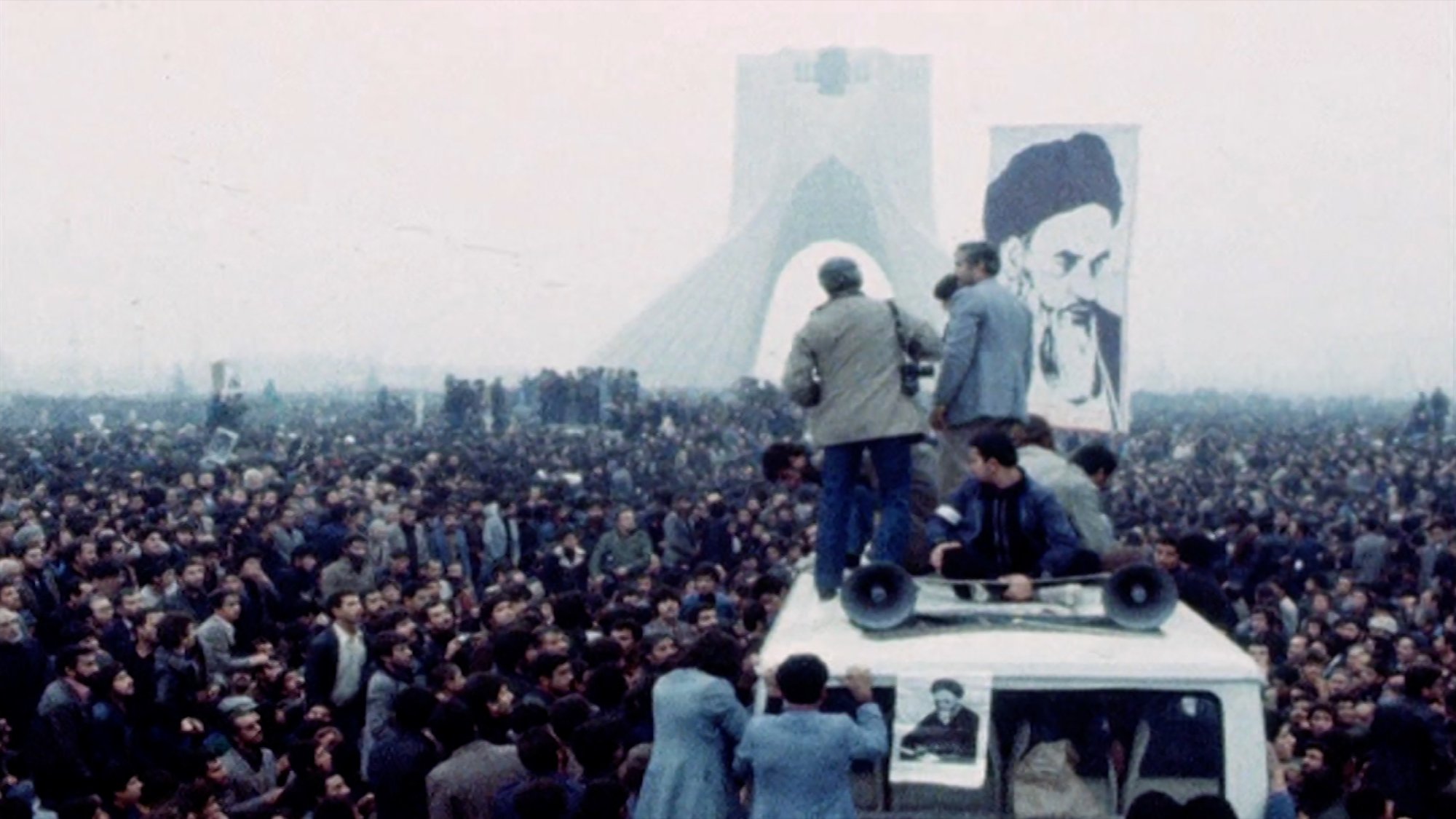
VERDICT: A moving document of struggle and revolution spanning generations inside Iran.
“A revolution’s defeat belongs to all. Its victory belongs to few,” says filmmaker Pegah Ahangarani’s Uncle Rashid. The statement forms the central paradox of Rehearsals for a Revolution, a stirring documentary about life and resistance under successive oppressive Iranian regimes.
Told across five chapters — so perfectly molded they could each be a short film — Ahangarani unspools her family’s history against the backdrop of Iran’s turbulent and often violent political history. Eschewing on-screen interviews, the director relies exclusively on archival footage, home video (her parents were both filmmakers), photographs, and more. The result is akin to a thoughtfully curated scrapbook, guided by a narrator with a gift for involving storytelling.
Be warned, however: watching Rehearsals for a Revolution is an exercise in getting your heart broken again and again. The film’s first section focuses on Ahangarani’s father, who gave up making movies with his best friend Dawood to proudly fight against Iraq. However, his increasing disillusionment with Khomeini, whose picture he once proudly displayed in his home, is detailed in a shattering letter to his wife from the frontlines, one he told her not to share with the rest of the family.
The second chapter is the beautiful story of Ahangarani’s beloved grade school literature teacher, Shermin Sorraf, and the infuriating incident that led to her dismissal and exposed the young director to the double standard women face in Iran. Upon learning of what happened, her mother tells her daughter she has nothing to feel guilty about — “Those fuckers should be ashamed!” she exclaims about the school’s administration. Ahangarani’s family’s track record of activism is carried through in the third section, telling the devastating story of her Uncle Rashid in which his almost naive idealism and faith in civic process comes to a horrific end.
The film pivots in its backend, as a sliver of optimism starts shining through the darkness. Ahangarani shares her own story of taking to the streets during the 2009 protests in Iran, contrasted with the tale of a fleeting love with her boyfriend Amir. As the film wraps in January 2026, its last section finds the director married and a new mother, watching from afar as Iranians again demand change en masse. “Better that you’re not here Pegah,” she’s told by her family as the government violently cracks down on protestors..
The film’s emotions are as deep as they are delicate, and coupled with a confident authorial voice. Editor Arash Ashtiani is the truly the MVP for the latter, cutting together the director’s pointed narration with the extensive archive of Super 8 and smartphone footage, audio recordings, newspaper clippings, and more seamlessly. The picture is also aided by a considered sound design, thoughtfully thickening places where audio may be diminished and creating another dimension of immersion.
Rehearsals for a Revolution finds the director not just tracing her life alongside indefatigable resilience of Iranians across generations. She also interrogates her own commitment the cause and the guilt she feels living as an expat in London, instead of standing alongside her family and people. She wonders if yet another edit of images from the streets of Tehran coupled with mournful music is worth pulling together. But despite decades of loss and disappointment, Ahangarani refuses to give up. She is bound to her country, recognizing the contradiction her Uncle Rashid articulated all those years ago; the harder the regime presses on its people, the stronger they become. Ahangarani has a voice and this film is a megaphone. The director still has hope, which is perhaps the most dangerous weapon and revolutionary belief one can have during an era of uncertainty.
Director, screenplay: Pegah Ahangaran
Producers: Parnian Farnam, Pegah Ahangarani, Arash Ashtiani
Editing: Arash Ashtiani
Production companies: Media Nest (Czech Republic), Fasten Films (Spain)
Venue: Toronto International Film Festival (Centrepiece)
In Persian
98 minutes