
The Meltdown
El deshielo
VERDICT: Chilean director Manuela Martelli’s sophomore feature 'The Meltdown' is highly effective as a missing-person thriller, but stretches its political allegories too far.
Manuela Martelli’s exploration into the dark side of Chilean history continues with The Meltdown, which revolves around a child’s observations of how people react to the disappearance of a teenager in a far-flung ski resort in the Andes. Bowing in Un Certain Regard at Cannes, Martelli ups the stylistic and political ante of her debut 1976 with a follow-up that is highly polished and aims to cover more historical and political ground: here, she takes aim at Chile’s colonial legacy, the bourgeoisie’ exploitation of the rural poor, and the collective amnesia in the country as its leaders seek to turn the page on the Pinochet era.
It’s not something that can be easily integrated into a film which runs under two hours – and one that is very much anchored by more melodramatic family-drama tropes. Still, Martelli’s ability to appropriate and transform easily recognisable genre landmarks – the wintry hotel in the middle of nowhere, a young girl privy to bad goings-on around her – should serve as proof of her position as one of the most malleable and socially conscious filmmakers in Chile today.
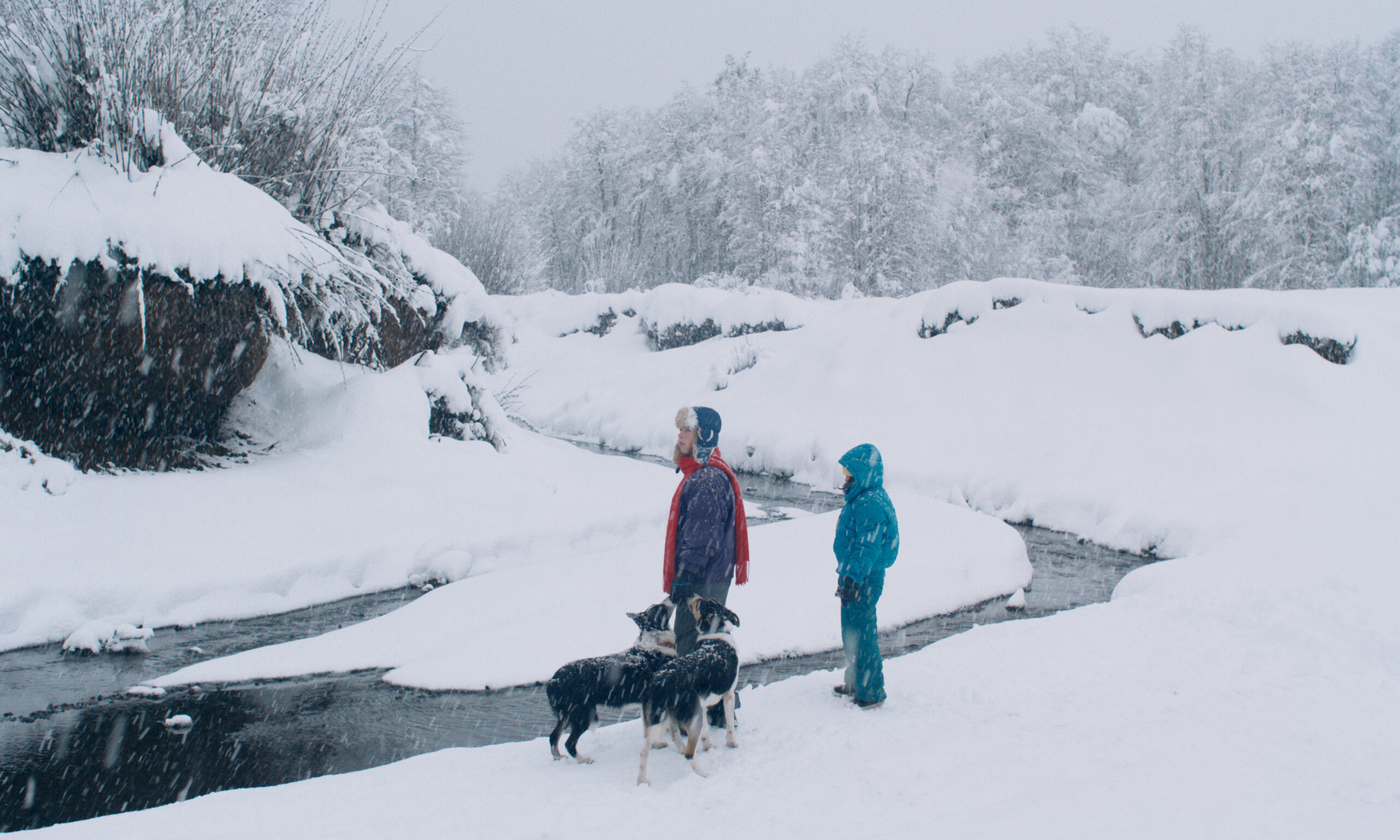
At the chilling center of The Meltdown is Inés (a dazzling Maya O’Rourke), a nine-year-old who is left to roam around her family’s ski hotel while her parents are away working on Chile’s first-ever Expo pavilion after the ousting of Augusto Pinochet in 1990. Seated in front of the TV with her grandmother – who is making plans to expand the resort with Spanish investors – Inés sees her father hyping Chile’s return to normalcy and his invitation for people to do business in the country. And then there’s the pièce de resistance in the pavilion: a 60-tonne iceberg cut off from Chile’s Antarctic regions and transported to Spain for the event.
While all this goes on, Inés’ sole fascination is Hanna (Maia Rae Domagala), a young German skier training and staying at the hotel with her team. Witnessing the bullying Hanna is subjected to and the awkward relationship between her and her coach (Jakub Gierszal), Inès befriends the teenage guest and discovers many a secret of hers – her love of goth, her smoking, and her mother who “comes from a country that doesn’t exist anymore” – until she vanishes from view one day after a night out with Inés’ cousin Sebastian (Lautaro Cantillana).
Up until this point, Martelli manages to strike an interesting balance in unfolding Hanna’s disappearance with sporadic allusions to Chile’s historical schisms, such as the subtle revelation of the family’s untoward procurement of indigenous-owned land where the hotel stands, or the way white characters (that is, Inès’s family) patronises and belittles Mestizos. (It’s perhaps telling that Inés has chosen which side she is on from the get-go, as she constantly sneaks off to sleep with the servers.)
And when Hanna’s mother (Saskia Rosendahl) arrives, the film basically flips into family melodrama with the expected twists, turns and arguments about parenting – a meltdown that distracts from The Meltdown’s mysterious ambience, as conjured by Benjamin Echazaretta’s colour template and slow zooms and Yibrán Asuad’s splicing.
Director, screenplay: Manuela Martelli
Producers: Alejandra García, Alex C. Lo, Andrés Wood
Executive producers: Javier Palma Quaas
Cast: Maya O’Rourke, Maia Rae Domagala, Saskia Rosendahl, Jakub Gierszal, Paulina Urrutia
Cinematography: Benjamin Echazaretta
Editing: Yibrán Asuad
Production design: Nohemí González
Costume design: Carolina Espina
Music: Mariá Portugal
Sound: Javier Umpierrez
Production companies: Ronda Cine, Cinema Inutile, Wood Producciones
World sales: Films du Losange
Venue: Cannes Film Festival (Un Certain Regard)
In Spanish, English and German
108 minutes